

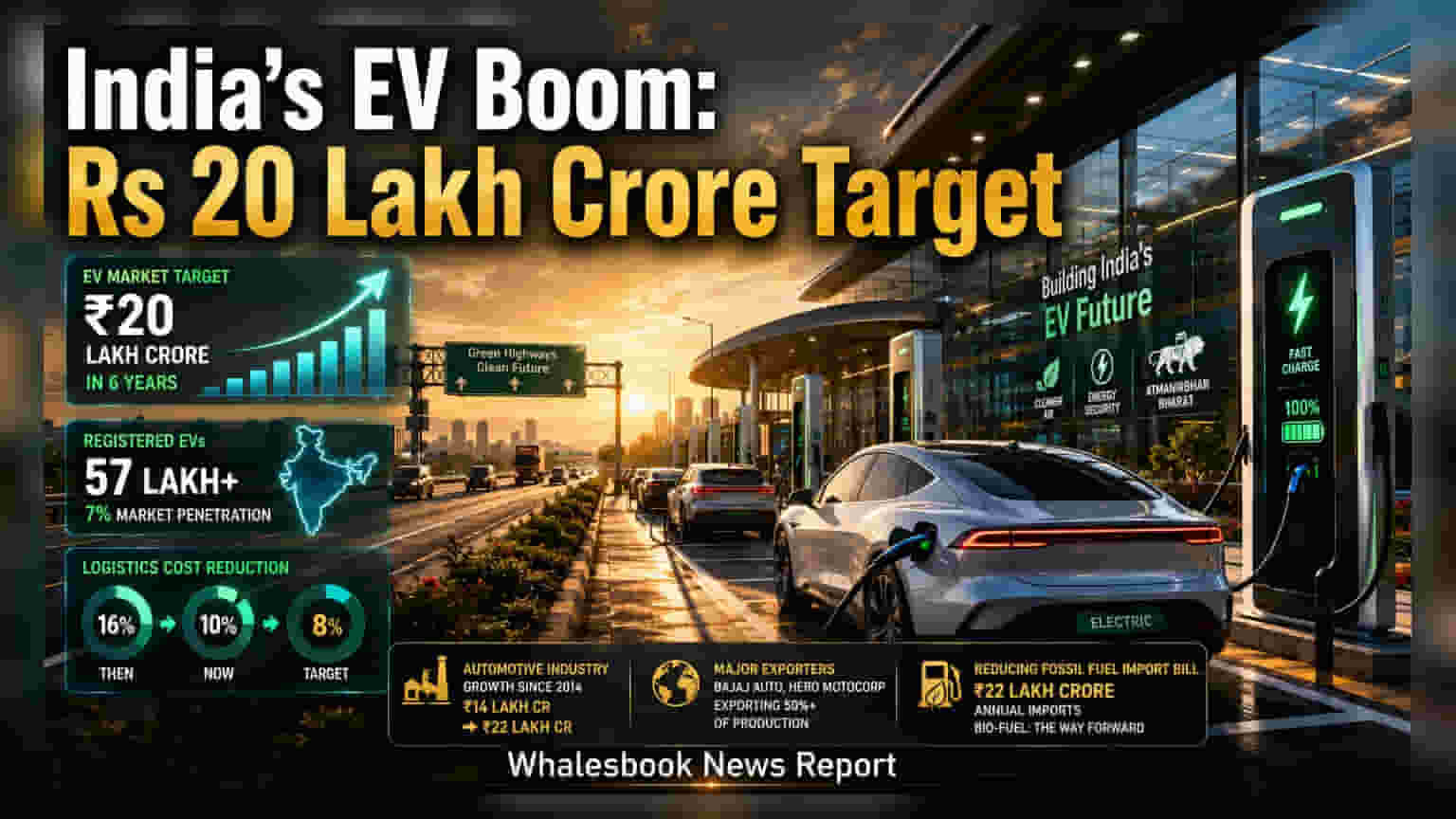
Union Minister Nitin Gadkari forecasts India's electric vehicle market will hit Rs 20 lakh crore by 2030, potentially creating five crore jobs. The government is aggressively pursuing a transition to cleaner energy and efficient logistics to displace heavy fossil fuel imports.
Scaling the Electric Transition
India aims to transform its automotive landscape through an aggressive push toward electric mobility. Union Minister for Road Transport and Highways Nitin Gadkari confirmed the government's vision to scale the domestic EV sector to a valuation of Rs 20 lakh crore within the next six years. Currently, India records 57 lakh registered electric vehicles, reflecting a 7 per cent market penetration that officials intend to accelerate.
Industrial Growth and Global Competition
The ambition to rank as the world's premier automobile manufacturer remains central to the government’s industrial strategy. Since 2014, the domestic automobile industry has expanded from Rs 14 lakh crore to Rs 22 lakh crore. While the US currently leads at Rs 78 lakh crore and China follows at Rs 47 lakh crore, India’s move toward local production and enhanced export capabilities remains a structural priority. Major manufacturers like Bajaj Auto and Hero MotoCorp are already exporting more than half of their production volume, signaling a shift in global standing.
Logistics and Resource Efficiency
A critical bottleneck in India’s manufacturing competitiveness remains the cost of logistics. Data from IIT Chennai, IIT Kanpur, and IIM Bangalore indicates that the development of expressways and economic corridors has successfully brought logistics costs down from 16 per cent to 10 per cent. The central government is now targeting a further reduction to 8 per cent to boost global export viability. This initiative runs parallel to efforts to cut the annual Rs 22 lakh crore expenditure on fossil fuel imports, with the minister emphasizing bio-fuel as a necessary long-term alternative to combat pollution and improve trade balances.