 Whalesbook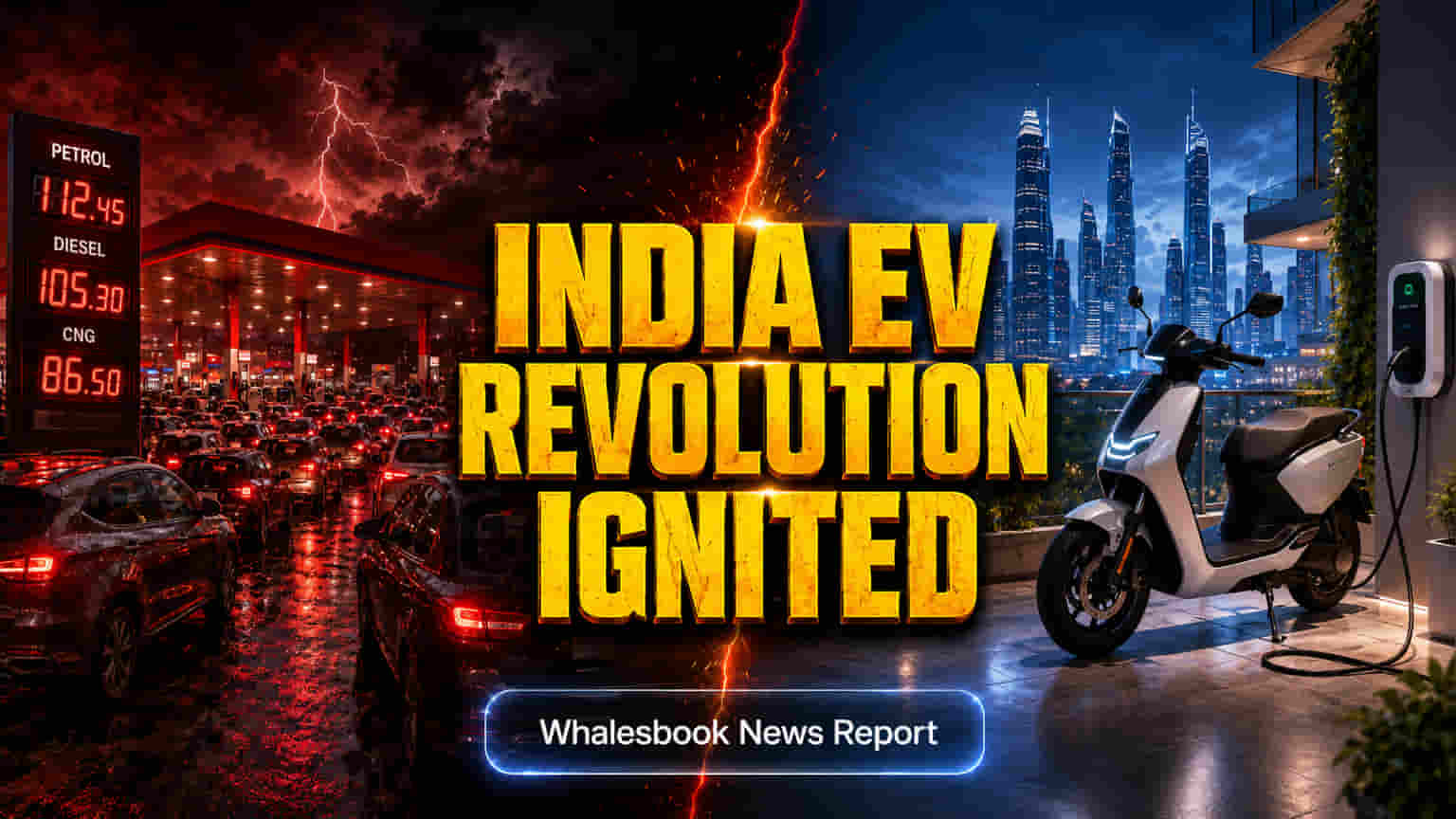


Volatile global oil prices, fueled by geopolitical tensions, are unexpectedly speeding up electric vehicle (EV) adoption in India. As petrol costs climb, more urban Indian households are choosing electric options, changing consumer habits. This trend is strongest in the two-wheeler market, which is seeing a surge in demand and marking a turning point for India's green mobility goals. Yet, the EV story isn't uniform, with a clear split between the booming electric scooter and motorcycle sector and the still-developing passenger EV market.
Electric Two-Wheelers Drive the Boom
Electric two-wheeler registrations rose 13.5% in the first half of May 2026, bucking a 5.5% decline in the overall two-wheeler market. This shows EVs are gaining ground even as the segment shrinks. TVS Motor Company is leading, planning to produce 50,000 units monthly. Bajaj Auto is also performing well with new models. Ather Energy, valued at $1.3 billion, is expanding its manufacturing. Key players combined aim to produce over 150,000 units monthly by year-end, nearly double current output, signaling a move towards large-scale production.
Passenger EVs Still Face Major Hurdles
Passenger electric car adoption, however, is still held back by major obstacles. Industry insiders agree there's a lack of appealing electric car models below ₹10 lakh, the price point for India's mass market. Most sales currently occur between ₹15 lakh and ₹30 lakh, limiting EVs mainly to upper-middle-class buyers. Practical issues, like getting approval to install home chargers in apartment complexes, also create consumer difficulties.
Huge Opportunity in EV Charging Infrastructure
The uneven growth of EV charging stations is both a problem and a major business opportunity. India will need an estimated 1.3 million charging stations by 2030, compared to about 29,000 today, meaning a huge gap needs filling. Building these stations requires significant investment, from ₹1.5 lakh for simple AC chargers to ₹15 lakh or more for DC fast chargers. Despite high upfront costs, grid challenges, and standardization issues, many entrepreneurs and small businesses are looking into EV charging franchises, investing typically ₹30 lakh to ₹40 lakh. Companies like Tata Power are offering these franchise opportunities, tapping into the expanding EV ecosystem.
Valuations and Financials of Key Players
Key publicly listed automotive companies show varied financial profiles. As of May 17, 2026, TVS Motor Company had a P/E ratio of 51.04 and a market cap of ₹164,721.9 Cr. Bajaj Auto's P/E was 28.97 (May 18, 2026) with a market cap of ₹290,067.9 Cr. Mahindra & Mahindra's P/E was 23.31 (May 18, 2026) and its market cap stood at ₹388,295.3 Cr. Tata Motors had a P/E of 25.2 (May 17, 2026) and a market cap of ₹130,043.16 Crore. Privately held Ather Energy was valued at $1.3 billion after funding in August 2024. Ola Electric, valued at $1.54 billion in May 2026, faces challenges despite an 11.6% overvaluation by GF Value metrics. Ola Electric is investing $208.5 million to increase production and aims for profitability by May 2027.
Key Risks Facing India's EV Market
Despite rising EV adoption, significant risks remain. Current growth heavily depends on fluctuating fuel prices, making demand susceptible to any drop in petrol costs. Ambitious expansion plans for electric two-wheelers face execution risks, such as potential labor shortages and delivery disruptions. Passenger EVs are hindered by high costs and slow charging infrastructure development, especially in residential areas and on highways. Competition is also heating up, with established makers like TVS and Bajaj challenging EV startups such as Ather and Ola Electric. Ola Electric, despite new investments, grapples with its high valuation and operating costs. A reliance on government subsidies also poses a risk if policies shift. Ather Energy's reported losses of ₹1,059.7 crore in FY24 show the difficult path to profitability for many EV companies.
Outlook for India's EV Market
Industry forecasts predict continued strong growth for electric two-wheelers, supported by persistent fuel price worries and more model choices. Further market consolidation and innovation are expected, focusing on lowering ownership costs and improving charging access. Government support for electric mobility through initiatives like FAME India should help build the ecosystem, but the speed of infrastructure development will be key. The passenger EV sector's success depends on more affordable models and a stronger charging network. The EV charging infrastructure itself is set for significant expansion, directly driven by the overall EV surge.