 Whalesbook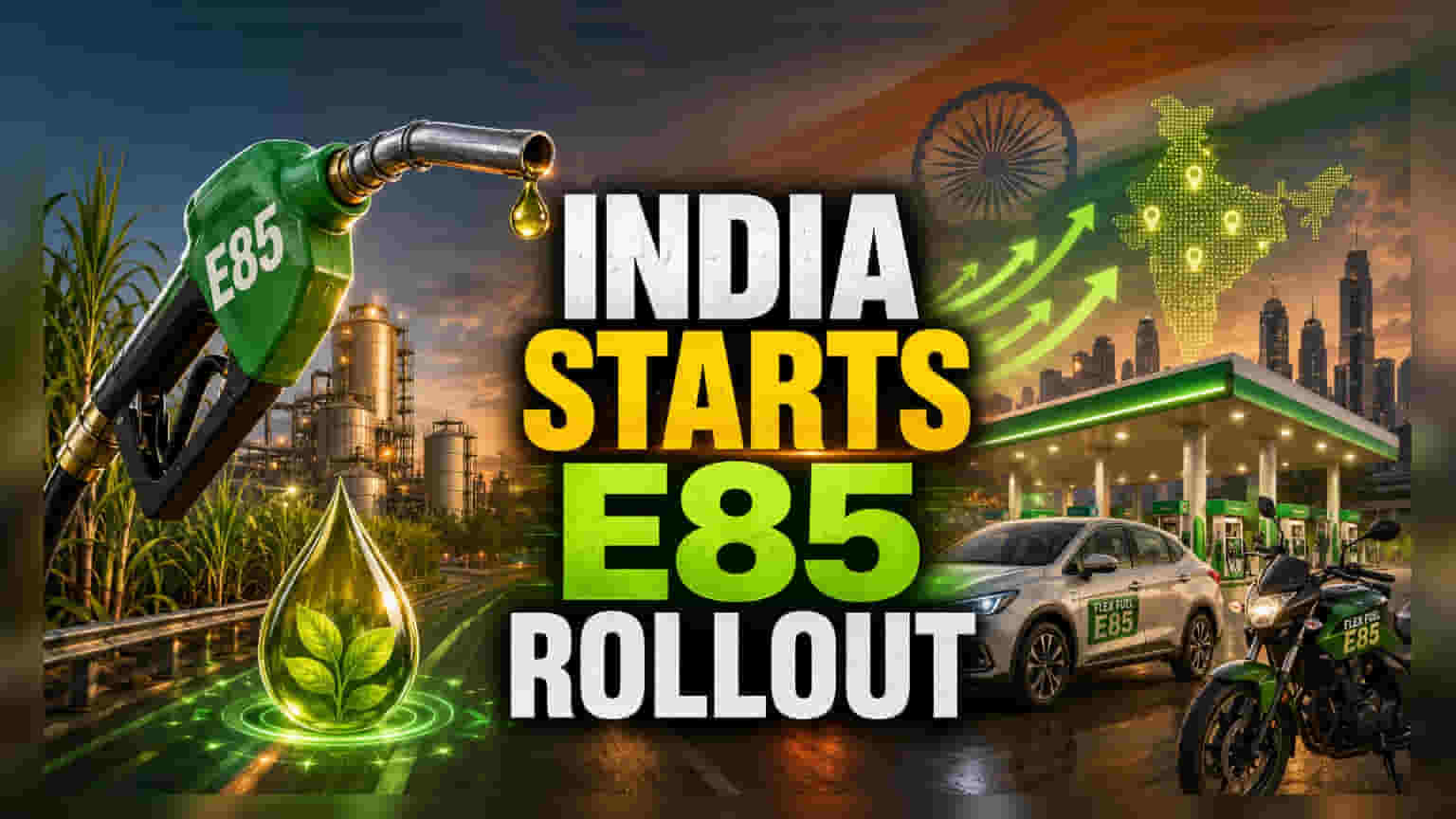


What Happened
India has officially commenced the rollout of E85 fuel, a high-ethanol blend composed of 80% to 85% ethanol mixed with petrol. This launch, occurring in June 2026, marks a significant step in the government's strategy to utilize domestically produced biofuels. The current infrastructure includes an initial network of 48 pilot stations, with a roadmap to scale this to 500 dispensing outlets by December 2026 and a substantial 5,000 stations by the end of 2027. This initiative is designed exclusively for vehicles equipped with flex-fuel engines, which can operate on varying blends of ethanol and petrol, ranging from E20 to E100.
Why This Matters For Investors
The push for E85 is part of a broader macroeconomic goal to reduce India's heavy reliance on imported crude oil, which often creates pressure on the balance of payments. For investors, this shift creates potential ripple effects across several sectors. Auto manufacturers are beginning to introduce flex-fuel variants, such as recent launches in the two-wheeler segment and passenger vehicle prototypes. Meanwhile, oil marketing companies (OMCs) will need to invest in the necessary dispensing infrastructure. While the government aims to create a viable, large-scale ecosystem, the speed of adoption remains the critical variable. If flex-fuel vehicles gain traction, it could provide a steady demand stream for the ethanol-producing industry, particularly sugar and grain-based distilleries.
The Efficiency And Consumer Challenge
A major point of concern for potential consumers is fuel efficiency. Because ethanol has lower energy density than conventional petrol, vehicles running on higher ethanol blends like E85 typically offer lower mileage. This creates a practical barrier: even if the fuel is priced lower than conventional petrol, the higher volume of fuel consumed per kilometer could offset those savings for some users. Furthermore, as of now, there are very few flex-fuel vehicle models available in the commercial market. Without a wide range of affordable and reliable vehicle options, consumer adoption may remain slow in the initial years. Investors should be wary of assuming rapid mass adoption until these vehicle models become widely available at competitive price points.
The Infrastructure Question
Building a network of 5,000 fuel stations by the end of 2027 is an ambitious capital-intensive project. It requires significant investment from OMCs to upgrade existing pump infrastructure, manage storage for different fuel grades, and ensure supply chain reliability. Unlike electric vehicle charging, which can sometimes be decentralized, E85 infrastructure relies on the physical distribution of liquid fuel. The progress of these 5,000 stations will be a key performance indicator. Delays in infrastructure rollout would severely limit the usability of flex-fuel vehicles, potentially leaving early buyers with limited refueling options.
Peer And Sector Context
India’s ethanol strategy is often compared to the Brazilian model, where flex-fuel technology has been the standard for years. However, India's market dynamics are distinct, with a very different vehicle mix and different consumer cost sensitivities. While the government is actively supporting this transition, the sector faces a unique competitive environment. Flex-fuel vehicles are being positioned as an alternative or a bridge solution alongside electric vehicles. Investors should note that these two technologies are currently competing for both consumer interest and government policy support. Whether flex-fuel vehicles become a mainstream choice or a niche secondary option will depend on how effectively the government and manufacturers solve the fuel efficiency, pricing, and infrastructure gaps.
What Investors Should Track
Investors should closely monitor several indicators over the coming months. First, the pace of new flex-fuel vehicle launches by major original equipment manufacturers (OEMs) is crucial. Second, track the official updates from OMCs regarding the actual construction and commissioning of the targeted 500 stations by late 2026. Third, watch for any further policy announcements regarding GST rationalization or differential pricing that might make E85 more attractive to the average car buyer. Finally, keep an eye on how the ethanol supply chain manages the increased demand, as sustained availability is essential for the ecosystem to succeed.