

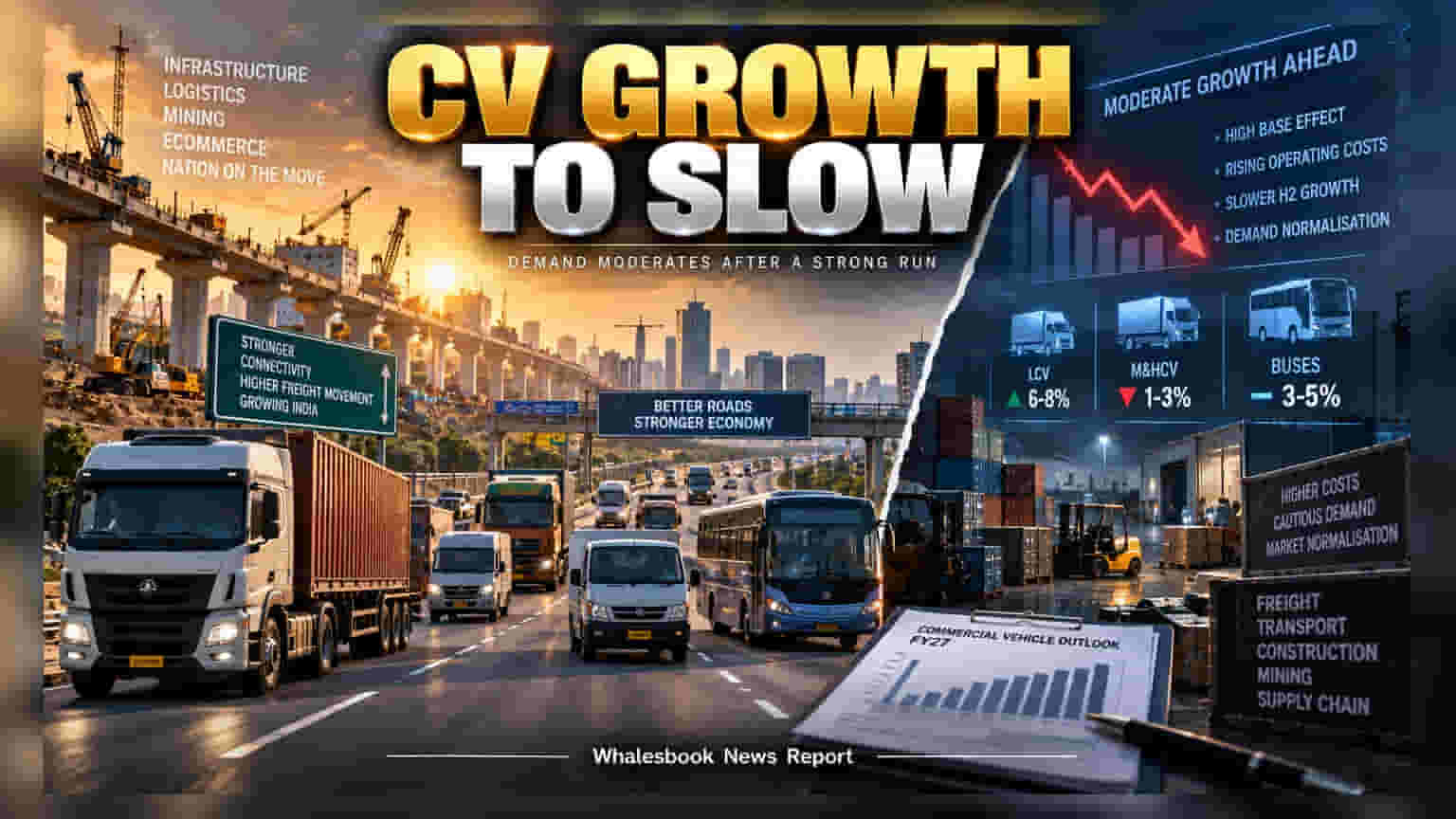
ICRA predicts India's commercial vehicle industry will grow by 4-6% in FY27, slowing down from a strong start. While light commercial vehicles are set to lead with 6-8% growth, heavier trucks will face slower expansion due to a high sales base from last year. Investors may track how infrastructure spending and logistics demand offset these tough yearly comparisons.
The Indian commercial vehicle market is entering a phase of moderate growth in the current fiscal year. Rating agency ICRA projects that total industry sales volume will rise by 4-6% for the full year of FY27. This outlook follows an exceptionally strong start to the fiscal year, where sales surged, but the pace is now expected to cool down significantly during the second half of the year.
Segment Trends and Demand Drivers
The moderation in growth is largely due to a statistical hurdle known as the high base effect. The second half of FY26 saw a sharp increase in vehicle demand, partly supported by changes in tax rates during that period. Because last year's sales figures reached such high levels, it becomes harder for the industry to show significant year-on-year growth against those larger numbers in the coming months.
Different segments of the market are expected to grow at varying speeds. Light commercial vehicles are expected to be the fastest-growing category, with a projected volume increase of 6-8%. This demand is fueled by the continued rise of e-commerce and the need for better last-mile delivery networks. Conversely, medium and heavy commercial vehicles are predicted to see much slower growth of 1-3%. Bus volumes are also expected to remain steady, with growth estimated at 3-5%.
Despite the slower pace, the industry continues to draw support from key economic drivers. Infrastructure projects, mining operations, and the movement of heavy commodities such as steel and cement remain vital for the demand for larger trucks. Additionally, the availability of vehicle financing options continues to help fleet operators manage their expansion.
However, the sector is not without its hurdles. The costs associated with owning and operating these vehicles remain high, which can put pressure on fleet owners' buying decisions. As the industry moves through the second half of the year, investors will likely track whether sustained infrastructure spending and steady freight movement are enough to keep demand resilient despite the tough comparison with last year's record volumes. The sustainability of freight rates and the pace of government project execution will be important to monitor as the sector moves toward a more normalized growth phase.