 Whalesbook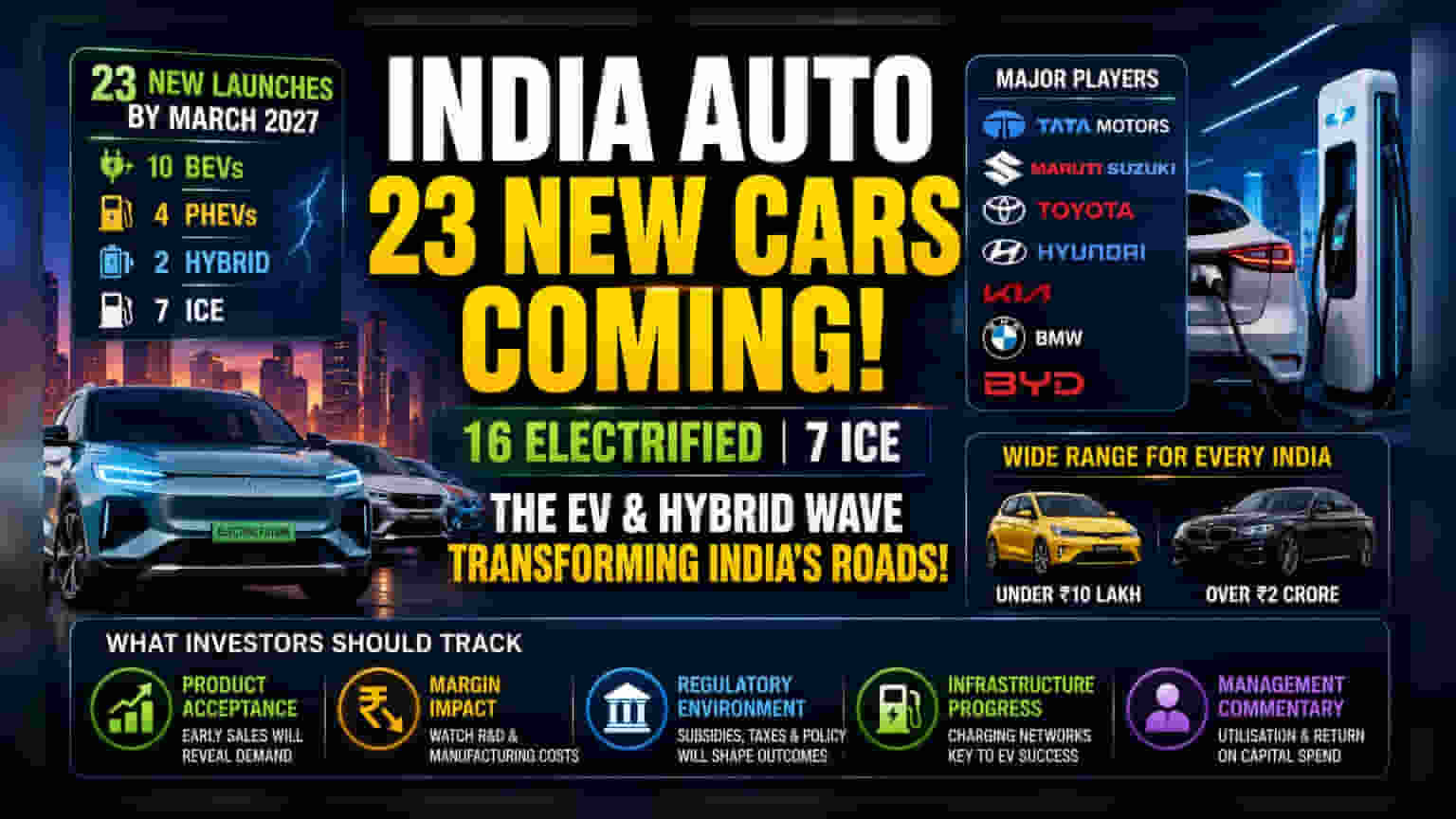


Indian automakers are launching 23 new vehicle models by March, with a strong focus on electric and hybrid technology. This shift toward electrified powertrains over traditional engines signals a major change in capital spending and product strategy. Investors should watch how this impacts profit margins and whether consumer demand matches the aggressive expansion plans of manufacturers like Tata Motors and Maruti Suzuki.
What Happened
India’s automotive industry is preparing for a significant product offensive, with 23 new passenger vehicle models scheduled for launch by March 2027. The most notable aspect of this wave is the clear move toward electrification. Out of the 23 upcoming models, 16 will feature electrified powertrains, including 10 battery-electric vehicles (BEVs), four plug-in hybrids (PHEVs), and two hybrid-assisted models. In comparison, only seven new models will run on traditional internal combustion engines (ICE), such as petrol or diesel.
The launches are broad, ranging from affordable city cars priced under ₹10 lakh to luxury sedans costing over ₹2 crore. Major automakers including Tata Motors, Maruti Suzuki, Toyota, Hyundai, Kia, BMW, and BYD are participating in this cycle, indicating that the shift is happening across both mass-market and premium segments.
Why This Matters For Investors
For investors, this is more than just a list of new cars; it represents a fundamental change in how these companies are allocating their money. Developing new vehicle platforms, particularly for electric and hybrid models, requires massive upfront capital spending.
When a company invests heavily in new electric architectures, it creates a need for higher future sales volume to justify the cost. Investors should be watching whether these companies can manage this financial burden without damaging their overall profitability. If the demand for these new models does not meet expectations, companies may face pressure on their profit margins due to high fixed costs and underutilized production capacity.
The Hybrid vs. EV Strategy
Automakers are taking very different paths to electrification, which will lead to different financial outcomes. Some companies, like Tata Motors, are spending heavily on dedicated electric vehicle platforms like the 'acti.ev' architecture. This strategy assumes that the market will move directly to battery-electric cars.
Others, such as Toyota, Honda, and Maruti Suzuki, are continuing to promote hybrids as a transitional technology. This approach allows them to offer cleaner vehicles without the immediate, massive infrastructure and battery cost requirements of a pure electric vehicle. Investors should monitor which strategy proves more effective in capturing market share, as each path carries different risks regarding regulation, technology adoption, and consumer preference.
Execution and Demand Risk
While the industry is pushing for new technology, there are real-world risks. The primary challenge is consumer adoption. For electric vehicles, charging infrastructure in India remains a work in progress. If buyers feel that charging is inconvenient or if the initial purchase price remains too high compared to traditional cars, sales may be slower than anticipated.
Furthermore, the competitive environment is intensifying. As more global players enter the Indian market with advanced hybrid and electric technology, existing leaders may have to spend more on marketing or offer discounts to protect their market share. This could squeeze profit margins for the entire sector.
What Investors Should Track
Moving forward, investors should focus on the following monitorables:
Product Acceptance: Early sales data for new electric and hybrid models will reveal if consumer demand truly supports this aggressive launch schedule.
Margin Impact: Keep an eye on quarterly results to see how research and development costs and higher manufacturing expenses for these new models impact overall profit margins.
Regulatory Environment: Government policies, including subsidies for electric vehicles or changes in tax rates for hybrids, will significantly influence the success of these new launches.
Infrastructure Progress: The pace at which charging networks expand will be a critical factor for the long-term success of the new battery-electric vehicle models.
Management Commentary: Listen for updates on the utilization levels of new electric platforms and whether companies are seeing the expected return on their capital spending.