

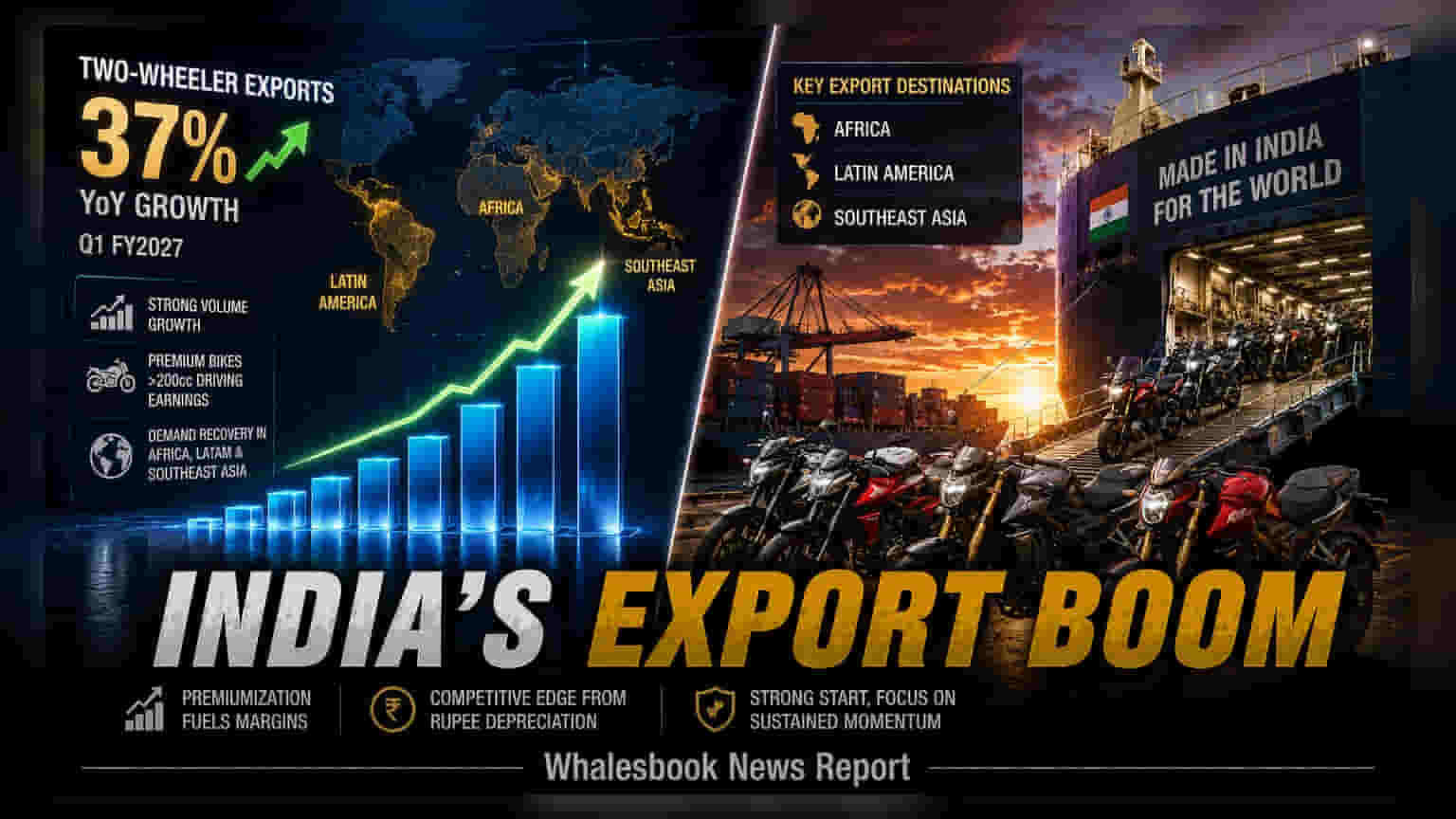
India's two-wheeler exports rose 37% in Q1 FY2027, fueled by strong demand in Africa, Latin America, and Southeast Asia. The shift toward premium, higher-value motorcycles is boosting manufacturer profits. However, investors should track currency volatility and potential inflationary pressures that could impact future growth.
The Indian two-wheeler industry has started the 2027 fiscal year on a strong note, with exports witnessing a significant 37% year-on-year surge in the first quarter. This rebound in international shipments marks a recovery in key export hubs, with major manufacturers seeing a sharp rise in both volumes and earnings per unit.
Premiumization Strategy Drives Earnings
The growth in export revenue is not just a result of higher unit sales but is also driven by a structural change in the product mix. Indian manufacturers are increasingly shipping premium motorcycles, specifically those exceeding 200cc, alongside higher volumes of scooters. This shift, often called premiumization, allows companies to command higher prices in global markets, improving profit margins compared to entry-level models. For instance, data indicates that companies like Bajaj Auto have reported a 54% rise in export shipments, reaching over 732,000 units in the first quarter of FY2027 alone.
Drivers of Global Demand
Demand in international markets such as Africa, Latin America, and Southeast Asia has recovered significantly. Improved foreign exchange availability in these regions and easing inflationary pressures have made Indian-made vehicles more affordable for local consumers. Additionally, the depreciation of the Indian rupee, which has traded near ₹95–₹96 against the US dollar in recent months, has provided a competitive pricing advantage for exporters. By receiving more rupees for every dollar earned, companies can defend their margins against rising operational costs.
Risks and Monitorables
While the start of the fiscal year is positive, the industry faces specific challenges that investors should track. The high base effect from the previous year’s growth means that maintaining such high percentage jumps in the coming quarters may be difficult. Furthermore, while rupee depreciation aids exports, it can also increase the cost of importing raw materials and components, potentially putting pressure on profit margins if not managed effectively.
Weather-related risks, such as a potential impact on rural demand from erratic monsoon patterns, and persistent inflationary pressures remain factors to watch. These can affect both domestic sales and overall production costs. The industry's ability to navigate these macro-economic variables while maintaining the current momentum in the export segment will be a key area of focus for the remainder of FY2027. Investors will likely look for updates in subsequent quarterly results to see if the premiumization trend and export volume growth remain sustainable despite these headwinds.