

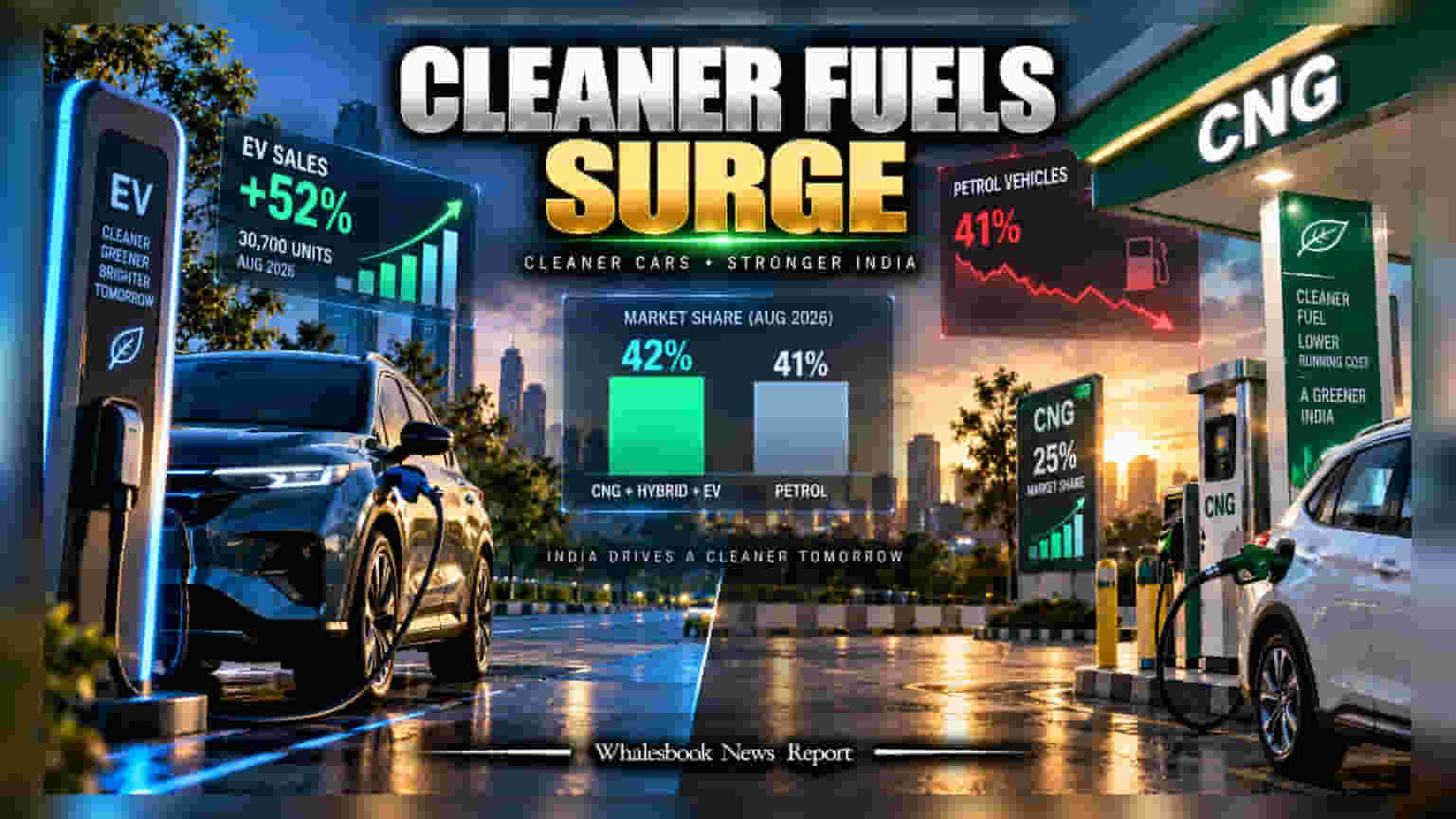
In August 2026, combined sales of CNG, hybrid, and electric vehicles hit 42%, outpacing traditional petrol cars for the first time. This marks a structural shift in buyer preference driven by lower running costs and fuel policy changes. Investors should monitor how this trend affects the profitability and product strategy of major Indian automakers as they adjust to a cleaner-fuel market.
August 2026 marked a historic turning point in the Indian automotive market. For the first time, the combined market share of cleaner-fuel vehicles—including CNG, hybrid, and electric models—reached 42%, officially surpassing petrol-powered cars, which fell to 41%. This trend, supported by a 16% year-on-year increase in total retail sales, indicates that Indian buyers are rapidly moving away from traditional internal combustion engines.
A major driver of this change is the rising popularity of CNG and hybrid models, which accounted for a significant portion of the clean-fuel basket, with CNG alone capturing a 25% market share. Many consumers are switching to these alternatives due to fluctuating fuel costs and growing uncertainty regarding the long-term impact of E20 fuel on the mileage and maintenance of traditional petrol engines. These models offer a familiar ownership experience while addressing concerns about high running costs.
Electric vehicles also saw strong growth, with registrations increasing by 52% compared to last year, totaling over 30,000 units. Tata Motors remains the dominant leader in the electric segment with a 43% market share, benefiting from its established model lineup. Mahindra & Mahindra follows with a 21% share, while other manufacturers like JSW MG Motor and Maruti Suzuki are actively working to gain ground in this evolving space.
For investors, this shift changes how carmakers must allocate their resources. Companies that already have a strong presence in CNG, hybrids, or EVs are currently better positioned to capture this demand. However, this transition comes with business challenges. Developing and producing electric and hybrid technology requires large amounts of money to be spent upfront, which can put pressure on profit margins in the near term. Investors should note that success in this environment depends on how efficiently these companies can balance their traditional petrol business with the high cost of developing new, cleaner technology.
The future impact on stock performance will depend on several external factors. The pace at which charging infrastructure expands across the country and the availability of CNG will be critical to keeping this growth trend alive. Additionally, any sudden changes in government emission policies or vehicle subsidies could alter the profitability of specific segments. The next important update for investors will be the upcoming quarterly results, where management commentary on demand trends and the ability to maintain profit margins despite rising expansion costs will be key monitorables.