 Whalesbook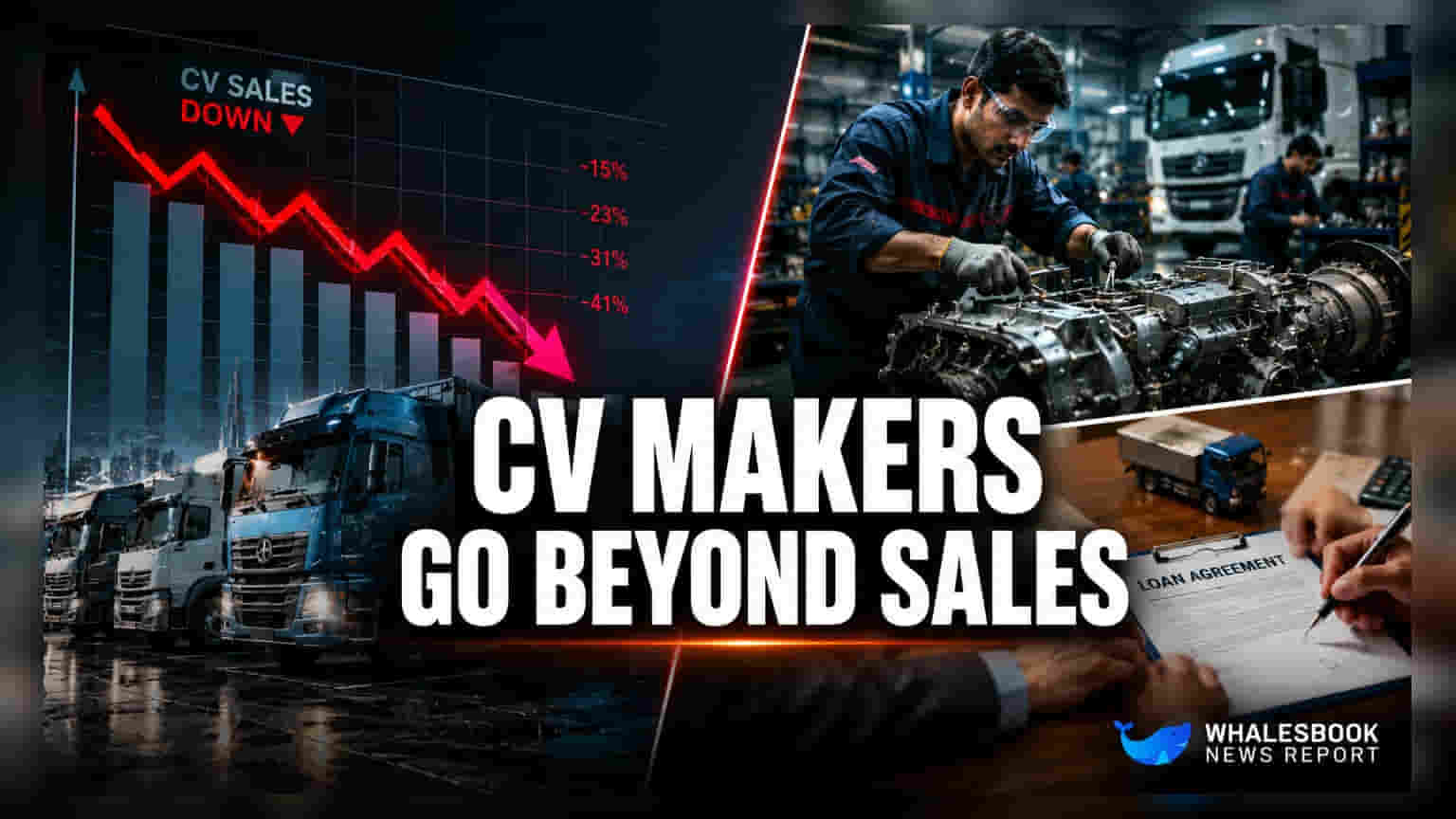


The Shift Toward Recurring Capital
Commercial vehicle manufacturers are fundamentally altering their business models to escape the historical vulnerability of the Indian freight cycle. While traditional sales remain the core, the structural pivot toward high-margin aftermarket services, power solutions, and captive financing has reached a critical juncture. By institutionalizing revenue from spare parts and fleet services, these companies are effectively creating a defensive buffer against the cyclical downturns that have historically constrained profitability.
Scaling Non-Core Operations
Fiscal year 2026 underscored the effectiveness of this diversification. Ashok Leyland, for example, has moved beyond simple manufacturing, with its aftermarket division generating nearly ₹3,800 crore and power solutions expanding by double digits. The company’s strategic integration of Hinduja Leyland Finance, which grew its assets under management by 24% to approximately ₹59,500 crore, exemplifies the trend of captive financing becoming a major profit center. Meanwhile, VE Commercial Vehicles is deepening its commitment to integrated customer support through a new joint venture with Volvo Financial Services, a move designed to lock in long-term customer relationships and capture financing yields that were previously ceded to third-party lenders.
Tata Motors has similarly prioritized this transition. Management has emphasized that non-cyclical revenue growth is now significantly outpacing traditional sales growth, as the company expands its footprint in connected vehicle platforms and digitized fleet management. This strategy is essential for protecting the bottom line, especially as the industry faces intensifying competition and the high cost of entry into electric commercial vehicle segments.
Risk Factors and Competitive Challenges
Despite the clear push for stability, significant structural risks remain. The "competition cost"—characterized by deep discounting in the M&HCV segment—continues to compress margins for all major players. While diversification into captive finance, such as Hinduja Leyland Finance, provides a hedge, it also increases balance sheet leverage. The quality of these loan books is a critical monitorable, as rural and freight-linked stress can quickly impair asset quality. Furthermore, the capital-intensive nature of launching EV infrastructure and autonomous fleet solutions requires sustained investment that could strain cash flows if the expected returns from non-core businesses do not materialize at scale.
Industry Outlook
Market sentiment remains guarded regarding the long-term sustainability of these margins. While the shift to service-led revenue is a positive development, companies are still heavily reliant on the broader macroeconomic environment and government infrastructure spending. As the industry moves toward higher levels of technological integration, the focus will likely shift to how effectively these firms can maintain their dominant market shares while navigating the capital costs of electrification and the operational risks associated with new, complex service models.