 Whalesbook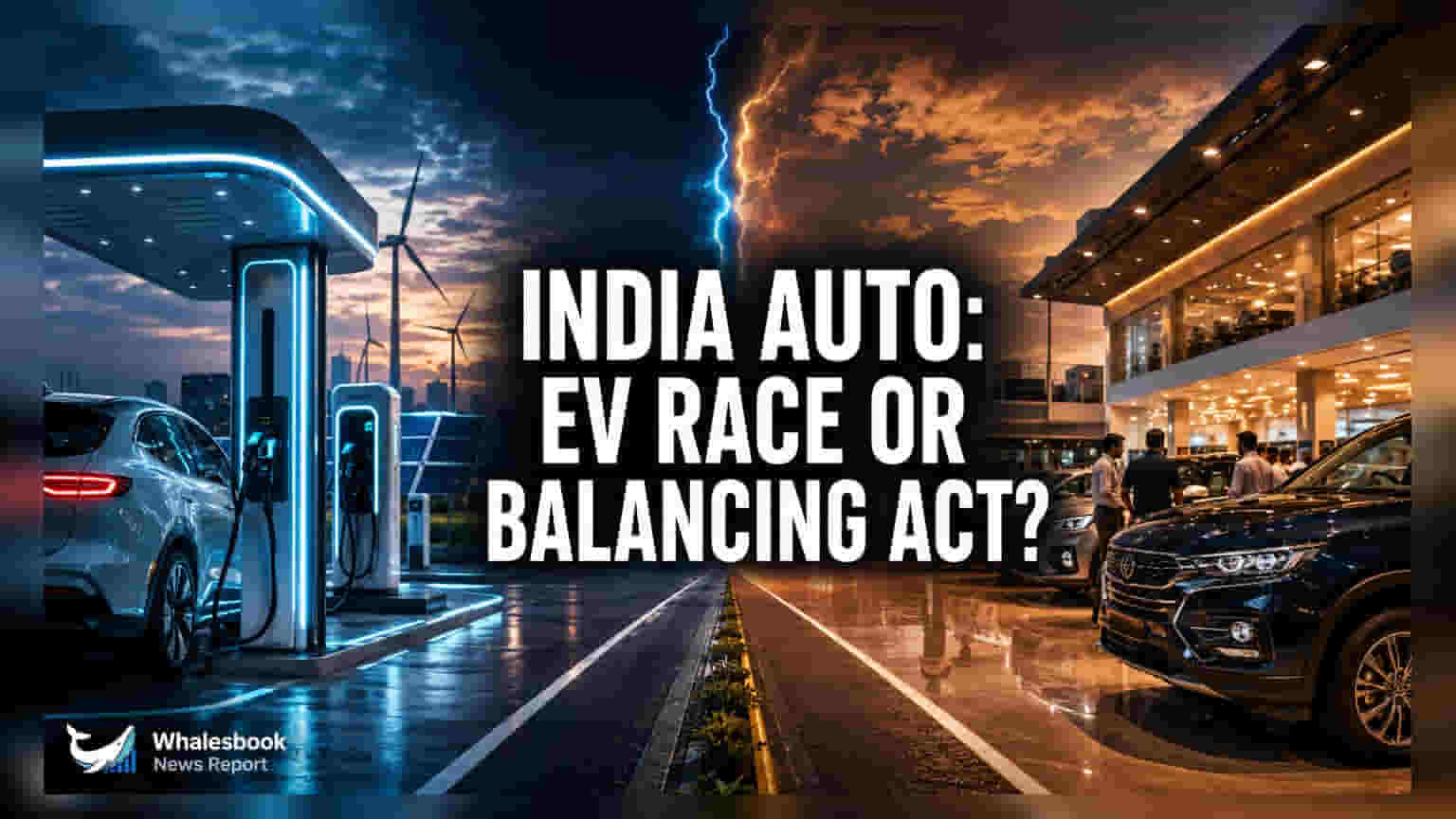


The Pragmatic Pivot
Automotive manufacturers in India are recalibrating their long-term roadmaps, moving away from the singular "EV-only" narrative that dominated recent industry discourse. This shift is not a retreat from sustainability but a calculated reaction to on-ground realities: sluggish charging infrastructure, regulatory friction, and a consumer base that remains sensitive to the higher upfront costs of electric models. While the government pushes for 30% EV penetration by 2030, current market data confirms that EVs account for roughly 4% of total passenger vehicle sales. Consequently, major OEMs are treating hybrids and high-efficiency petrol engines as the essential bridge to maintain volume and margin stability.
Valuation and Market Dynamics
Investors are witnessing a divergence in how the market prices these strategies. Tata Motors, a leader in the EV space, trades at a high P/E multiple (approximately 42x to 49x, depending on the valuation model), reflecting high growth expectations despite sector-wide pressure. Conversely, players like Maruti Suzuki and Mahindra & Mahindra are maintaining robust P/E ratios in the 20x to 28x range, anchored by their deep penetration in ICE and hybrid segments. This valuation gap underscores the market’s tension: betting on the future growth of electrification while demanding the reliable, non-cyclical cash flows generated by conventional SUV and petrol sales.
The Hybrid Resurgence
Hybrids have emerged as the surprise winner of FY26. With over 1.23 lakh units sold, hybrids offer a practical middle ground for Indian buyers who require long-distance capability without the range anxiety of current battery tech. Toyota, through its partnerships, has captured a massive share of this segment, forcing competitors to rethink their product pipelines. The data is clear: in the absence of a universal charging network, the “green mobility” surge—which saw EVs, hybrids, and CNG vehicles collectively claim nearly 30% of total passenger vehicle sales—is being driven by technologies that fit into the current infrastructure, not just those that promise a carbon-free future.
The Forensic Bear Case
Despite the diversification, significant structural risks remain. Manufacturers are essentially running parallel product and manufacturing ecosystems, which places an immense strain on capital expenditure. For companies like Tata Motors, the aggressive push into dedicated EV architectures like the Sierra and Avinya involves high R&D costs that must be amortized over relatively low current volumes. Furthermore, the industry faces supply chain fragility regarding lithium and battery minerals, leaving domestic firms vulnerable to global export controls. Additionally, the regulatory landscape is becoming increasingly complex; recent draft policies in regions like Delhi have reopened old wounds regarding incentives for hybrids, creating a high-stakes environment where one unfavorable policy shift could erode margins on major product lines overnight.