

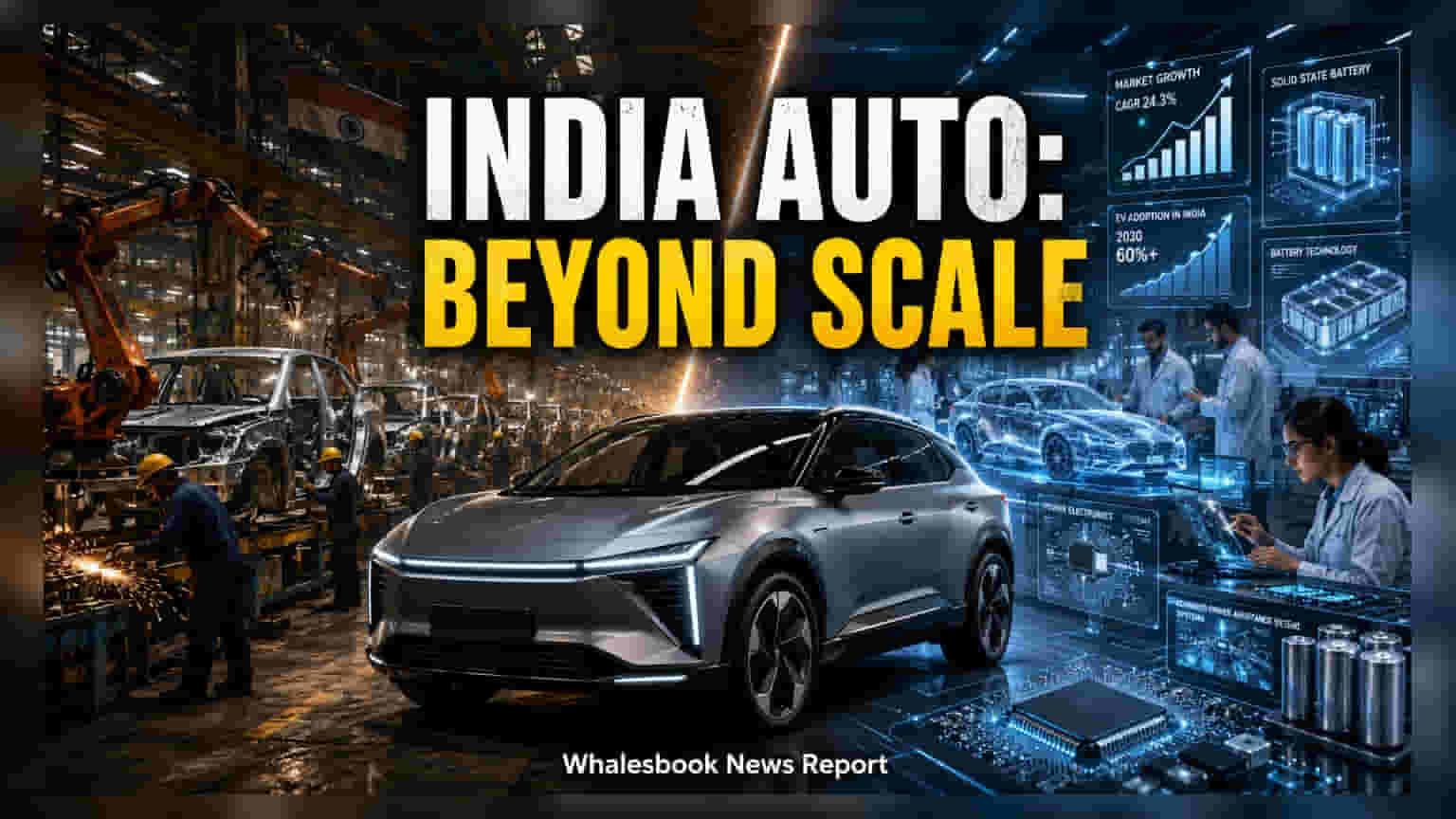
As India marks its 80th Independence Day, the auto industry is pivoting from simple manufacturing to high-tech innovation. While FY26 saw record sales and a 32% rise in the BSE Auto index, leaders warn that future success depends on mastering semiconductors and AI. Investors are now watching for margin sustainability and demand trends as the sector faces a transition to more capital-intensive operations.
India’s automotive industry enters its 80th year of independence at a significant turning point. The sector, which has established itself as the world’s fourth-largest automobile producer, contributed approximately 7.1% to the national GDP in the recent fiscal year. While record passenger vehicle sales of 46.43 lakh units and a surge in exports to 9.05 lakh units in FY25-26 highlight a strong manufacturing foundation, the conversation among industry leaders has shifted toward a more complex goal: technological self-reliance.
The Shift Toward Advanced Technology
Moving beyond pure production volume, the industry is now focusing on the next frontier of mobility. Companies are prioritizing investments in advanced electronics, semiconductors, and software-defined vehicle architectures. This transition is not merely strategic; it is a necessity to remain relevant in a global market that is increasingly data-driven. Industry leaders have identified key areas for improvement, including the need for deeper administrative reforms to ease business operations and a faster push toward indigenous research and development.
For instance, the need to secure supply chains for critical raw materials like lithium and cobalt, alongside domestic chip manufacturing, has taken center stage. Experts point out that the ability to integrate artificial intelligence and digital engineering into vehicles will define the next phase of competitiveness. The goal is to move from being a low-cost manufacturing hub to a source of global innovation, where the focus remains on high-value components rather than just basic assembly.
Market Performance and Operational Hurdles
The financial sentiment toward the sector has been positive, with the BSE Auto index significantly outperforming the broader Sensex in FY26. The auto index recorded a growth of nearly 32%, compared to the Sensex's 8.5%, reflecting investor confidence in the sector's recovery and electrification efforts. However, this growth brings new challenges that market participants are closely monitoring.
Profit margins are under pressure due to persistent inflation in commodity prices and high input costs. While revenue figures have been strong, analysts are cautious about how long companies can maintain these margins. Furthermore, the global supply chain remains fragile, with geopolitical uncertainties threatening the availability of critical components. There is also an expectation of moderating volume growth, with estimates suggesting wholesale growth may slow to 3-6% in FY27 as the pent-up demand from previous years normalizes.
For investors, the crucial monitorable remains the balance between aggressive capital spending on electric vehicle (EV) technology and maintaining a healthy balance sheet. The shift toward high-tech mobility requires sustained investment, which could temporarily strain cash flows. The industry's ability to navigate these costs while integrating into global supply chains will be the deciding factor for long-term growth as the sector navigates the changing economic landscape.