

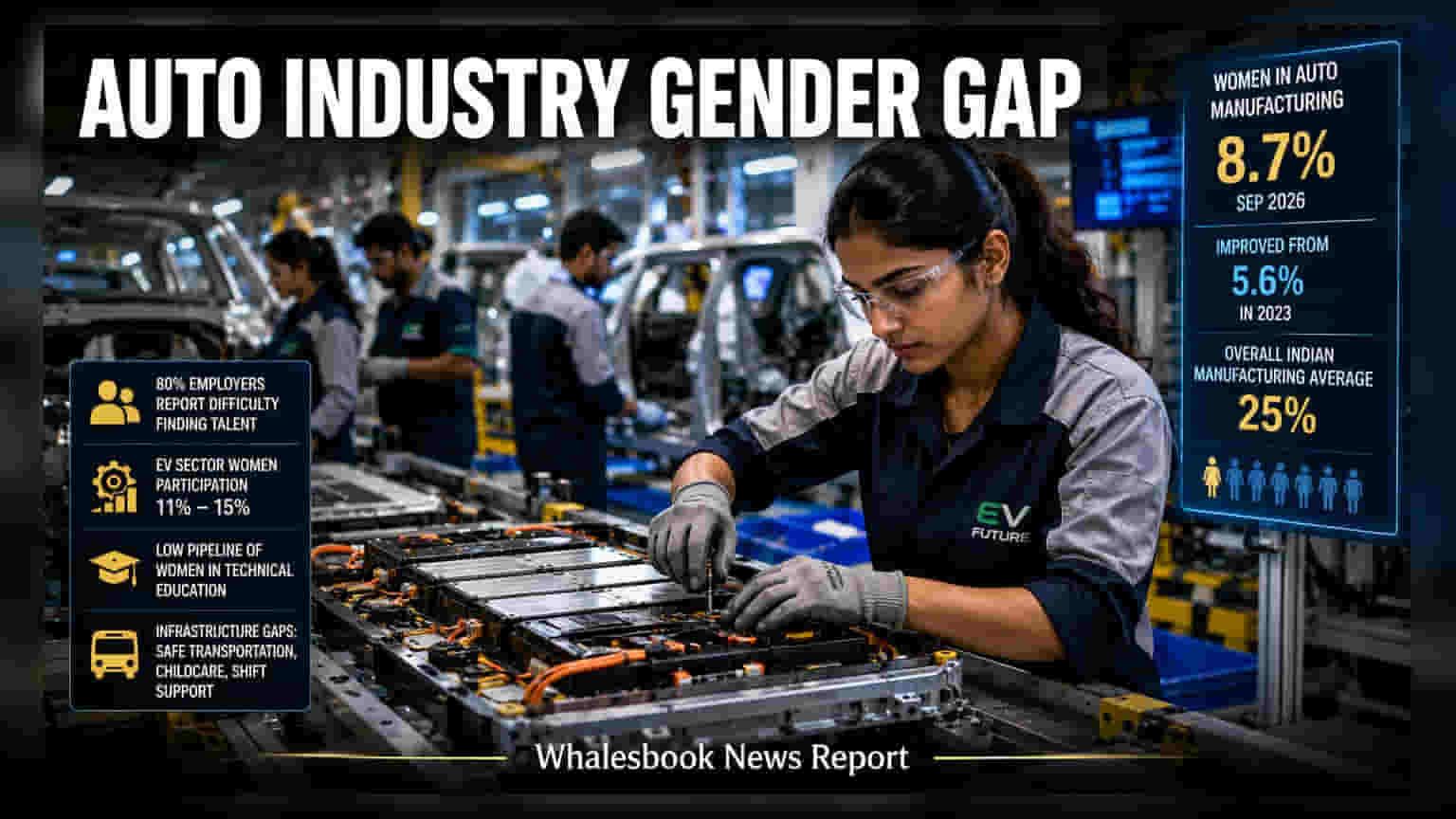
India’s automotive industry struggles with a workforce imbalance, as women make up just 8.7% of manufacturing roles. While companies like Tata Motors and JSW MG Motor India report progress, the sector lags behind the 25% average seen in broader manufacturing. For investors, this talent gap presents a long-term risk to production capacity and operational efficiency.
The Indian automotive manufacturing industry is currently grappling with a significant workforce shortage, highlighted by a persistent gender gap on the shopfloor. As of September 2026, data revealed at the 66th ACMA Annual Session shows that women occupy only 8.7% of positions within the combined OEM and component manufacturing sectors. While this marks an improvement from 5.6% in 2023, the industry still trails the broader Indian manufacturing sector, where women’s participation averages approximately 25%.
The Impact of Talent Shortage on Growth
For investors and business analysts, this gender imbalance is not merely a social metric but a critical operational concern. With 80% of employers in the sector reporting difficulty in finding trained professionals as of 2025 and 2026, the industry faces an acute skills gap. Industry leaders have framed the inclusion of women as a vital pillar for achieving the government’s 2047 manufacturing ambitions. If the sector fails to tap into this talent pool, it risks stalling the production scale required to meet long-term economic goals.
Operational logistics remain a significant hurdle. Many manufacturing plants operate on a round-the-clock, three-shift model. The industry has struggled to integrate women into these rotations due to infrastructure constraints, such as a lack of safe transportation, childcare facilities, and the high fixed costs associated with upgrading factories for mixed-gender workforces. This limitation restricts the total number of women that can be effectively deployed in high-output production environments.
EV Segment Shows Higher Potential
The electric vehicle (EV) segment, which often utilizes newer production facilities, is showing a slightly different trend, with female participation rates estimated between 11% and 15%. This suggests that the transition toward modern automotive technology may offer better structural opportunities for inclusivity. Companies such as JSW MG Motor India, Tata Motors, and Hero MotoCorp have already initiated large-scale hiring programs, with thousands of female technicians now deployed across various facilities. These examples demonstrate that institutional policy can influence hiring trends, though the primary challenge remains the low pipeline of female students enrolling in technical education.
Future Monitoring for Investors
Investors may monitor how effectively automotive companies bridge the divide between their current workforce composition and the broader manufacturing average. Future updates to track include company-specific initiatives for upskilling, improvements in shopfloor infrastructure, and adjustments to shift rotations that accommodate a more diverse workforce. Additionally, the ability of OEMs to reduce their reliance on a shrinking pool of traditional labor by embracing a more diverse candidate base will be a key indicator of long-term operational resilience and productivity.