 Whalesbook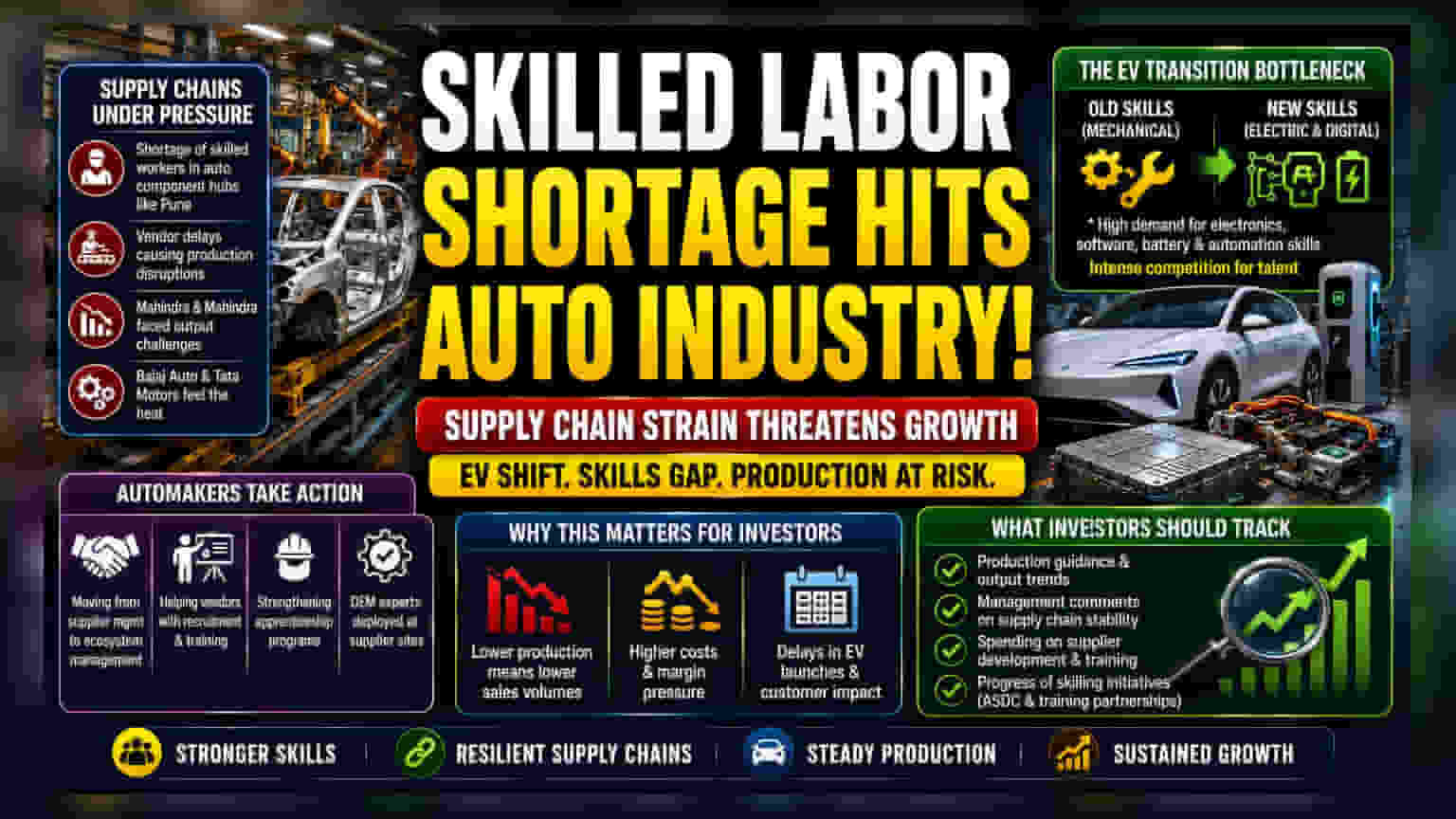


India's automotive industry is facing a critical labor shortage within its supply chain, impacting production for major automakers. As the industry shifts toward electric vehicles, the demand for specialized technical skills is outstripping supply. This workforce deficit is forcing companies to overhaul their supplier management strategies, which could lead to production delays and increased costs for manufacturers like Mahindra & Mahindra, Tata Motors, and Bajaj Auto.
What Happened
Automotive manufacturing hubs in India, particularly around Pune, are grappling with a growing shortage of skilled labor within their component supply chains. This challenge is hindering the ability of suppliers to keep up with production demands. Automakers are now reporting disruptions where the availability of skilled workers, rather than just raw materials or technology, is becoming a bottleneck. Companies such as Mahindra & Mahindra have faced challenges in maintaining full production output due to these labor deficits at the vendor level. Similarly, the rapid expansion into electric two-wheelers by Bajaj Auto and the dual focus on combustion and electric vehicles by Tata Motors require a workforce that is becoming increasingly difficult to secure and retain.
The EV Transition Bottleneck
The industry's shift toward electrification has fundamentally changed the type of talent required. Traditional automotive manufacturing relied heavily on mechanical engineering skills. However, the move toward electric vehicles (EVs) requires workers skilled in electronics, battery management systems, and automated software manufacturing. This has created a gap where the industry is not necessarily short of people, but short of people with the right skills. Engineering firms and global technology centers are also competing for the same talent pool, making it harder for auto component manufacturers to retain specialized staff in critical industrial clusters.
Shifting Supplier Strategy
To mitigate these risks, automakers are moving away from traditional supplier management toward a more hands-on approach known as ecosystem management. Instead of treating suppliers as independent entities, companies are now actively deploying internal teams to assist vendors with recruitment and training. OEMs are also strengthening their apprenticeship programs and dispatching quality and manufacturing specialists to work directly at supplier facilities. This indicates that automakers are increasingly aware that a delay at a small, critical component supplier can halt their entire assembly line.
Why This Matters For Investors
For investors, this labor shortage represents a hidden operational risk. When production is cut or delayed due to supplier-level issues, it directly impacts the volume of vehicles an automaker can sell. Furthermore, the need for automakers to spend time and capital helping suppliers train workers adds a layer of operational complexity. If this shortage persists, it could lead to higher costs, potential delays in the launch of new EV models, and pressure on profit margins. The ability of a company to effectively manage this ecosystem and ensure its suppliers have the right workforce will be a key differentiator in who successfully navigates the transition to electric mobility.
What Investors Should Track
Investors may want to monitor how this labor issue affects the production guidance of major automakers in the coming quarters. Key areas to watch include management commentary regarding supply chain stability during earnings calls and whether companies are reporting increased expenditure on supplier development. Additionally, the broader success of skilling initiatives conducted by bodies like the Automotive Skills Development Council (ASDC) and industry-level partnerships with training institutes will be important indicators of how quickly the sector can bridge this talent gap. The speed at which component manufacturers can stabilize their workforce will ultimately influence the sector's ability to maintain production targets and sustain growth in the electric vehicle segment.