 Whalesbook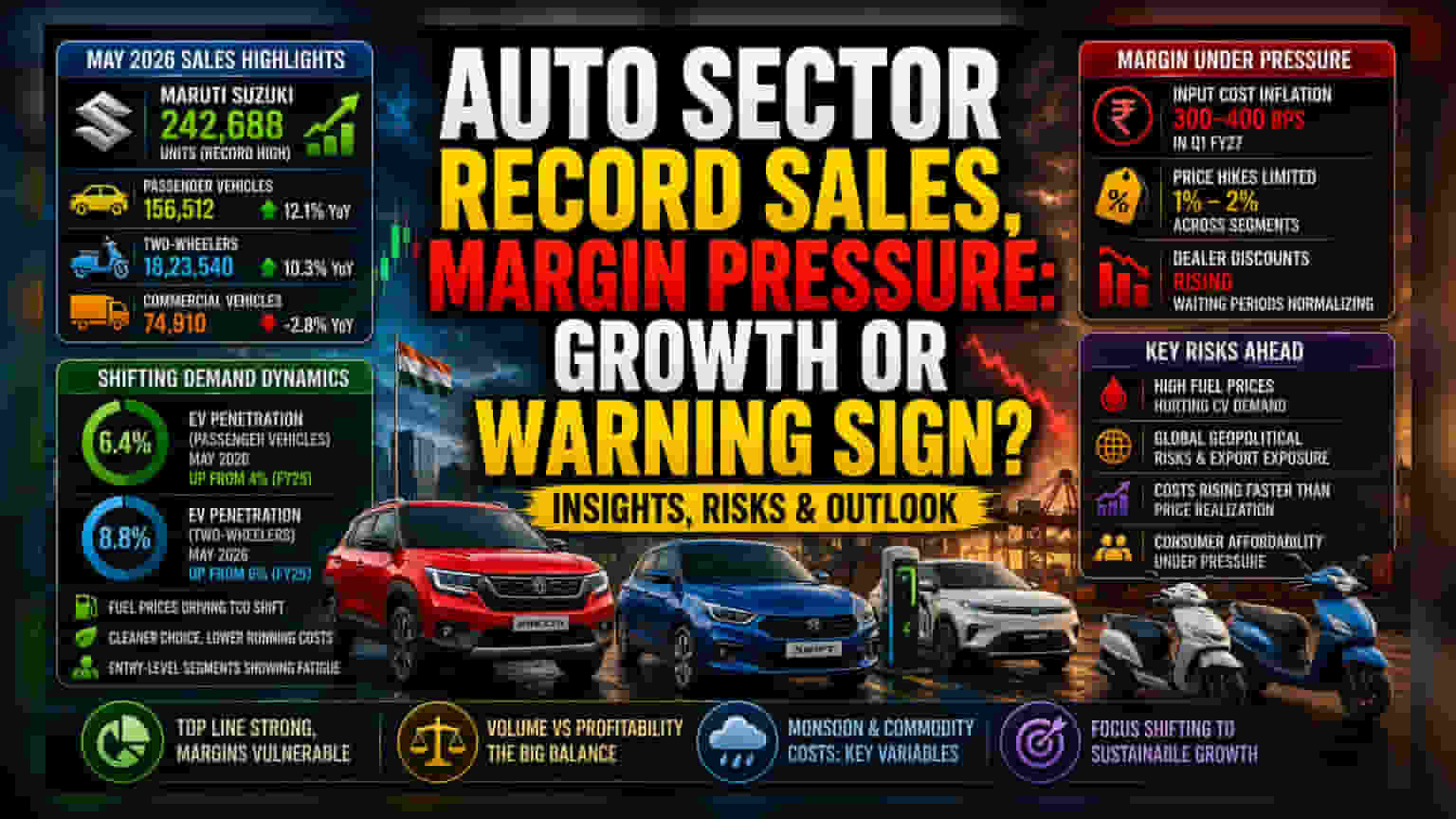


The Valuation Paradox
While May 2026 sales figures painted a picture of unbridled growth, the underlying financials suggest a more precarious reality. Maruti Suzuki’s record-setting performance—reaching 242,688 units—has bolstered investor sentiment, yet the broader sector is currently navigating a distinct margin squeeze. Original Equipment Manufacturers (OEMs) are absorbing significant input cost inflation, with cost pressures estimated between 300 and 400 basis points in the first quarter of fiscal year 2027 alone. Despite these headwinds, price hikes have remained tepid, hovering between 1% and 2%, indicating a management reluctance to risk further demand destruction in price-sensitive segments.
The Shifting Demand Composition
Consumer behavior is undergoing a rapid, fuel-price-induced pivot. Escalating petrol and diesel prices have forced a shift in total cost-of-ownership calculations, accelerating electric vehicle (EV) penetration. EV adoption in the passenger vehicle segment reached 6.4% in May, up from 4% in the previous fiscal year, while two-wheeler EV penetration climbed to 8.8%. This transition is not merely a preference for cleaner technology; it is a defensive move against sustained energy inflation. While high-end models remain insulated, the entry-level segments for both motorcycles and passenger cars are showing signs of exhaustion. Normalizing waiting periods and rising dealer discounts are clear indicators that the 'pent-up demand' narrative is losing its efficacy.
The Forensic Bear Case
Investors should remain skeptical of the current growth trajectory given the macro-economic overlay. Unlike the stable demand profiles of the past, the current environment is defined by severe cost volatility. Commercial vehicle operators, facing high diesel costs, are delaying fleet renewals, signaling a moderation in heavy-vehicle demand that is often a leading indicator for industrial economic health. Furthermore, the reliance on a high-base effect to mask volume moderation is becoming less effective. Companies like Eicher Motors, while maintaining a strong brand moat, face specific export risks due to geopolitical tensions in key markets. The industry’s structural weakness lies in its inability to pass on costs without risking a sharp drop-off in retail demand, a dynamic that will be stress-tested as farmers and price-sensitive commuters contend with rising cost-of-living indices.
Future Outlook
Brokerage sentiment remains bifurcated. While the immediate sales performance exceeded expectations, the outlook for the remainder of FY27 is contingent on monsoon performance and the stabilization of global commodity prices. Market leaders like Maruti Suzuki and TVS Motor Company have shown operational agility in capturing current demand, but the sustainability of these margins is the primary variable. As the sector moves past the initial FY27 euphoria, focus will inevitably shift toward how OEMs manage the delicate balance between volume protection and profitability preservation.