

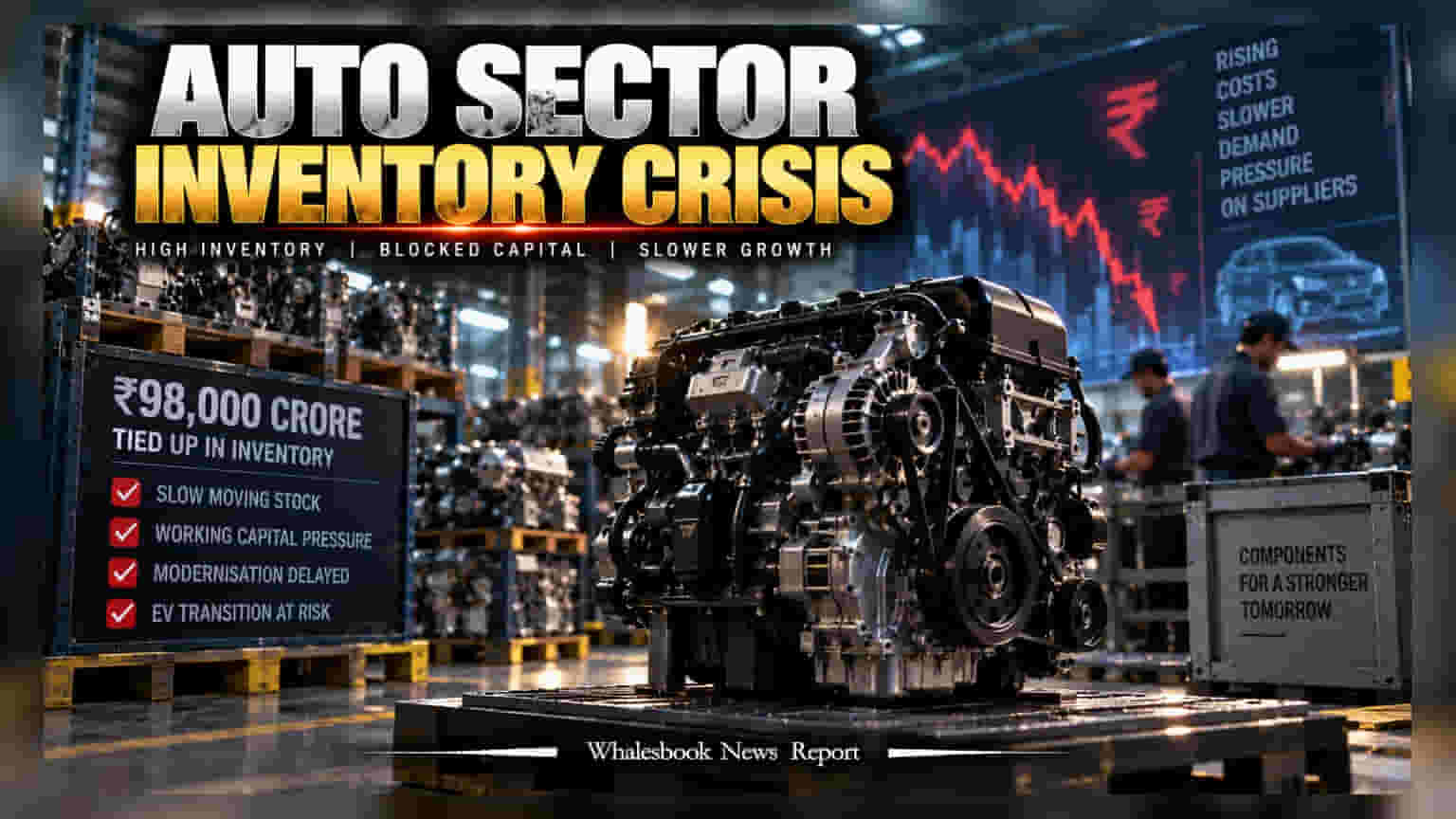
India's automotive component manufacturers are carrying Rs 98,000 crore in stagnant inventory, impacting operational liquidity. Unlocking this capital is essential for MSMEs to fund the transition toward electric vehicles and advanced software. For investors, monitoring how efficiently these companies manage their working capital and cash conversion cycles is now more critical than ever.
The Indian automotive component industry is facing a significant operational hurdle as a large portion of its capital remains stuck in stagnant inventory. A recent study by Vector Consulting Group highlights that nearly Rs 98,000 crore is currently tied up in unsold or slow-moving stock across the sector. This liquidity bottleneck restricts the ability of manufacturers to fund essential modernization projects, particularly as the industry shifts toward high-growth areas like electric vehicles (EVs), power electronics, and embedded software.
At the heart of this issue is a productivity paradox. While industry plants report operating at between 75% and 85% capacity utilization, a large majority of executives still view capacity constraints as a primary challenge. This disconnect suggests that the perceived shortage of production space is often caused by internal inefficiencies—such as frequent production changeovers, high rework rates, and disjointed material flows—rather than a true lack of equipment or physical space. Because of these bottlenecks, companies may feel the need to spend more on physical capacity expansion than is actually required, potentially straining their balance sheets and reducing financial flexibility.
For investors, this situation offers a specific lens through which to evaluate the quality of a company's operations. The industry consists largely of MSMEs, which make up about 80% of the segment. These smaller players are under immense pressure to upgrade their technology to remain relevant in the supply chains of large automotive OEMs. However, limited access to cash, often due to inefficient inventory management, makes this transition difficult. Firms that can optimize their inventory levels and improve their cash conversion cycles are likely to be in a stronger position to self-fund their research and development needs without relying heavily on debt.
The risk for shareholders is that if companies fail to modernize their operations, they may lose their competitive advantage to more agile global or domestic peers who are better at integrating advanced systems. The ability to pivot toward new-age technologies like software-integrated components is no longer optional but a necessity to secure long-term sourcing contracts.
Looking ahead, investors may want to focus on key financial metrics beyond just revenue growth in the upcoming quarterly and annual reports. Watching for trends in inventory turnover ratios, working capital cycles, and the efficiency of capital spending can reveal which companies are successfully tackling these structural challenges. Companies that demonstrate an ability to unlock trapped cash from operations and redirect it toward future-ready technologies are likely to show more sustainable profit margins and stronger long-term balance sheets.