

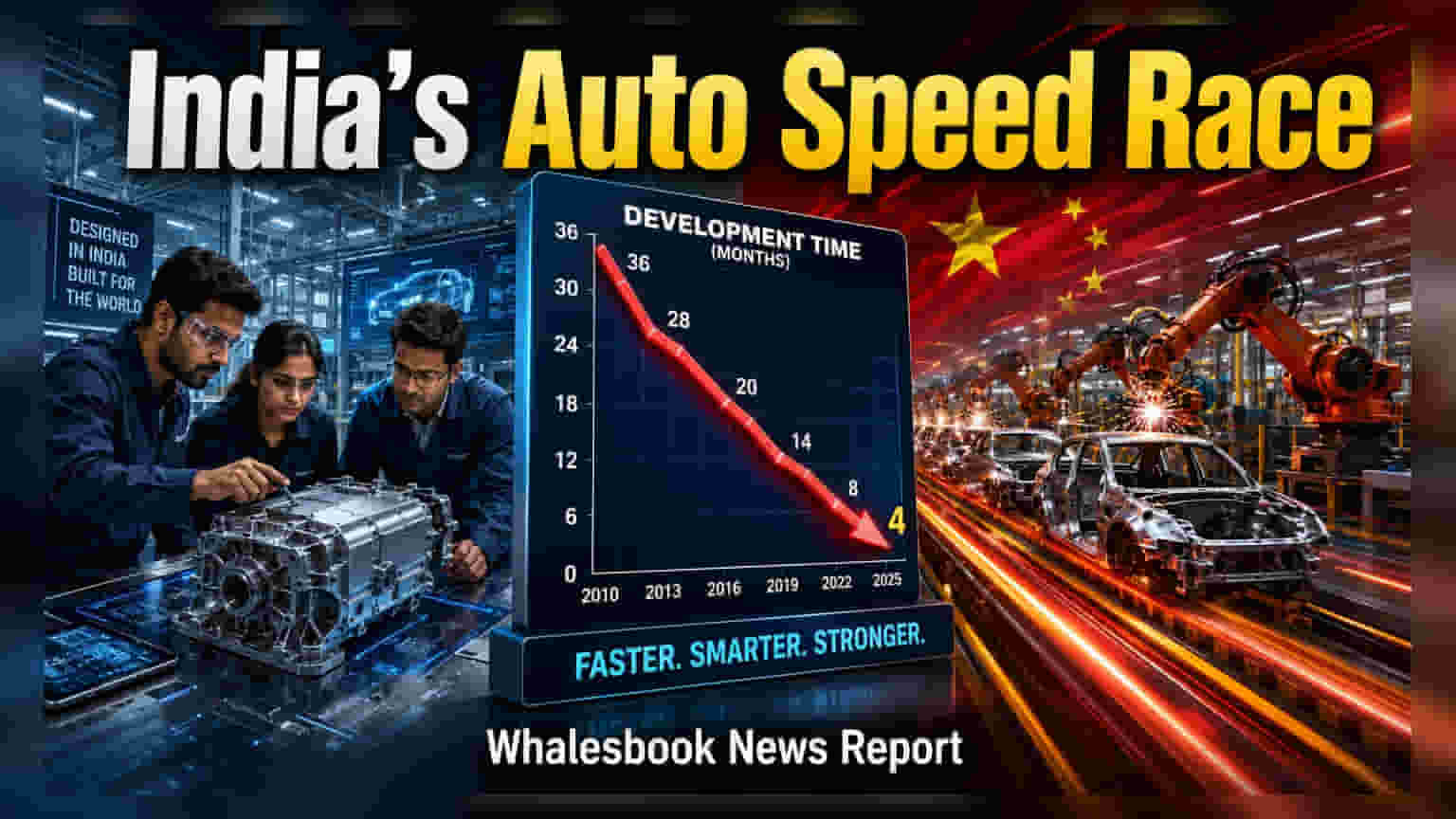
Indian auto component firms like Samvardhana Motherson and Sona Comstar are drastically reducing product development cycles to counter Chinese competition. By adopting advanced simulation tools and AI, these companies aim to match global timelines as automakers demand faster vehicle rollouts. Investors may monitor whether these technology investments maintain profit margins amid intense pricing pressure.
Detailed Coverage
Indian auto component manufacturers are accelerating their research and development processes to keep pace with global automakers' demands for faster vehicle launches. Companies including Samvardhana Motherson, Sona Comstar, and Varroc are shifting their operational focus to reduce product development timelines, which historically spanned 18 to 24 months, to meet the new industry requirement of roughly 11 to 12 months.
This shift is largely a response to competitive pressure from Chinese manufacturers, who have historically set the benchmark for speed through extensive use of AI and automated prototyping. Indian suppliers are now investing heavily in digital capabilities and simulation tools to bridge this efficiency gap. By using simulation, which allows for virtual testing before physical production, companies aim to reduce both the time and the capital spending required for bringing new components to market.
Strategic Investment and Operational Shifts
For companies like Sona Comstar, the need for speed is reflected in recent annual reports, which identify rising competitive intensity as a major factor for future performance. Varroc has demonstrated this shift by delivering a passenger car lighting solution in 11 months, showcasing how streamlined engineering can bypass traditional, slower development phases. Tenneco Clean Air India is similarly focusing on early engagement with original equipment manufacturers (OEMs) to align engineering teams before vehicle specifications are finalized.
While these technological upgrades are designed to protect market share, they require sustained capital spending. Investors should monitor how these investments influence profit margins. While faster development can lead to higher turnover by winning more contracts, the initial cost of digital transformation and AI integration may temporarily weigh on financial performance if demand does not grow as expected.
Challenges in Industry Adaptation
Industry experts note that the change requires more than just faster work; it demands a fundamental redesign of how products are validated. Automakers are shortening their own development programs from 48 months to approximately 33-36 months, which forces component makers to start engineering work earlier. The risk for shareholders lies in potential execution delays or cost overruns associated with adopting these new methodologies. Furthermore, if raw material costs fluctuate or if the broader automotive sector experiences a demand slowdown, the benefits of faster product launches may be offset by weaker sales volumes.
Moving forward, the key monitorable for investors will be whether these companies can translate faster R&D cycles into sustained market share gains without sacrificing their profitability. Tracking quarterly margins and management commentary on capital allocation toward digital tools will be essential to gauge the success of this strategy.