

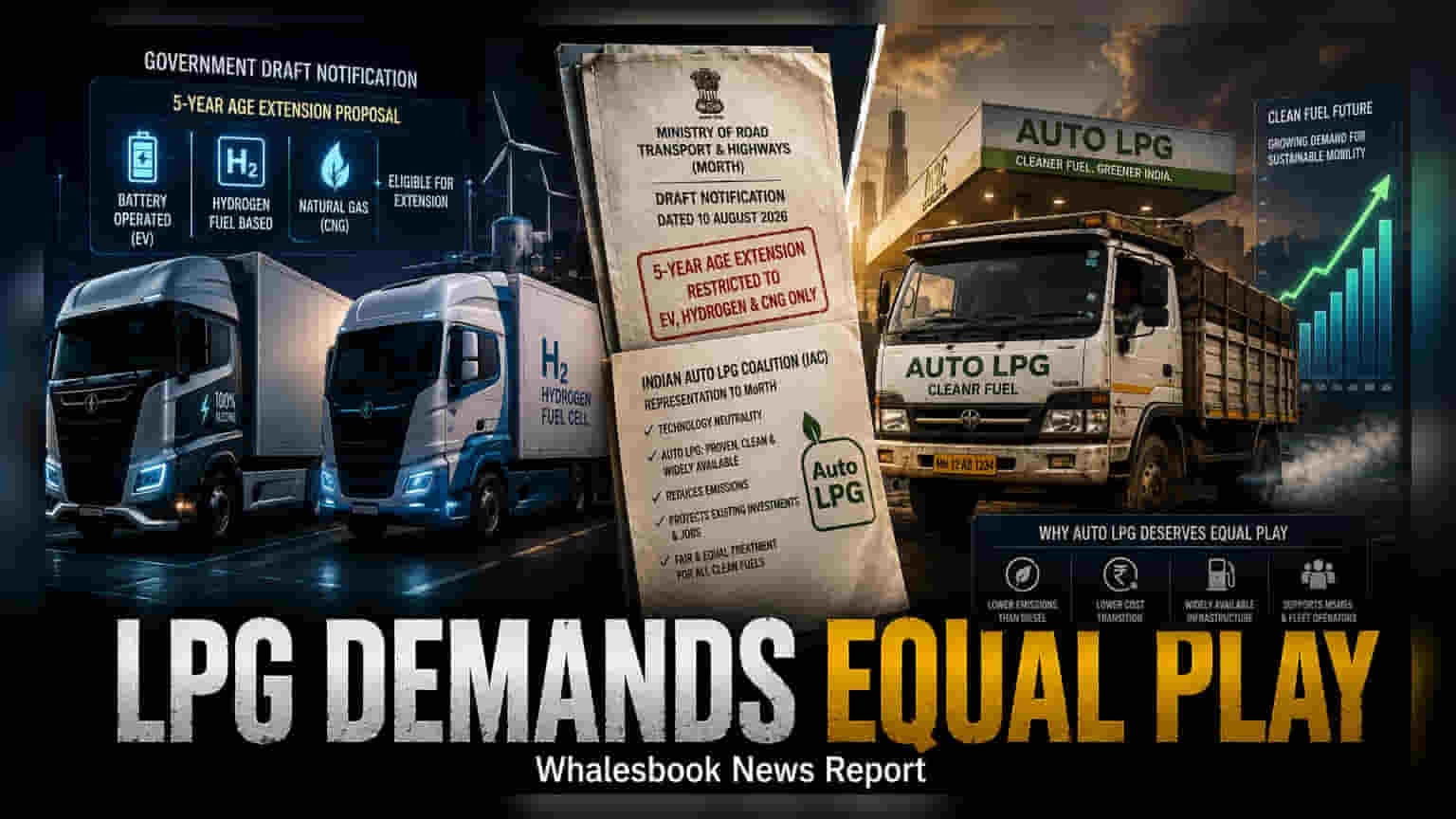
The Indian Auto LPG Coalition (IAC) has requested the Ministry of Road Transport and Highways to include Auto LPG vehicles in a proposed five-year age limit extension. The government's current draft amendment, released in August 2026, specifically targets battery-operated, hydrogen, and natural gas (CNG) vehicles. This demand highlights a push for technology-neutral policy in the cleaner transport sector, which could impact operational costs for fleet owners and influence fuel infrastructure investments.
The Indian Auto LPG Coalition (IAC) has formally approached the Ministry of Road Transport and Highways (MoRTH) to advocate for the inclusion of Auto LPG-powered commercial vehicles in a proposed five-year age extension. This move comes following a draft notification issued by the ministry on August 10, 2026, which outlined plans to extend the operational life of commercial vehicles, but specifically restricted the eligibility to battery-operated, hydrogen fuel-based, and natural gas-driven fleets.
The Argument for Technology Neutrality
The IAC, led by Director General Suyash Gupta, has argued that mobility policy should remain technology-neutral. The coalition contends that Auto LPG is a readily available and proven clean fuel that can reduce vehicular emissions without requiring the heavy capital spending needed for new electric or hydrogen-powered vehicle purchases. By allowing older vehicles to continue operating under strict safety and emission compliance standards, the coalition believes fleet owners can manage their existing investments more effectively while supporting broader environmental goals.
Implications for Fleet Operators and Fuel Infrastructure
For transport and logistics fleet operators, the government’s current preference for CNG, electric, and hydrogen alternatives presents a specific regulatory challenge. If the policy remains restricted to these fuels, operators of Auto LPG-powered fleets may face pressure to scrap vehicles sooner than those operating on CNG, potentially increasing capital replacement costs.
From an industry perspective, this creates a distinct split between the beneficiaries of the current policy and those outside it. Natural gas (CNG) infrastructure is dominated by City Gas Distribution (CGD) companies, which have seen significant expansion over recent years. In contrast, Auto LPG is primarily supplied by Oil Marketing Companies (OMCs) such as Indian Oil, HPCL, and BPCL. Investors often monitor these policy shifts as they dictate the long-term utility of the existing fuel dispensing networks managed by these companies.
Sector Risks and Competitive Pressure
The primary risk for the Auto LPG segment remains the strong policy tailwind behind electric vehicles and CNG, which are currently favored by the government to reduce crude oil import bills and carbon footprints. As the government continues to incentivize the transition to battery and gas-based transport, Auto LPG may face growing competition for market share.
Additionally, the sector is sensitive to global energy price fluctuations. Reliance on imported LPG means that any volatility in global energy markets can impact both the pricing for end-users and the profit margins for marketing companies. Investors tracking this development may look for further clarification from MoRTH regarding whether the final notification will maintain its current focus on CNG and EVs or whether it will broaden the scope to include transitional fuels like Auto LPG, which would mitigate the risk of premature asset stranding for existing fleet owners.