

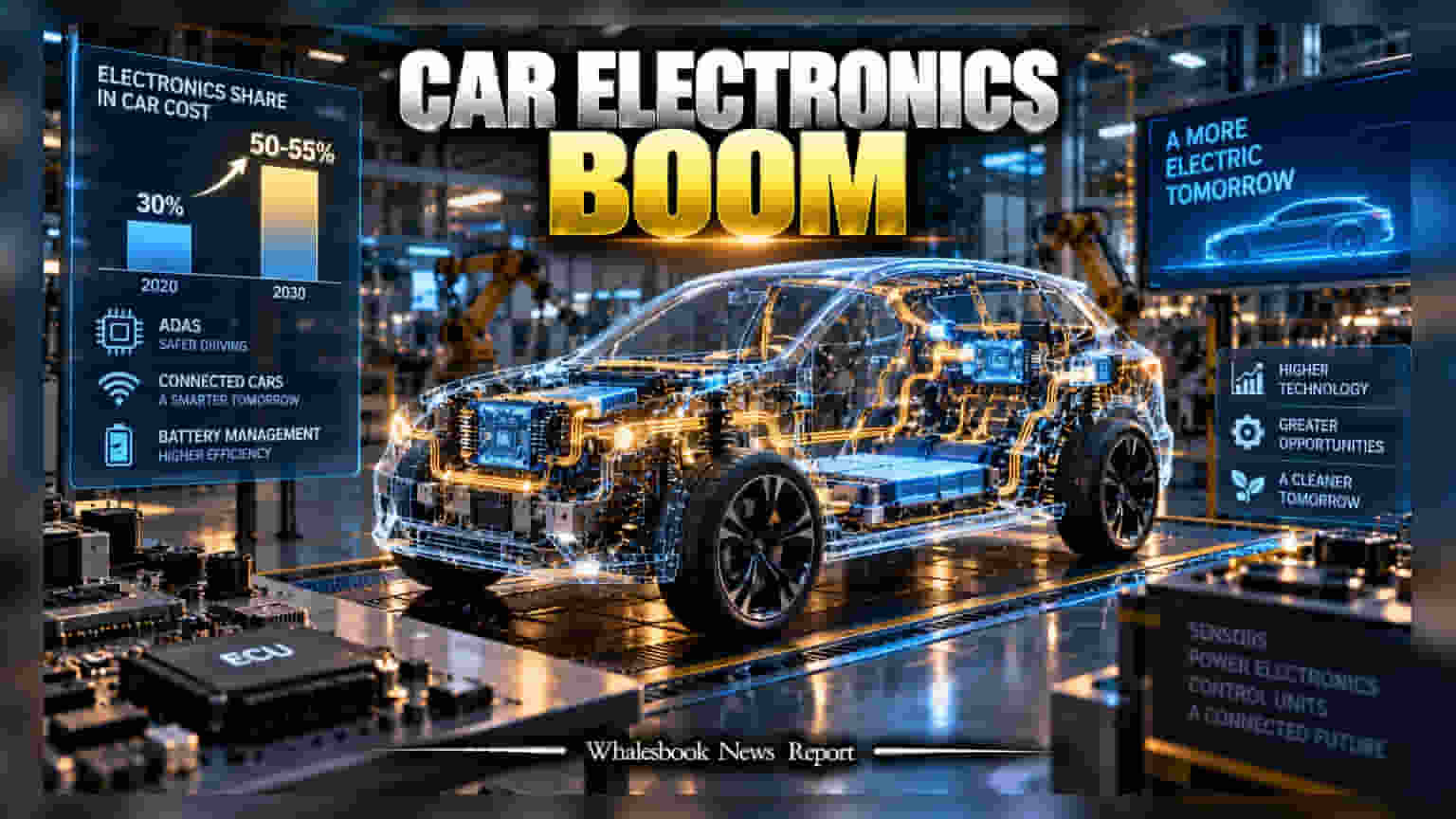
Automotive electronics are projected to comprise over 50% of vehicle production costs by 2030, rising significantly from historical levels. A joint BCG and ACMA report highlights this shift toward advanced systems like driver assistance and sensors. For Indian component manufacturers, this creates a major localization opportunity but also poses execution risks, as firms must shift from mechanical expertise to high-tech R&D to remain competitive in the global supply chain.
The automotive industry is preparing for a structural change where electronics are set to make up more than half of a car's production cost by 2030. According to a recent report by the Boston Consulting Group and the Automotive Component Manufacturers Association, the share of electronics in total vehicle costs is projected to reach 50-55%, compared to roughly 30% in 2020. This transformation is driven by rising consumer demand for connected features, advanced driver assistance systems, and efficient battery management in both traditional and electric vehicles.
For Indian auto component suppliers, this shift represents a significant move away from traditional mechanical engineering. Currently, the electronics segment accounts for only about 12% of India’s domestic component supply, creating a gap that firms are now aiming to fill. The industry has set ambitious targets, aiming for an overall valuation of $200 billion by 2030. Capturing this market requires more than just scaling up production; it demands a fundamental change in business models.
However, this transition is not without its challenges. The most critical hurdle for manufacturers is the capability gap. Moving from making metal and mechanical parts to producing complex sensors, electronic control units, and power electronics requires heavy investment in research and development. Companies that fail to update their technology and engineering capabilities risk losing market share to more agile global competitors who are already embedded in the electronic supply chain.
Investors should also be aware of the operational pressures currently facing the sector. The auto component industry has recently seen operating margins come under pressure due to volatile input costs, such as steel and aluminum, and rising freight expenses. Furthermore, manufacturers are forced to hold higher buffer stocks, often increasing inventory by several weeks, to protect against global supply chain disruptions. These factors tie up cash and can weigh on financial performance in the short term.
While the long-term potential for localization is high, the success of individual companies will depend on their ability to execute this high-tech transition without stretching their balance sheets too thin. The key monitorables for shareholders moving forward will include the pace of R&D spending, the ability to secure new orders for electronic components, and the management's success in protecting profit margins while navigating the shift toward a software-defined automotive future.