

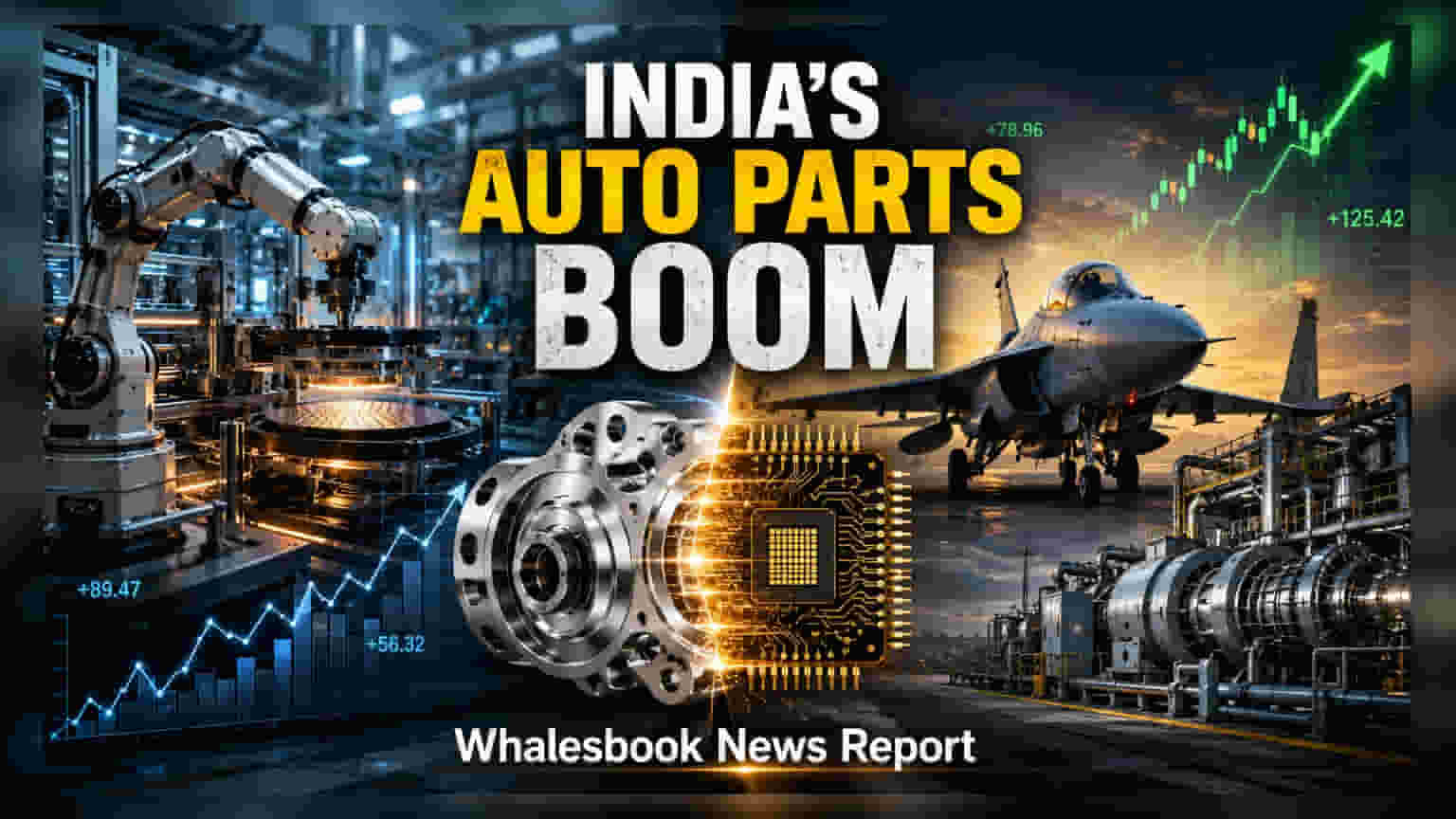
India's auto component industry is projected to reach $124.4 billion in revenue by FY30, growing at a 10% annual rate. Manufacturers are diversifying into aerospace, defense, and semiconductor equipment to reduce reliance on traditional vehicle parts. Investors may monitor how this strategic shift impacts long-term profit margins and competitive standing against global peers.
The Indian auto component sector is entering a phase of structural transformation, with industry revenue expected to climb from approximately $85.6 billion in FY26 to $124.4 billion by fiscal year 2030. This growth, supported by a 10% compound annual growth rate, is driven by a move beyond traditional automotive manufacturing. Companies are increasingly applying their precision-machining expertise to enter specialized segments such as semiconductor fabrication equipment, aerospace, defense, and data center infrastructure.
Strategic Diversification and Margin Outlook
A primary factor behind this shift is the need to move away from the cyclical nature of the traditional auto market. By expanding into non-automotive sectors, manufacturers aim to diversify their revenue streams. Projections suggest that EBITDA, a measure of core operating profitability, could outpace revenue growth with a 15% annual increase through FY30. This expected margin expansion is tied to the ability of these firms to provide higher-value components that command better pricing than standard automotive parts.
Global Supply Chain Shifts and Competitiveness
Global original equipment manufacturers are actively de-risking their supply chains, which provides a significant window for Indian manufacturers. While Indian companies remain roughly 30% more expensive than Chinese suppliers, they maintain a cost advantage over producers in Japan, Korea, the US, and Europe. This competitiveness is supported by India’s lower labor costs, ongoing infrastructure development, and various production-linked incentive schemes. However, the industry still faces a disadvantage in research and development spending, which remains lower than that of international peers. Additionally, companies often struggle with limited bargaining power unless they own proprietary technology, a factor that remains a hurdle for many mid-sized players.
Key Areas for Investor Monitoring
The long-term success of this transition depends on several variables. The growth trajectory will be influenced by the pace of domestic vehicle electrification, the potential impact of an Eighth Pay Commission on consumer spending, and the ability to increase the value of components supplied for every vehicle produced. Furthermore, the effectiveness of diversification strategies into complex fields like semiconductor equipment will be a critical measure of management execution. Investors may continue to track how effectively these companies scale their operations in new adjacencies while managing the risks associated with global supply chain dependencies and the persistent pricing pressure from regional competitors.