

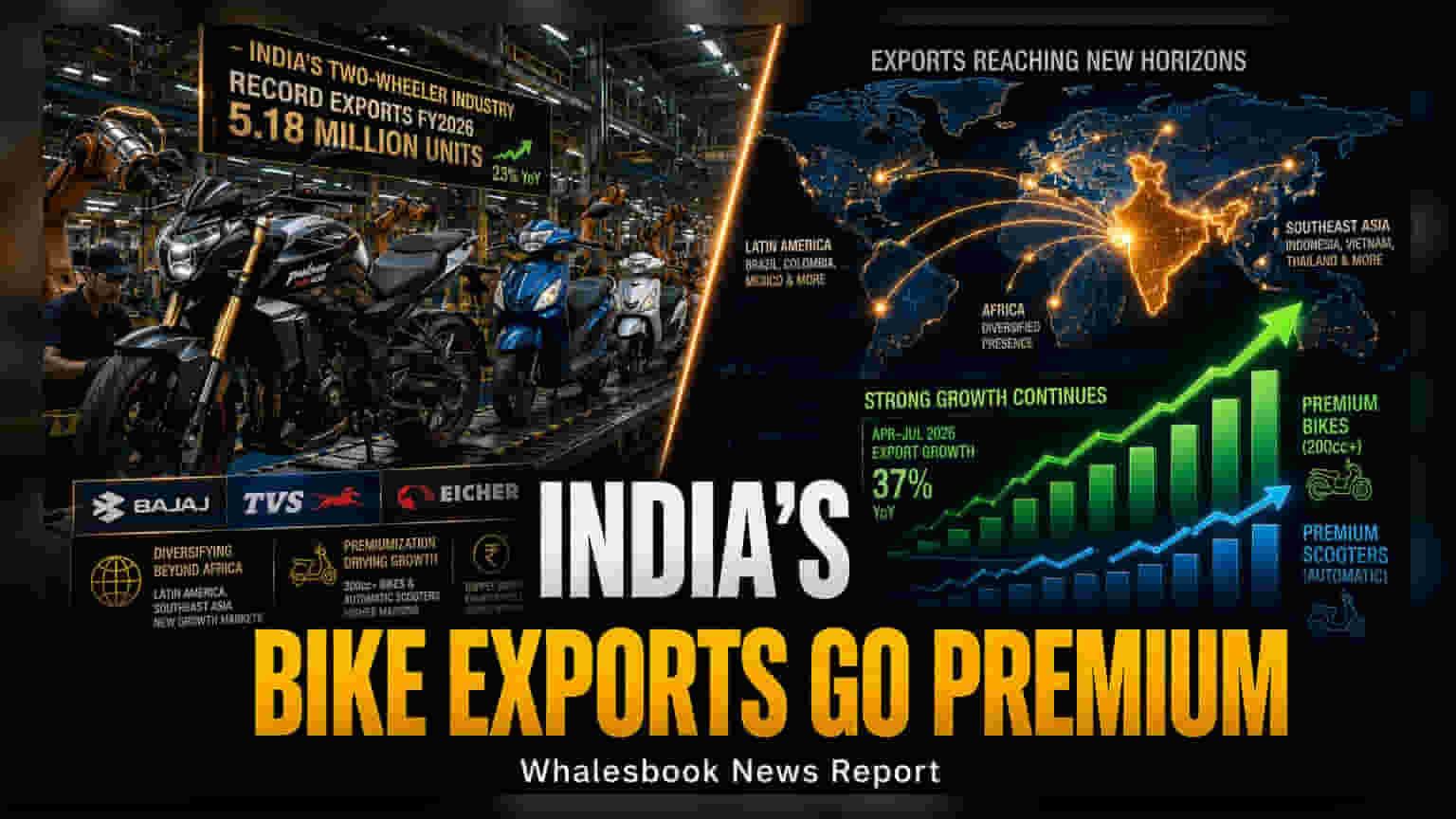
India's two-wheeler exports soared to a record 5.18 million units in FY26, a 23% jump driven by demand for premium motorcycles and scooters. This shift toward higher-value models is helping major players like Bajaj Auto and TVS Motor expand beyond traditional markets into regions like Latin America, supporting better profit margins.
India’s two-wheeler industry has achieved a significant milestone, with exports reaching a record 5.18 million units in the fiscal year 2026, marking a 23% year-on-year increase. This momentum has continued into the current year, with industry data showing a 37% surge in the April to July 2026 period compared to the previous year. A key factor behind this growth is the industry's strategic shift toward premium products, which are helping manufacturers earn higher returns per vehicle.
Traditionally, Indian manufacturers relied heavily on African markets. However, companies like Bajaj Auto, TVS Motor Company, and Eicher Motors are now successfully diversifying their global footprint. New regions such as Latin America—including countries like Brazil, Colombia, and Mexico—and Southeast Asia are becoming major buyers. This geographical spread helps reduce the risk of relying on a single region, which can be vulnerable to local economic downturns or currency issues, as seen in Nigeria in recent years.
The industry is also benefiting from a trend called premiumization. Sales of motorcycles with engines larger than 200cc and automatic scooters are growing faster than standard budget bikes. Because these premium products are sold at higher price points, they contribute to better profit margins for manufacturers. The depreciation of the rupee against the US dollar has also provided a boost to export revenue for these companies.
Despite the positive volume growth, the industry faces specific challenges that investors may watch closely. One major hurdle is the intensifying competition, particularly from Chinese manufacturers who are aggressively targeting the electric two-wheeler segment with lower-cost products. While Indian firms have made strides in internal combustion engine exports, replicating this success in the electric vehicle space remains a difficult task given the cost and supply chain advantages held by international rivals.
Furthermore, the "high base effect" poses a challenge for future growth rates. After recording high double-digit growth for consecutive years, maintaining such a fast pace in FY27 could be difficult. Investors are also monitoring external factors such as rising freight and logistics costs, which can put pressure on profit margins, and macroeconomic issues like high interest rates and inflation that might limit the affordability of two-wheelers in emerging markets.
The next important monitorable for the industry will be the sustainability of this premium-led growth. Shareholders will likely look for updates on how companies manage their operational costs, whether they can sustain their margins amidst rising commodity prices, and how effectively they can fend off international competition in the growing electric vehicle segment.