

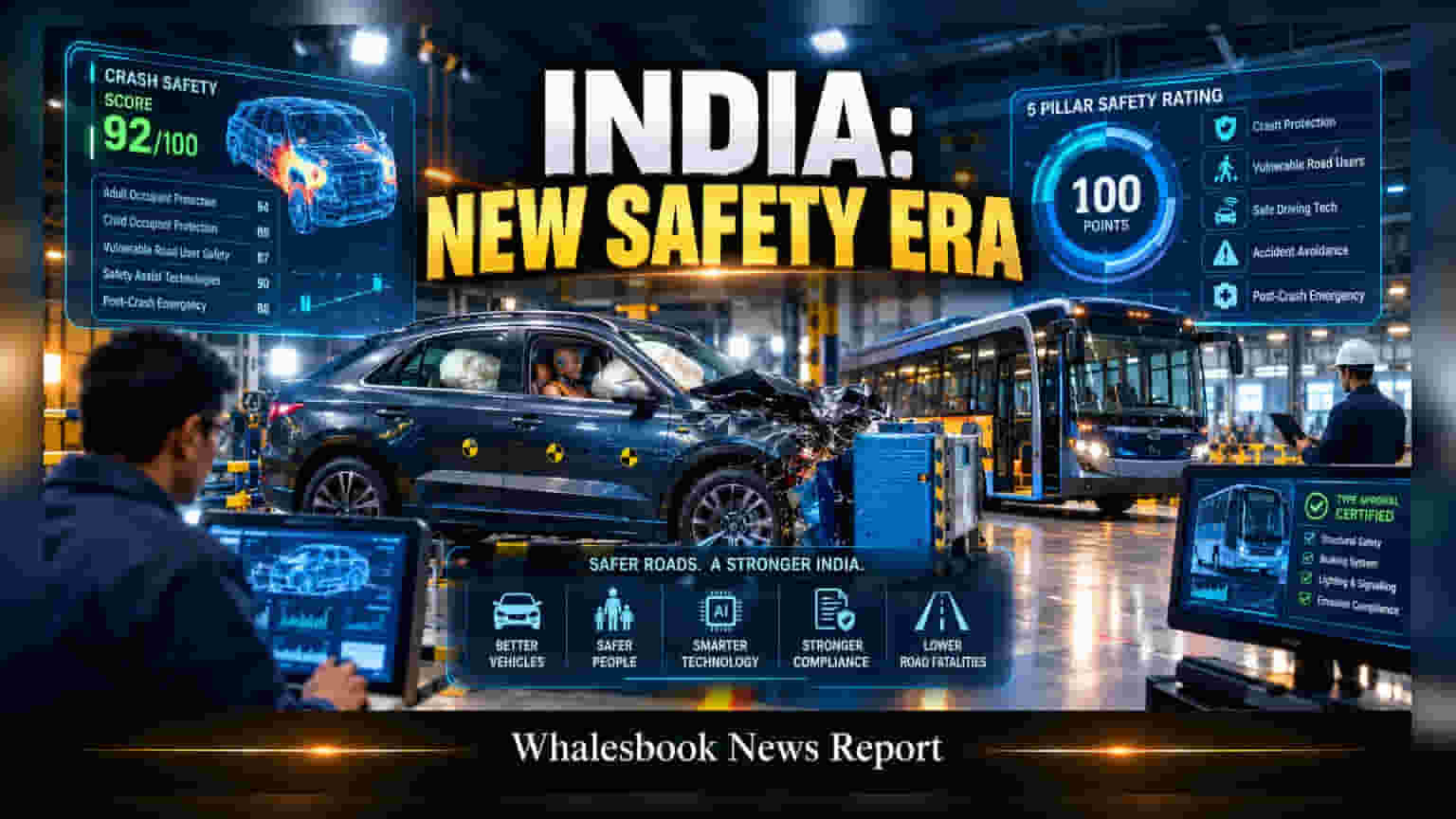
India is upgrading its vehicle safety framework to Bharat NCAP 2.0 starting October 2027. The move shifts focus from basic crash testing to a 100-point, five-pillar system, potentially increasing manufacturing compliance costs for automakers. Investors should watch how manufacturers manage R&D spending and vehicle pricing in the transition.
The Ministry of Road Transport and Highways has announced that the Bharat New Car Assessment Programme (Bharat NCAP) will evolve into a more comprehensive version, known as Bharat NCAP 2.0, effective October 2027. While the current program primarily focuses on crashworthiness, such as adult and child occupant protection, the new framework will introduce a 100-point, five-pillar scoring system. This broader evaluation will include crash protection, vulnerable road user safety, safe driving technologies, accident avoidance systems, and post-crash emergency protocols.
Impact on Automakers and Compliance
For automobile manufacturers, this regulatory shift marks a move toward higher-value safety technology integration. To meet the stricter thresholds for a high safety rating, companies will likely need to increase spending on research and development. This includes localizing Advanced Driver Assistance Systems (ADAS) and other safety features suitable for Indian driving conditions. While this investment is essential for compliance, it could put pressure on profit margins if companies cannot pass the increased manufacturing costs on to consumers in a price-sensitive market. Companies with a higher proportion of budget-segment vehicles may face greater challenges in balancing safety upgrades with competitive pricing.
Cost Efficiency Advantage
Despite the higher technical requirements, the program maintains a significant cost advantage over global alternatives. Domestic testing under the current Bharat NCAP framework costs approximately ₹60 lakh per model, which is substantially lower than the roughly ₹2.5 crore required for similar testing at international facilities. This cost-effectiveness has been a key factor in the program's initial adoption, with over 30 models from 11 manufacturers receiving certification since the 2023 inception. As the framework evolves, this domestic testing ecosystem could remain an important support for manufacturers looking to minimize compliance-related expenses.
Broader Regulatory Changes
Beyond passenger cars, the government is intensifying its focus on wider transport safety. This includes a transition to a graded demerit point system for driving licenses, where traffic violations will directly impact license validity. Furthermore, the transport sector is seeing tighter enforcement on public transit, with mandatory type-approval certifications required for all bus body builders, ending the practice of manual self-certification. These steps are part of a larger push to reduce the high annual count of road fatalities in India.
For investors, the key monitorables will be the pace at which automakers update their product lineups to meet the 2.0 standards and the impact of these changes on vehicle margins. Investors may also track whether the anticipated price increases due to safety compliance affect demand, particularly in the entry-level vehicle segments, and how companies prioritize their capital spending between safety-focused R&D and capacity expansion.