

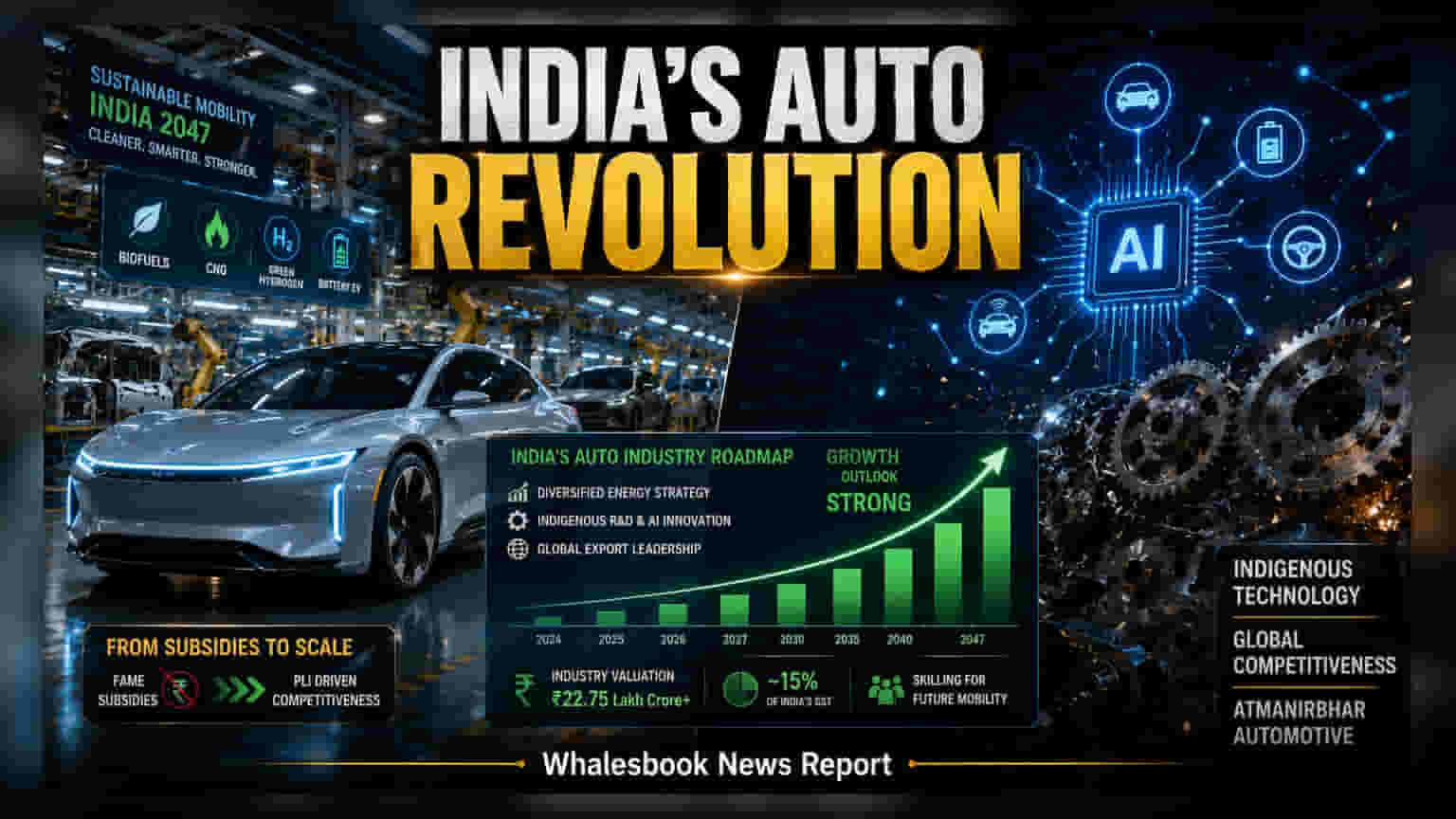
At the 66th SIAM Convention, India’s auto sector outlined a strategic pivot from subsidy-led models to production-linked incentives and indigenous R&D. The roadmap targets global mobility hub status by 2047 by integrating EVs, green hydrogen, and AI. Investors may track how companies manage margins during the phased exit of government subsidies.
The Indian automotive industry has formalised a strategic shift toward a diversified energy future. During the 66th Annual Convention of the Society of Indian Automobile Manufacturers (SIAM) held on September 3, 2026, industry leaders and policymakers outlined a long-term roadmap to establish India as a global sustainable mobility hub by 2047. The strategy moves beyond a singular focus on battery-electric vehicles, embracing a mix of biofuels, CNG, and green hydrogen to ensure energy security and maintain affordability for the mass market.
Transitioning from Subsidy Dependence
A critical highlight of the convention was the government’s signal to transition away from direct subsidy schemes like FAME. Policymakers emphasized that the industry must now rely on production-linked incentive (PLI) models to build scale and global competitiveness. This shift is significant for the sector, which contributes approximately 15% of India’s GST collections and holds a valuation exceeding 22.75 lakh crore rupees. For investors, the withdrawal of subsidies poses a potential headwind for profit margins. Companies that have successfully localised their supply chains and reduced import dependence for critical components are likely to be better positioned to navigate this transition without passing on significant price hikes to the consumer.
Scaling Indigenous Tech and AI
Innovation is becoming central to the industry’s export ambitions. With the government urging manufacturers to move from assembly-based operations to full-scale indigenous research, major domestic players are increasing their focus on digital transformation. Companies like Mahindra & Mahindra are already deploying artificial intelligence across manufacturing and customer service, while simultaneously building large-scale manufacturing complexes. The consensus among industry leaders is that integrating AI into product development and automated driving systems will be essential for India to export advanced mobility solutions effectively.
Risks and Monitorables
While the long-term outlook focuses on scaling and global integration, the sector faces verified risks. Industry executives have warned against aggressive pricing models that could alienate India’s price-sensitive domestic consumer base. Furthermore, there is a widening skills gap as automotive technology shifts rapidly toward software-defined, electric, and AI-integrated vehicles. The high import dependence for critical electronic components and technology remains a structural risk that necessitates faster adoption of local design capabilities. Investors may continue to track project execution timelines for new capacity, R&D spending trends, and whether the industry can successfully balance the costs of new technology with the affordability expectations of the Indian market.