

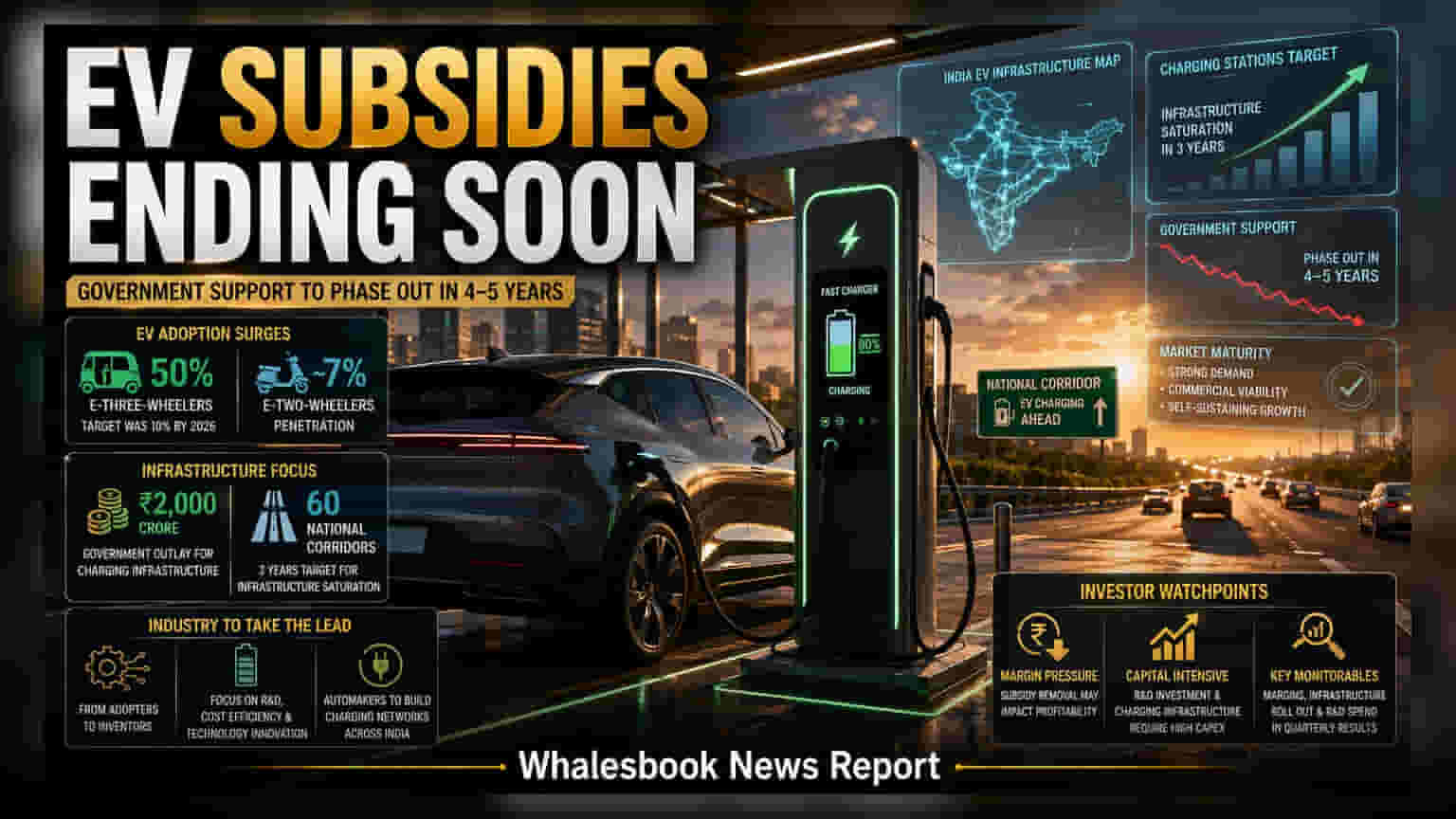
India is set to phase out financial subsidies for electric vehicles within five years, citing strong adoption in segments like three-wheelers. The government is shifting its focus to industry-led charging infrastructure and internal research capabilities. This move forces automakers to prioritize operational efficiency and self-sustaining growth as government support fades.
The era of heavy government reliance for India’s electric vehicle (EV) sector is moving toward a new phase. Heavy Industries Secretary Kamran Rizvi announced that government financial support will be phased out over the next four to five years. This policy change reflects the government's view that key segments of the EV market have reached commercial maturity and no longer require government-backed incentives to survive.
The decision comes after electric three-wheeler adoption reached 50% of the market, far surpassing the original 10% target set for 2026. Two-wheeler EV penetration has also reached approximately 7%. With these segments showing consistent demand, the ministry believes the industry is now strong enough to stand on its own without fiscal hand-holding.
Infrastructure and R&D Shift
While the government has allocated ₹2,000 crore to help build the foundation for charging networks, it is now putting the responsibility on automakers. The government expects the industry to take the lead in developing charging stations across 60 strategic national corridors. Officials have set a timeline of three years for these transit routes to achieve infrastructure saturation. This creates a clear mandate: manufacturers are expected to move from being technology adopters to technology inventors.
Investor Perspective and Risks
The transition from subsidized growth to market-led competition has specific implications for investors. In the short term, companies that have relied heavily on subsidies to maintain their profit margins may face pressure if they cannot achieve cost efficiency on their own. The shift requires manufacturers to increase their capital spending on research and development to create proprietary technology, which could weigh on cash flow.
Another challenge is the requirement for the industry to build its own charging networks. This is a capital-intensive task. Companies that can manage their balance sheets effectively while funding this expansion will likely stand out. Investors should monitor how different players in the auto sector adjust their spending plans. Manufacturers with a strong focus on unit economics and internal R&D capabilities may be better prepared for this transition than those dependent on government incentives.
What to Monitor Next
The most important factor for investors will be how companies manage their profit margins as support is withdrawn. Future quarterly reports will show which manufacturers are successfully lowering costs and which ones are struggling without the subsidy buffer. Furthermore, the pace of private investment in charging infrastructure will be a key indicator of the industry's health. Tracking management commentary on future R&D spending and infrastructure rollout plans will provide insight into which companies are adapting to this new, self-sustaining landscape.