

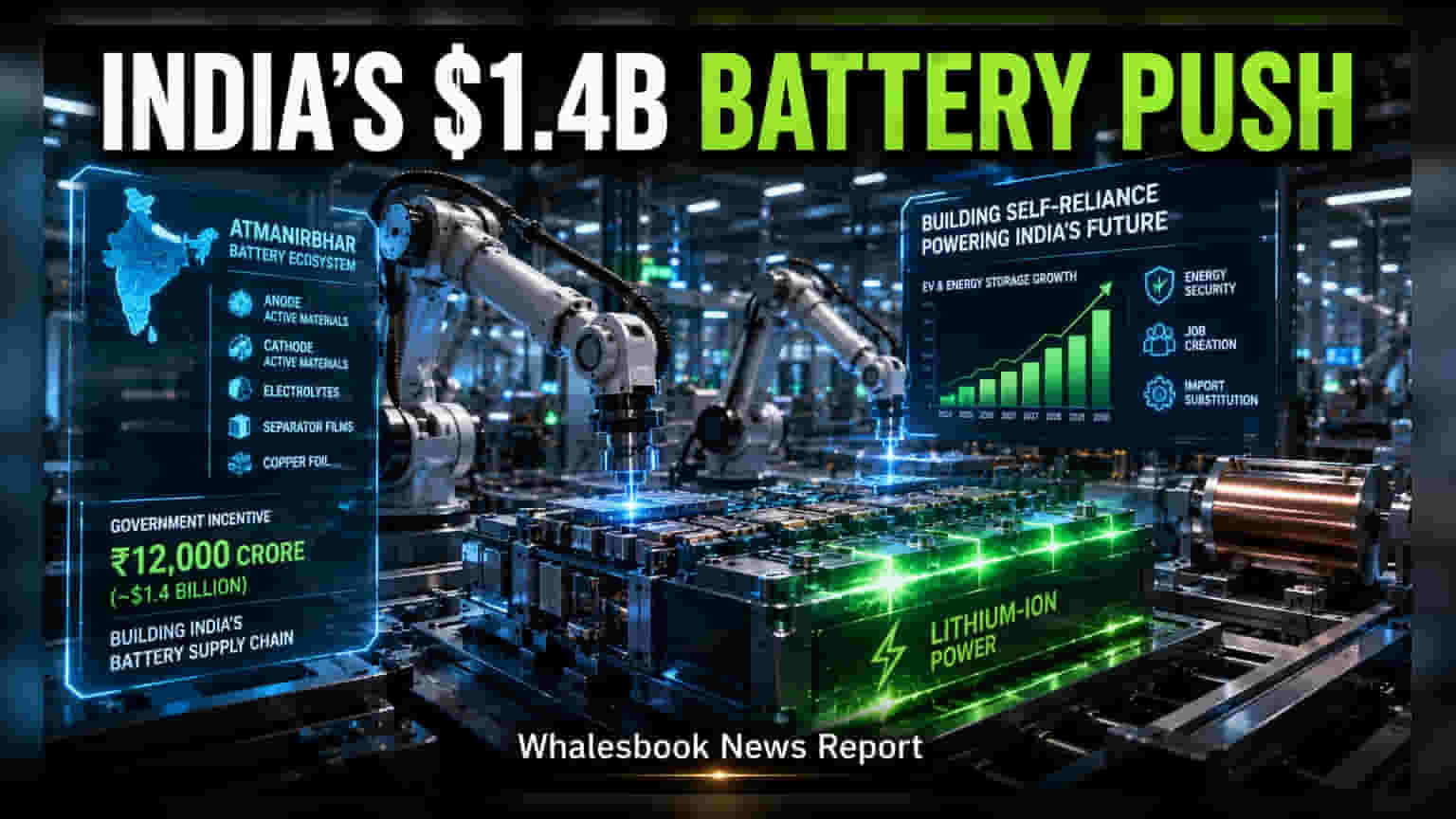
The Indian government is preparing a ₹12,000 crore incentive package to support the local manufacturing of critical battery components like anodes, cathodes, and separators. This initiative aims to reduce dependence on Chinese imports and lower costs for the domestic electric vehicle supply chain. Investors should track how this policy impacts the profit margins and production timelines of major battery players.
The Indian government is moving to strengthen the country's electric vehicle and energy storage ecosystem by finalizing an incentive package worth approximately ₹12,000 crore. The proposal aims to encourage domestic manufacturing of five essential battery components: anode active materials, cathode active materials, electrolytes, separator films, and copper foil. By offering financial support for these high-value inputs, the government hopes to create a self-reliant supply chain that currently relies heavily on imported parts, particularly from China.
For investors, this shift marks an important change in the government's industrial strategy. Previous programs focused largely on simple cell assembly, which often faced delays because manufacturers had to import almost all the expensive raw materials. By subsidizing the deeper manufacturing of these core components, the government is attempting to fix the supply chain bottlenecks that have hampered production schedules for companies like Reliance Industries, Ola Electric, Tata Group (Agratas), Exide Industries, and Amara Raja Energy & Mobility.
While the plan aims to build long-term manufacturing capabilities, the sector faces immediate challenges. Currently, domestically produced battery cells are estimated to be at least 15% more expensive than imported alternatives. This price gap exists because local manufacturers lack a mature ecosystem of specialized suppliers, leading to higher costs. Even with government support, companies will need to balance the costs of setting up complex, capital-intensive facilities against the risk of lower profit margins during the initial phase of operation. There is also the challenge of acquiring advanced technology and specialized machinery, which has caused implementation delays in existing cell manufacturing projects.
Market participants will be monitoring the final policy framework, particularly the criteria for receiving subsidies and the timelines for implementation. For listed companies like Exide Industries and Amara Raja Energy & Mobility, this move is crucial. These companies are heavily investing in cell manufacturing, and their ability to succeed will depend on whether this subsidy can effectively bridge the cost gap with global peers. Investors should look for updates on project commissioning dates, the progress of vendor localization, and management commentary on how these incentives will affect future capital spending and profitability.