 Whalesbook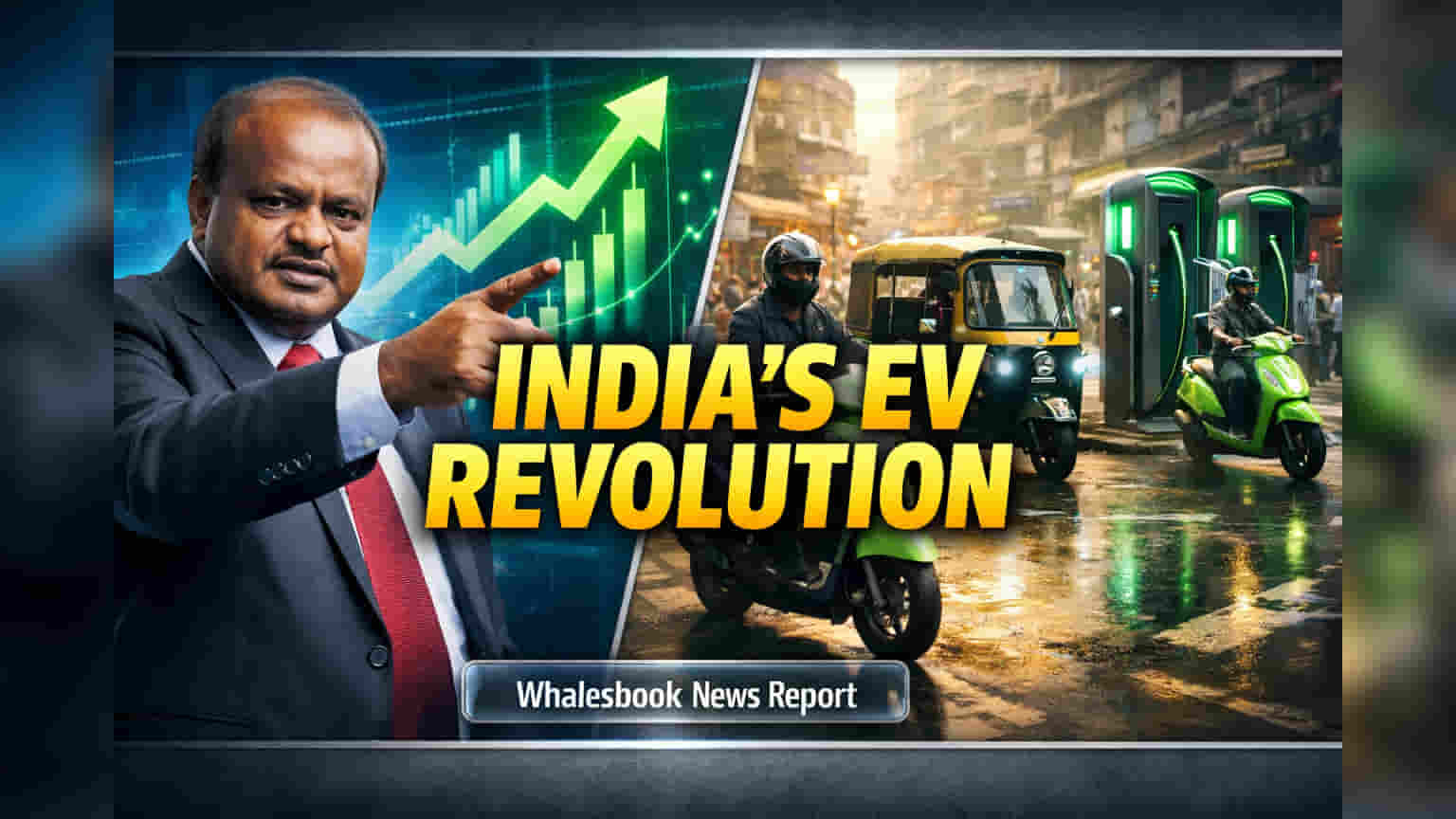
LEAF Initiative Aims to Accelerate India's EV Transition
Union Minister HD Kumaraswamy marked a significant step in India's electric vehicle journey with the launch of the Light Electric-Vehicle Acceleration Forum (LEAF). This industry-led group, involving key players like Hero MotoCorp Ltd, IPEC India, and Ather Energy Ltd, aims to speed up the use of electric two- and three-wheelers. The minister stressed that successful charging infrastructure needs to be reliable, easily accessible, and interoperable, going beyond just expansion. Kumaraswamy highlighted India's potential to lead not only domestically but also to export affordable and scalable EV solutions to markets in Asia, Africa, and Latin America, stating that the transition relies on strong government-industry teamwork. The government pledged continued policy support and manufacturing ecosystem strengthening, recognizing LEAF as a model for collaborative impact across the EV sector.
Bridging the Affordability and Scalability Gap
Despite ambitious policy goals, achieving true affordability and scalability for electric mobility across India's diverse urban and rural markets poses a significant challenge. Rural households spend about 18% of their monthly income on transport, with fuel making up over half of that. Economic viability is therefore crucial. While EV registrations in rural and semi-urban areas are growing 34% year-on-year, faster than in cities, electric car adoption lags in these areas. People still prefer gasoline cars due to limited charging and higher initial prices. Current government subsidies, such as the PM E-DRIVE scheme, offer incentives for electric two-wheelers up to ₹5,000 per vehicle and similar caps for three-wheelers. However, these measures and their fund limits might not close the affordability gap enough for widespread use across all income levels, especially in price-sensitive rural areas.
Competition Heats Up in the EV Market
The Indian light electric vehicle sector is highly competitive. Ola Electric leads with a 19.6% market share in Q1 FY26, followed by TVS Motor at 18.7% as of January 2024, which is expanding its EV range. Ather Energy, a LEAF member, holds about a 9% market share and is valued at $1.3 billion, with IPO plans. India's overall EV market share is about 4%, far behind China's nearly 40%. While the minister envisions global leadership, emerging markets like Vietnam (near 40% EV share) and Thailand (over 20% share) are seeing faster EV adoption, often with affordable models from Chinese manufacturers. India's electric car sales in 2024 represented only 2% of the market, highlighting the need for faster cost cuts and market strategies to compete globally in light EVs.
Infrastructure and Policy Roadblocks Remain
Major structural hurdles remain, slowing the widespread adoption LEAF aims for. Charging infrastructure is a key obstacle, mostly in cities, with insufficient coverage in rural and semi-urban regions needed for wider EV use. India's EV-to-charger ratio of 1:235 is much higher than the global average, requiring a huge build-out to meet future demand. Furthermore, the EV transition still heavily depends on government incentives like the PM E-DRIVE scheme. While extended, the scheme is fund-limited with specific vehicle caps, totaling ₹10,900 crore. Some segments, like registered electric three-wheelers (L5), have already hit their targets and closed. This reliance on evolving subsidy structures and finite funds create uncertainty. Companies also face challenges with battery supply chains and the changing regulatory environment, including potential new road taxes in some states.
Path Forward: Balancing Ambition with Reality
LEAF's creation shows a unified effort to handle the complexities of India's EV transition. The initiative's focus on collaboration and a broad approach to infrastructure is a positive step. However, the path to mass, affordable EV adoption—especially in rural India—needs ongoing policy support, major private investment in affordable local solutions, and extensive development of charging and service networks. Bridging the affordability and infrastructure gaps will be crucial for India to achieve its domestic electrification goals and truly compete for global leadership in the light electric vehicle segment. Success will depend on practical steps that consider the financial realities for most Indian buyers.