

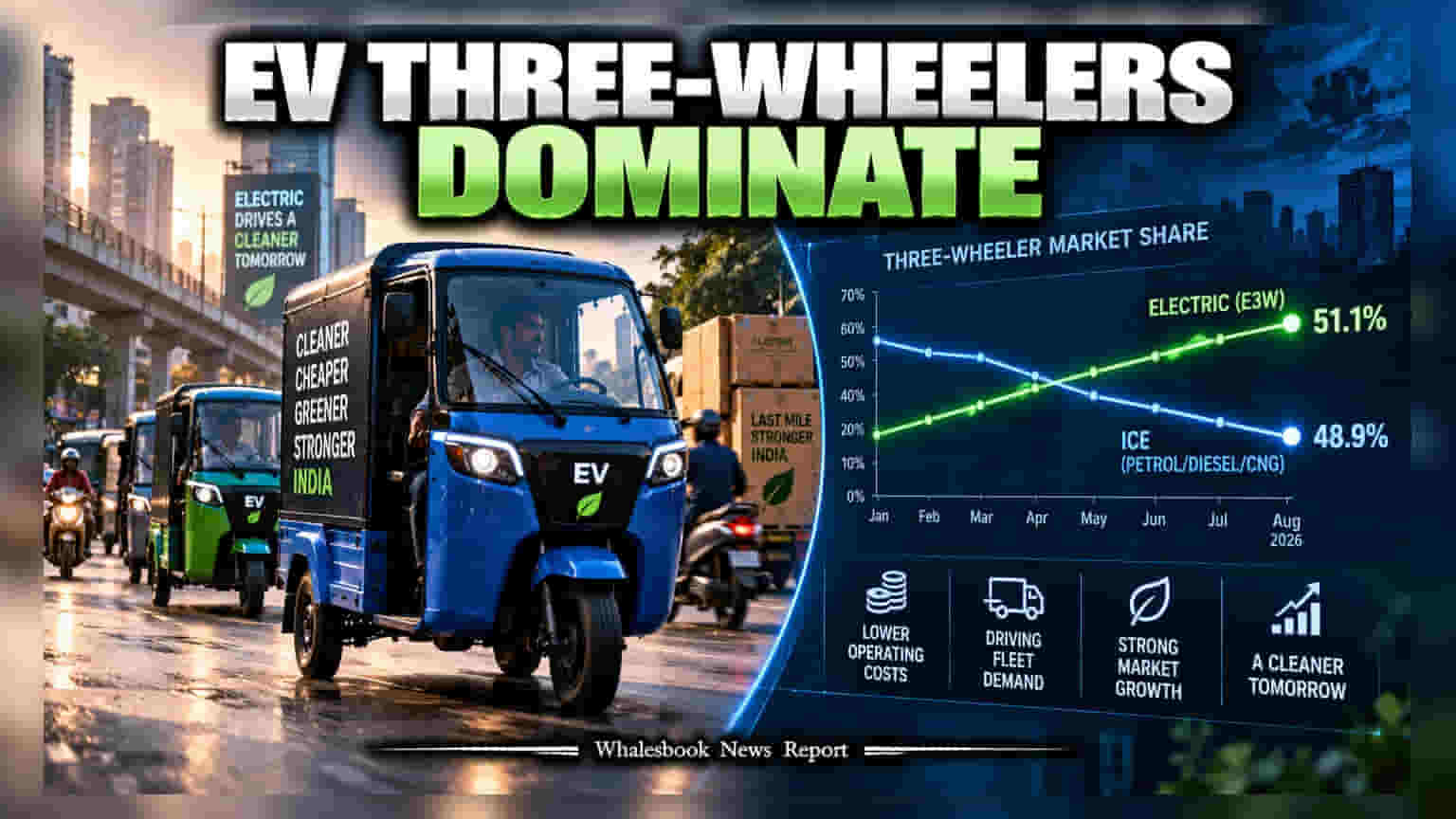
Electric three-wheelers captured 51.1% of India's market in August 2026, marking a shift as electric sales outpaced internal combustion models. Commercial demand for low-cost logistics is driving this trend, even after the removal of government purchase incentives. Investors should track how this growth holds up as manufacturers navigate a broader automotive slowdown.
The Indian three-wheeler market has reached a structural turning point. In August 2026, electric three-wheelers (E3Ws) captured 51.1% of total registrations, officially outpacing traditional internal combustion engine (ICE) models for the first time on a monthly basis. While the broader automotive sector faced a period of cooling, the electric segment showed resilience with 45,600 units registered, compared to 43,700 for petrol, diesel, and CNG variants.
Commercial Demand Drives Shift
The primary engine for this growth is the commercial sector. E-commerce platforms, last-mile delivery fleets, and logistics companies are aggressively shifting to electric powertrains. For these fleet operators, the decision is based on daily economics rather than environmental targets. By switching to electric, businesses can significantly lower their operating costs compared to fuel-based vehicles. This total cost-of-ownership advantage has made electric models the preferred choice for professional use, allowing the segment to grow even when the rest of the auto market faces pressure.
Market Maturity Beyond Subsidies
A notable aspect of this adoption is that it is happening without the crutch of direct government purchase incentives. The central government discontinued direct subsidies for L5 category electric three-wheelers under the PM E-DRIVE scheme in December 2025, as the segment was deemed to have reached maturity. The fact that market share continues to climb suggests that the electric three-wheeler ecosystem—comprising players like Mahindra Last Mile Mobility, Bajaj Auto, TVS Motor Company, and YC Electric—has reached a level of cost efficiency where it can compete directly with legacy fuel engines on its own merits.
Challenges and Monitorables
Despite the strong market share data, the road ahead involves specific risks. The sector is now operating in a more competitive, market-driven environment. As manufacturers scale up production, supply-side constraints and the ability to maintain robust after-sales service networks across smaller towns will be critical. Additionally, because the sector is now highly sensitive to vehicle pricing, any significant increase in input costs could affect demand. Investors may monitor how these companies manage their margins now that they can no longer rely on government purchase subsidies to keep entry prices low for buyers. The industry’s ability to sustain this 50%-plus market share during periods of broader economic slowdown will remain a key indicator of the sector's long-term health.