

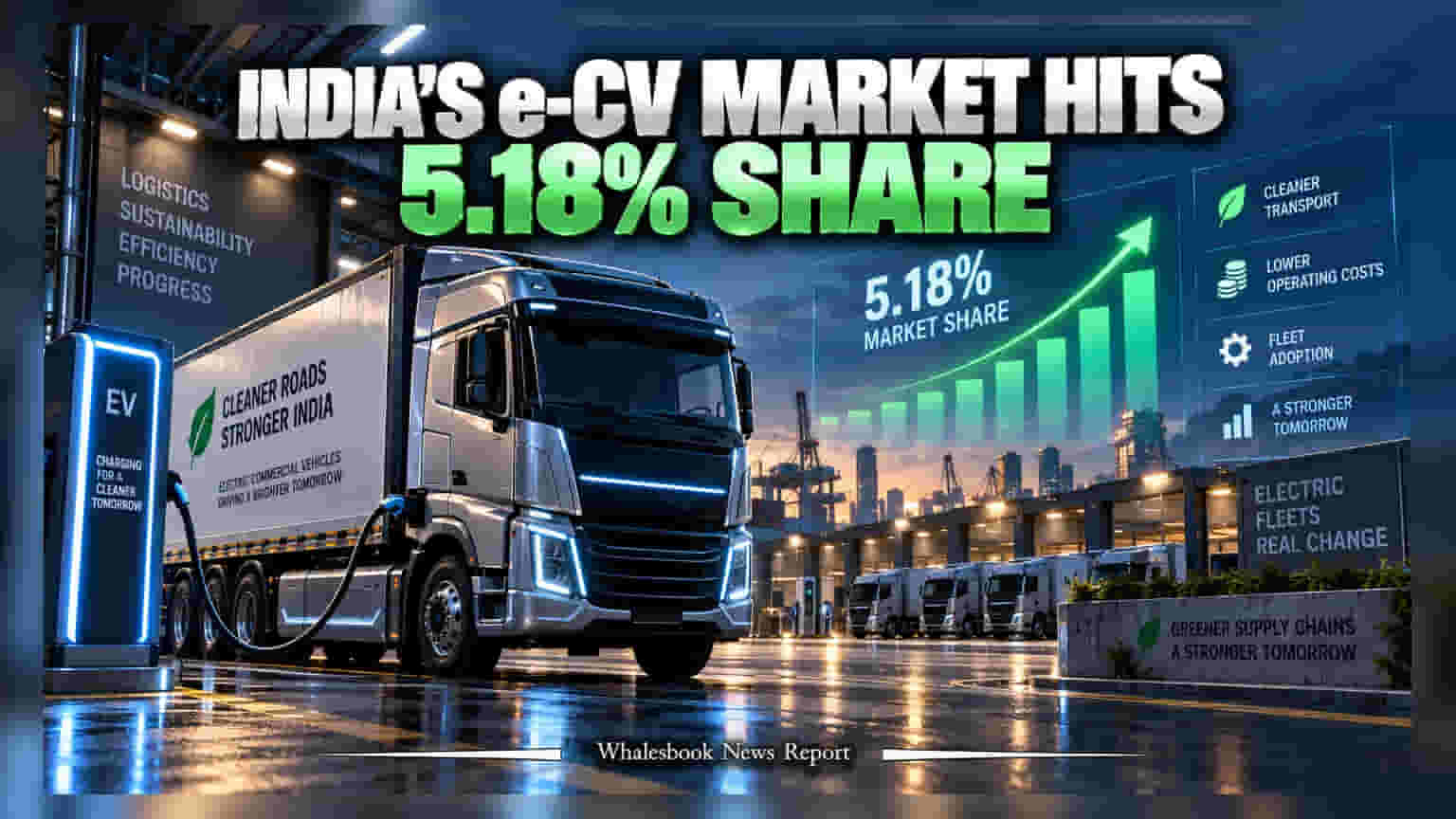
India's electric commercial vehicle market reached a record 5.18% share in August 2026, driven by large-scale fleet procurement. While total commercial vehicle retail sales grew 14.45% year-on-year to 90,769 units, diesel remains the dominant fuel. Investors should monitor how fleet operators manage high upfront costs and infrastructure gaps as the industry moves beyond pilot projects.
India’s electric commercial vehicle (e-CV) segment reached a new milestone in August 2026, capturing 5.18% of the market share. This growth, reported by the Federation of Automobile Dealers Associations (FADA), marks a significant jump compared to previous periods and confirms that fleet operators are increasingly opting for electric models to lower their long-term operating costs. Despite the broader commercial vehicle market seeing a sequential decline of 8.93% from July, total retail sales for the category grew by 14.45% year-on-year to 90,769 units.
From Pilot Projects to Fleet Adoption
For years, the adoption of electric commercial vehicles was primarily restricted to small, last-mile delivery vans and occasional government-funded bus fleets. The recent data suggests a structural shift. The growth is now being driven by fleet-level procurement orders rather than small-scale, experimental pilot projects. This move is critical because it indicates that logistics and transport companies are gaining confidence in the commercial viability of electric trucks and buses.
Heavy-duty vehicles, which were previously difficult to electrify due to weight and range requirements, are also seeing early signs of adoption. Electric penetration in heavy goods vehicles rose to 3.6% in August, up from less than 1% in July. While this is a small portion of the total market, it signals that the industry is beginning to address the challenges of hauling heavier loads over longer distances with electric drivetrains.
The Dominance of Diesel and Operational Hurdles
Despite the rapid growth of the electric segment, diesel remains the backbone of Indian freight transport, commanding a 78.77% market share in August. The dominance of diesel highlights the massive scale required to fully transition the commercial vehicle sector. Diesel vehicles benefit from a well-established nationwide network of fuel stations and easier financing options, which electric alternatives currently lack.
Investors must weigh the growth in e-CVs against several structural risks. The primary hurdles remain the high upfront purchase price of electric vehicles and the inconsistent availability of fast-charging infrastructure, especially for heavy-duty trucks. Furthermore, the industry is heavily reliant on government subsidies, such as the PM E-DRIVE program. Long-term sector stability will depend on whether companies can achieve self-sustaining economic viability without constant policy support.
Additional concerns include the need for robust financing models and the issue of vehicle resale value. Unlike traditional diesel trucks, where the second-hand market is mature, electric commercial vehicles face uncertainty regarding long-term battery health and residual value. The next phase for the industry will depend on the pace of charging infrastructure rollout and the ability of manufacturers to bring down costs through localizing battery and component supply chains.