 Whalesbook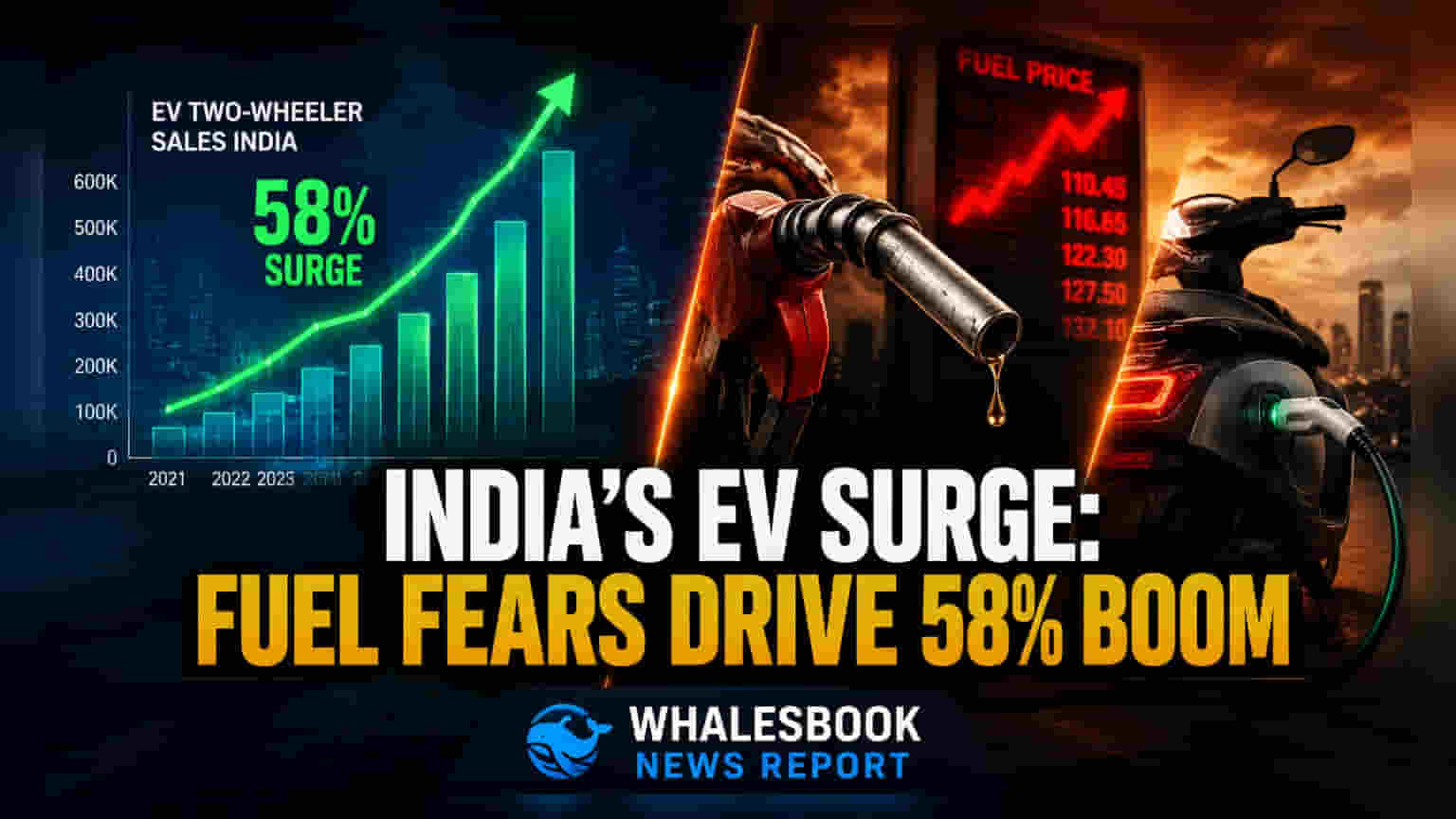


The Fuel-Driven Catalyst
The recent 42% year-on-year surge in electric two-wheeler (E2W) registrations is less a testament to organic product revolution and more a direct reaction to energy-market volatility. As geopolitical tensions in West Asia disrupted global crude supply chains, domestic retail prices for petrol and diesel jumped by at least ₹3 per litre in mid-May, while CNG prices rose by ₹2 per kg. This immediate inflationary pressure on the gig economy and daily commuters has forcibly shifted the total cost of ownership (TCO) calculus in favor of electric alternatives, providing a tactical windfall for manufacturers capable of scaling production quickly.
The Battle for Market Supremacy
Incumbent manufacturers are currently dominating the sector, effectively utilizing their legacy distribution networks to squeeze out pure-play EV startups. TVS Motor Company continues to lead, maintaining a stable 25% market share, though its growth is increasingly contested. Bajaj Auto has emerged as the most aggressive challenger, utilizing its Chetak platform to systematically close the gap; the company’s ability to maintain manufacturing consistency has made it a favorite among investors seeking exposure to the E2W transition without the volatility associated with younger, cash-burning entities. While Ather Energy holds its position with a 17% market share, it faces ongoing challenges regarding profitability, as indicated by its negative return on equity and persistent quarterly losses.
The Forensic Risk: The Subsidy Cliff
The current growth narrative rests on a fragile foundation: the PM E-Drive subsidy program. Government data indicates that over 2.35 million vehicles have already been subsidized, pushing the program dangerously close to its original target of 2.47 million units. While the scheme was extended through July, its impending exhaustion represents a structural threat. Historical data from 2025 provides a cautionary tale: when government incentives were reduced previously, the sector experienced an immediate, sharp deceleration as the price gap between electric and combustion-engine vehicles became prohibitive for mass-market buyers.
Valuation and Sustainability Concerns
Investors are currently pricing in high growth expectations, which may not be sustainable if public fiscal support is withdrawn. TVS Motor trades at a rich valuation with a P/E ratio approaching 58x, while Bajaj Auto offers a more conservative valuation at roughly 28x. Meanwhile, pure-play entities like Ola Electric continue to struggle with negative earnings, creating a significant valuation divergence within the sector. Unless OEMs can achieve massive manufacturing cost reductions in the coming quarters, the reliance on government intervention suggests that the sector is entering a high-stakes consolidation phase where market share gains may prove expensive and difficult to maintain.