 Whalesbook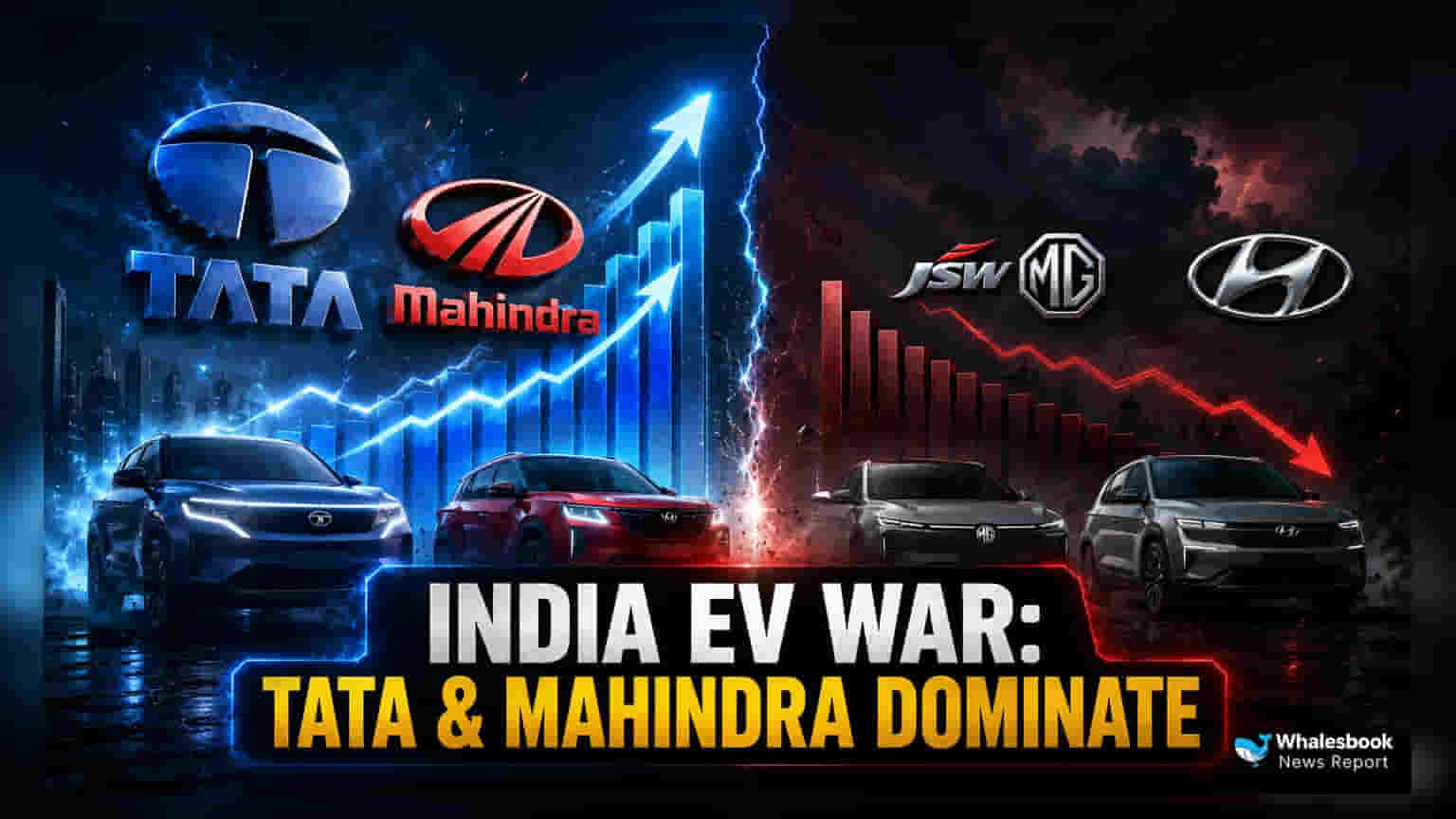


The Competitive Shift in India’s EV Sector
The Indian electric vehicle market is witnessing a fundamental restructuring as monthly sales volumes reach 26,319 units. While the sector has sustained growth for over 17 months, the narrative is no longer solely about the incumbent dominance of Tata Motors and Mahindra & Mahindra. Instead, the market is entering a phase characterized by aggressive diversification and strategic positioning by new entrants aiming to challenge the established duopoly.
The Duopoly Under Pressure
Tata Motors and Mahindra & Mahindra continue to anchor the sector, collectively commanding approximately 62% of the market. Tata Motors maintains its lead through a broad portfolio—including the Punch, Nexon, and Tiago EV models—which has allowed it to scale volumes significantly. Mahindra, meanwhile, is leveraging its momentum in the premium electric SUV space to defend its share. Despite this, the concentration of market power is being tested as the competitive entry cost for new players decreases through localization and local assembly initiatives.
Emerging Threats and Strategic Pivots
Vietnam’s VinFast is increasingly disrupting the landscape by shifting beyond standard retail sales. By launching the 'Green SM' electric taxi service, the company is attempting to bypass traditional dealership bottlenecks and establish a high-visibility fleet presence in Delhi-NCR. This move, supported by an ecosystem-led approach—including charging partnerships with HPCL and various ownership incentives—signals a departure from the traditional sales-only model used by incumbents. Meanwhile, JSW MG Motor, despite being a major participant, is experiencing a stabilization phase following an aggressive period of capacity expansion and product diversification, reflecting a broader trend where legacy EV players must balance high growth with the pressure of emerging, fleet-focused competitors.
The Forensic Bear Case
Investors should remain cautious regarding the long-term margin stability of the entire EV segment. The high upfront cost of electric vehicles remains a significant adoption barrier, often necessitating aggressive incentives and fleet-partner discounts that erode operating margins. Furthermore, the reliance on external battery supply chains leaves manufacturers vulnerable to commodity price volatility and freight tariff hikes. Management teams at major incumbents are also tasked with navigating high debt-to-equity ratios compared to the broader industrial median, raising concerns about capital efficiency in a high-interest-rate environment. Additionally, as competition intensifies, the risk of pricing wars increases, which could force companies to sacrifice profitability to maintain the market share metrics currently favored by the market.
The Path Forward
Market participants are closely watching the expansion plans of both domestic and global OEMs as they prepare for a wave of new product launches through 2027. With the government pushing for 50% EV penetration by 2030, the ability to build a comprehensive, localized ownership ecosystem—covering charging infrastructure, spare parts, and battery lifecycle management—will be the primary differentiator between sustained growth and market share erosion.