 Whalesbook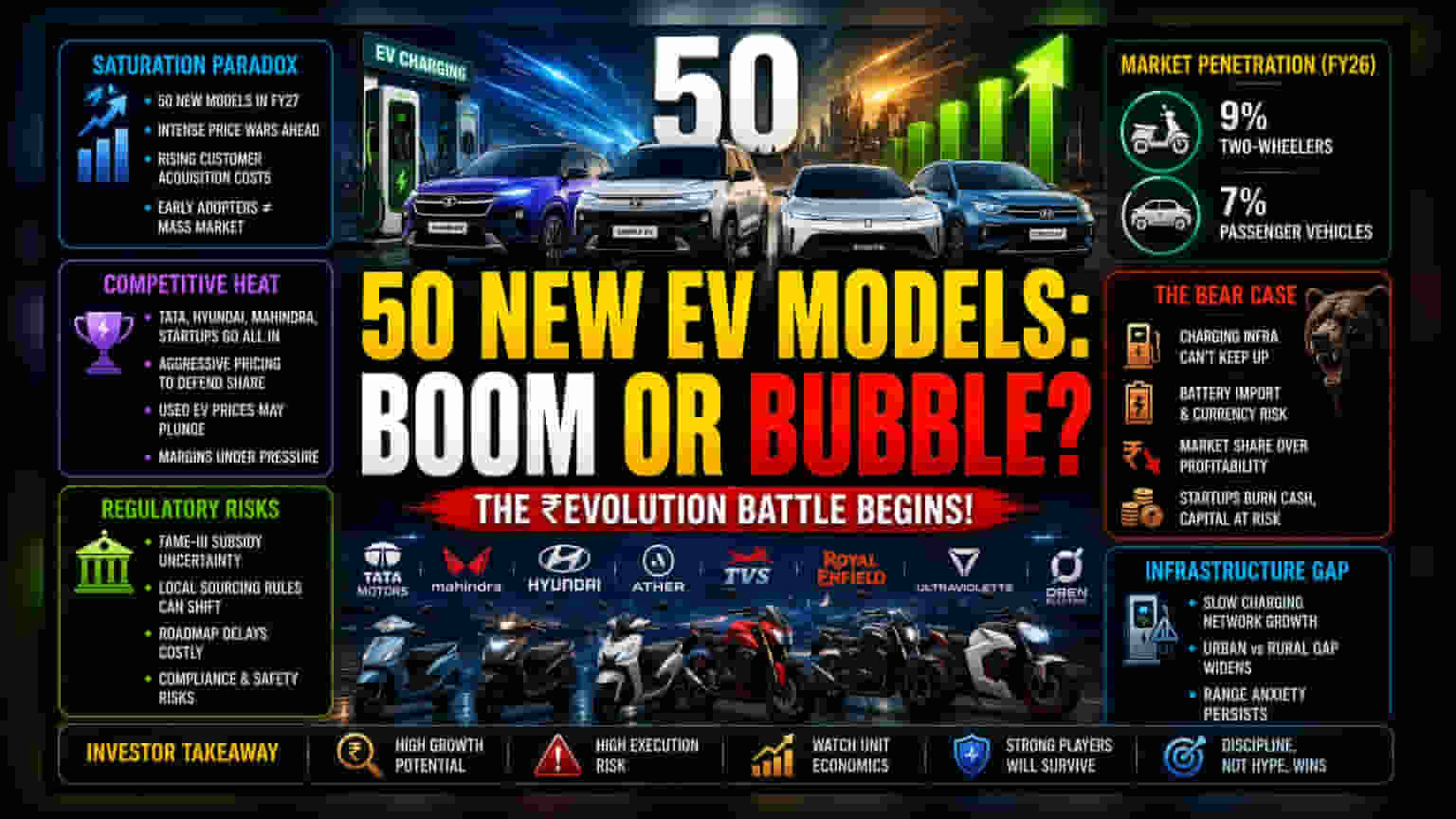


The Saturation Paradox
The impending rollout of 50 new electric models in fiscal year 2027 represents a structural shift from a supply-constrained market to an intensely competitive battlefield. While industry proponents view this velocity as a sign of maturity, the sheer volume of new entrants—ranging from legacy giants like Tata Motors and Hyundai to aggressive startups like Ather Energy—suggests an impending struggle for customer acquisition costs. Market penetration rates of 9% in two-wheelers and 7% in passenger vehicles indicate strong early-adopter interest, but the transition to mass-market adoption will likely require aggressive pricing that could erode profitability for less-capitalized players.
Competitive Benchmarking and Margin Risks
The fiscal year 2027 strategy marks a pivot where the focus shifts from product availability to shelf space dominance. Unlike the relative exclusivity of early-stage EV rollouts, the current pipeline forces direct competition between established internal combustion engine (ICE) players and pure-play electric brands. Tata Motors’ commitment to the Safari EV, Sierra EV, and Avinya platform creates a formidable barrier to entry, yet it also forces incumbents like Mahindra and Hyundai to subsidize aggressive introductory pricing to maintain market share. Historical data from global EV adoption suggests that when model variety spikes this rapidly, secondary market values for older electric trims often plummet, potentially impacting the lease-financing models central to Indian consumer adoption.
The Forensic Bear Case
The bull narrative surrounding India’s EV boom ignores three critical structural vulnerabilities. First, the supply-side rush is occurring against a backdrop of stagnant public charging infrastructure investment, which may lead to a plateau in consumer demand once the initial novelty of new launches fades. Second, the heavy reliance on battery imports makes these manufacturers exceptionally vulnerable to currency fluctuations and geopolitical instability in mineral-rich regions, factors that can turn an optimistic margin forecast into a net-loss quarter within months. Third, management teams across the sector are currently prioritizing market share over unit economics. Investors should look closely at the R&D burn rates of startups like Ultraviolette or Oben Electric; their survival depends on capital raises that may become difficult if public market sentiment cools toward capital-intensive growth stories.
Regulatory and Infrastructure Headwinds
Regulatory uncertainty remains a persistent overhang. Shifts in FAME-III subsidy structures or sudden changes in local sourcing requirements could force manufacturers to pivot their manufacturing roadmaps, causing costly delays. As established players like Royal Enfield and TVS Motor Company introduce updated battery technology, they face the risk of product recalls if the pace of testing is sacrificed for the pace of launch. The divergence between the growth of electric two-wheelers and the slower, more infrastructure-dependent adoption of electric passenger cars will likely create a bifurcated investment environment for the remainder of the fiscal year.