

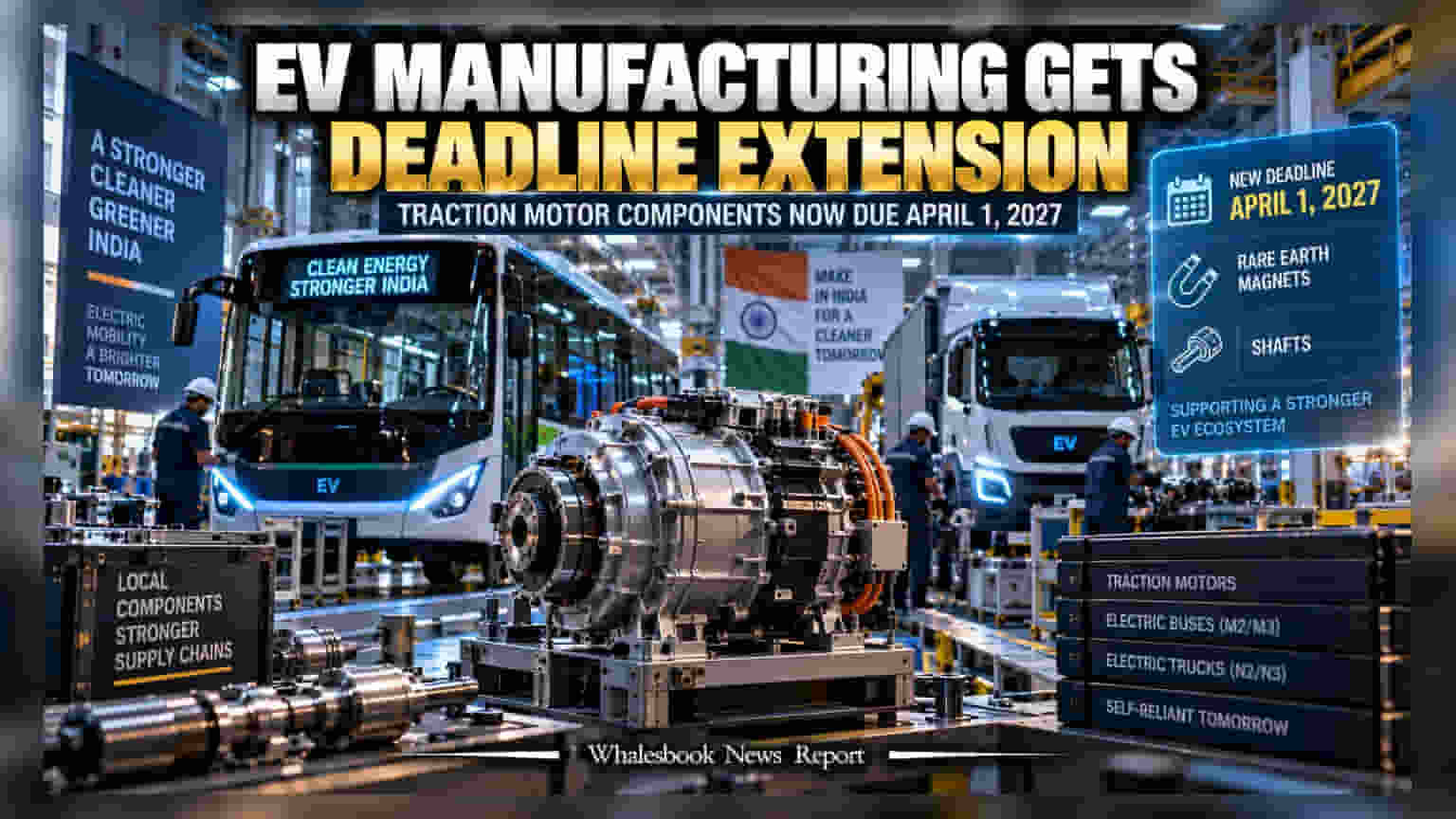
The Ministry of Heavy Industries has pushed the deadline for localizing traction motor magnets and shafts to April 1, 2027, to ease supply chain pressure for electric bus and truck makers. This decision allows manufacturers to continue accessing crucial PM E-DRIVE subsidies despite current import reliance. Investors should note that heavy dependence on imported rare earth materials remains a long-term risk for domestic EV component margins.
The Ministry of Heavy Industries (MHI) has provided a temporary reprieve to the electric vehicle (EV) industry by extending the deadline for mandatory domestic manufacturing of specific traction motor components. Under the updated guidelines for the PM E-DRIVE scheme, the requirement to localize rare earth permanent magnets and shafts for electric buses (M2/M3) and trucks (N2/N3) is now deferred to April 1, 2027.
This move is a direct response to supply chain hurdles faced by domestic manufacturers. While other traction motor components—such as the rotor, stator, bearings, and cables—became subject to mandatory local manufacturing rules on September 1, 2026, the inclusion of magnets and shafts proved technically and commercially challenging to implement immediately. India currently relies heavily on imports to meet its requirements for high-performance sintered Neodymium Iron Boron (NdFeB) magnets, with a significant portion of this supply sourced from China.
Subsidy Link and Financial Impact
For investors, the primary significance of this policy shift lies in the protection of subsidy eligibility. The PM E-DRIVE scheme links government incentives directly to the degree of domestic value addition in vehicles. Had the government maintained the original September 2026 deadline for magnets and shafts, manufacturers unable to source these components locally would have faced the difficult choice of either importing them and losing subsidy benefits—which would hurt vehicle pricing and margins—or halting production altogether.
By pushing the deadline to April 2027, the government has essentially provided a transition period. This allows companies to maintain their subsidy claims while they work on either establishing domestic production capabilities or finding alternative supply partners outside of existing restricted regions. For original equipment manufacturers (OEMs), this reduces the immediate risk of an earnings impact that might have occurred if they were forced to forfeit government incentives on electric bus and truck sales.
The Long-Term Supply Chain Risk
While the deadline extension eases the immediate pressure, the structural risk of dependency on imported raw materials remains a key factor for the EV sector. The production of high-quality rare earth magnets requires specialized technology and access to raw earth oxides, areas where India is still in the early stages of building a self-sufficient ecosystem.
Geopolitical tensions or trade restrictions affecting the import of these components could still disrupt production schedules in the future. As companies move toward the new April 2027 target, the market will monitor how effectively they can build a local vendor base for these critical motor parts. The financial health and margin sustainability of EV manufacturers will depend heavily on their ability to localize these components without incurring significant cost overruns or quality trade-offs as the new deadline approaches.