

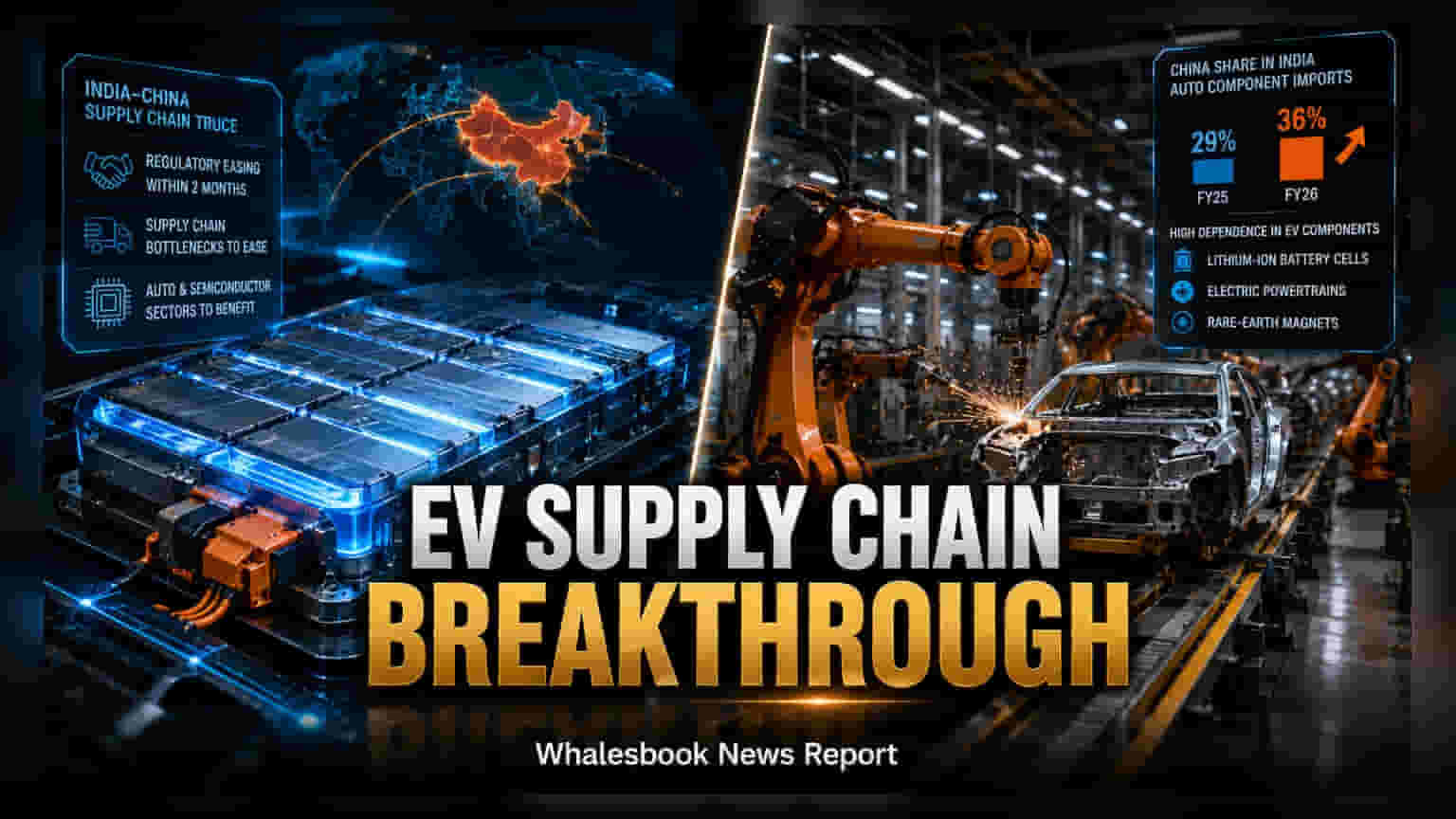
Commerce Minister Piyush Goyal has promised regulatory changes within two months to ease import hurdles for auto component and semiconductor firms. While this signals a pragmatic trade approach, investors should note that India’s reliance on Chinese imports remains high, with specific regulatory clarity becoming a key monitorable for domestic EV production targets.
The Indian government has signaled a more pragmatic approach to trade with China, with Commerce Minister Piyush Goyal announcing on August 24, 2026, that new regulations will be introduced within two months. These updates aim to address long-standing concerns raised by manufacturers in the auto component and semiconductor sectors, who have faced supply chain bottlenecks and visa issues for technical staff.
This move comes amidst a broader diplomatic 'supply-chain truce' following the 36th round of border-affairs talks in early August. While the industry is optimistic about smoother trade, it is important to understand that this is not a blanket removal of import restrictions. The government continues to maintain strict quality control and licensing mandates, and companies are still expected to adhere to Bureau of Indian Standards (BIS) certifications.
Impact on Auto Supply Chains
The reliance on Chinese imports remains a critical factor for the Indian automotive sector. In FY26, China accounted for 36% of India’s auto component imports, a significant increase from 29% in the previous year. This dependence is especially high for advanced technology components required for electric vehicles, such as lithium-ion battery cells, electric powertrains, and rare-earth magnets.
For major automakers, the current environment creates a dual challenge. On one hand, the government is pushing for domestic manufacturing and value addition, particularly in the EV segment. On the other hand, the immediate need for these high-tech components often forces companies to source from Chinese suppliers who currently dominate the global supply chain. The promised regulatory easing could help companies secure these parts more efficiently, potentially reducing delays in vehicle launch timelines caused by import bottlenecks.
Managing Strategic Risks
Investors should be aware that the diplomatic thaw remains cautious and fragile. Recent reports of renewed border friction in Arunachal Pradesh suggest that geopolitical risks persist, which can lead to sudden shifts in trade policy. The government’s intent to ease business does not eliminate the strategic vulnerability of depending on a single country for essential EV parts.
Furthermore, until the specific details of the new regulations are released, the exact benefit to company margins and supply chain stability remains uncertain. The industry is also preparing for the upcoming BRICS summit in September 2026, where a potential investment package may be discussed. For shareholders, the most important update to track will be the formal notification of the new import rules. The market will be watching to see if these changes provide a meaningful boost to domestic manufacturing timelines or if they only serve to smooth out temporary logistics and visa difficulties.