 Whalesbook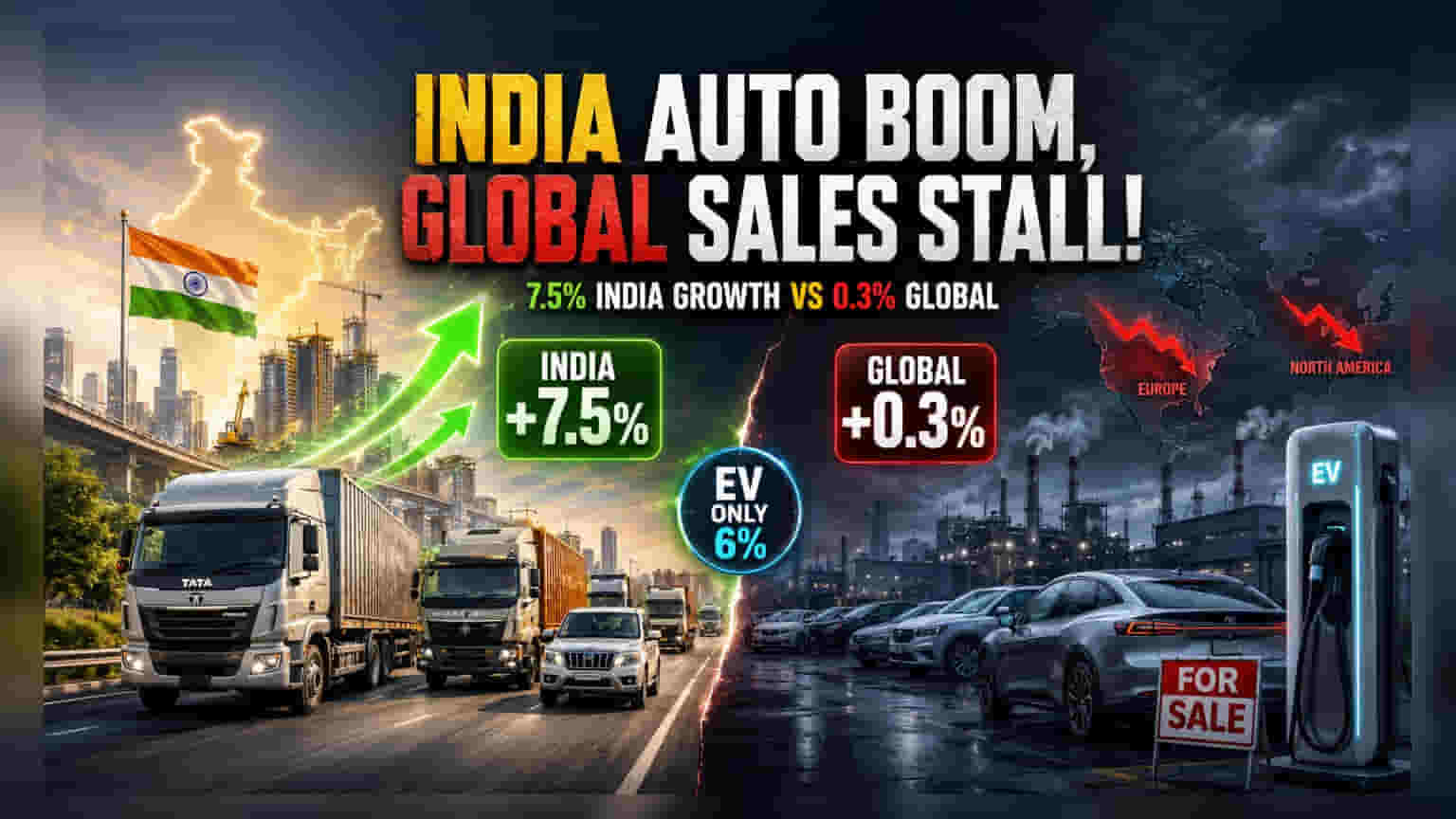


The Divergent Growth Narrative
The global automotive hierarchy is undergoing a profound realignment, with India emerging as the primary engine for new vehicle adoption while established economies transition into a difficult cycle of stagnation. Projections for 2026 indicate a sharp bifurcation: India is positioned for a 7.5% increase in light vehicle sales, supported by structural economic shifts, whereas global growth remains anchored near a tepid 0.3%. This disparity is not merely a regional success story but a reflection of how macroeconomic conditions in mature markets—specifically persistent inflation and the high capital intensity of the electric vehicle (EV) pivot—are eroding traditional volume drivers.
Infrastructure and Commercial Leverage
Unlike the consumer-heavy US market, which is increasingly dependent on high-income demographics purchasing premium SUVs to maintain sales volumes, India’s expansion is anchored in commercial productivity. The domestic truck market is expected to expand by 7% this year, a figure that dwarfs the modest 2.7% global forecast for the commercial sector. This resilience is directly correlated with aggressive infrastructure development and sustained freight demand. By prioritizing heavy-asset industrial growth, the domestic sector has shielded itself from the cooling sentiment currently impacting the household-focused retail markets in the West.
The Structural Bear Case
Despite the bullish optics, the underlying foundation faces significant hurdles that could derail long-term profitability. The failure to gain traction in the electric vehicle segment, where adoption lingers near 6% against a 30% government target, suggests a mismatch between regulatory ambition and consumer reality. Furthermore, the volatility in global energy markets stemming from regional conflicts poses a direct threat to household discretionary spending. If fuel costs remain elevated, the financing conditions that currently drive record-breaking sales—tax rationalization and interest rate relief—may prove insufficient to offset a sudden decline in consumer confidence.
Margin Compression and Competitive Realities
For investors, the contrast between India’s volume growth and the margin compression experienced by European and North American manufacturers is stark. European firms are currently grappling with the dual challenge of high EV-transition costs and aggressive pricing competition from incoming Chinese capacity. While the Indian market currently enjoys a period of expansion, it is not immune to these global structural pressures. As global G-20 GDP growth expectations are revised downward, the long-term sustainability of India’s current growth rate depends heavily on whether domestic manufacturers can reconcile their slow EV transition with the escalating demand for high-efficiency, lower-cost mobility solutions.