 Whalesbook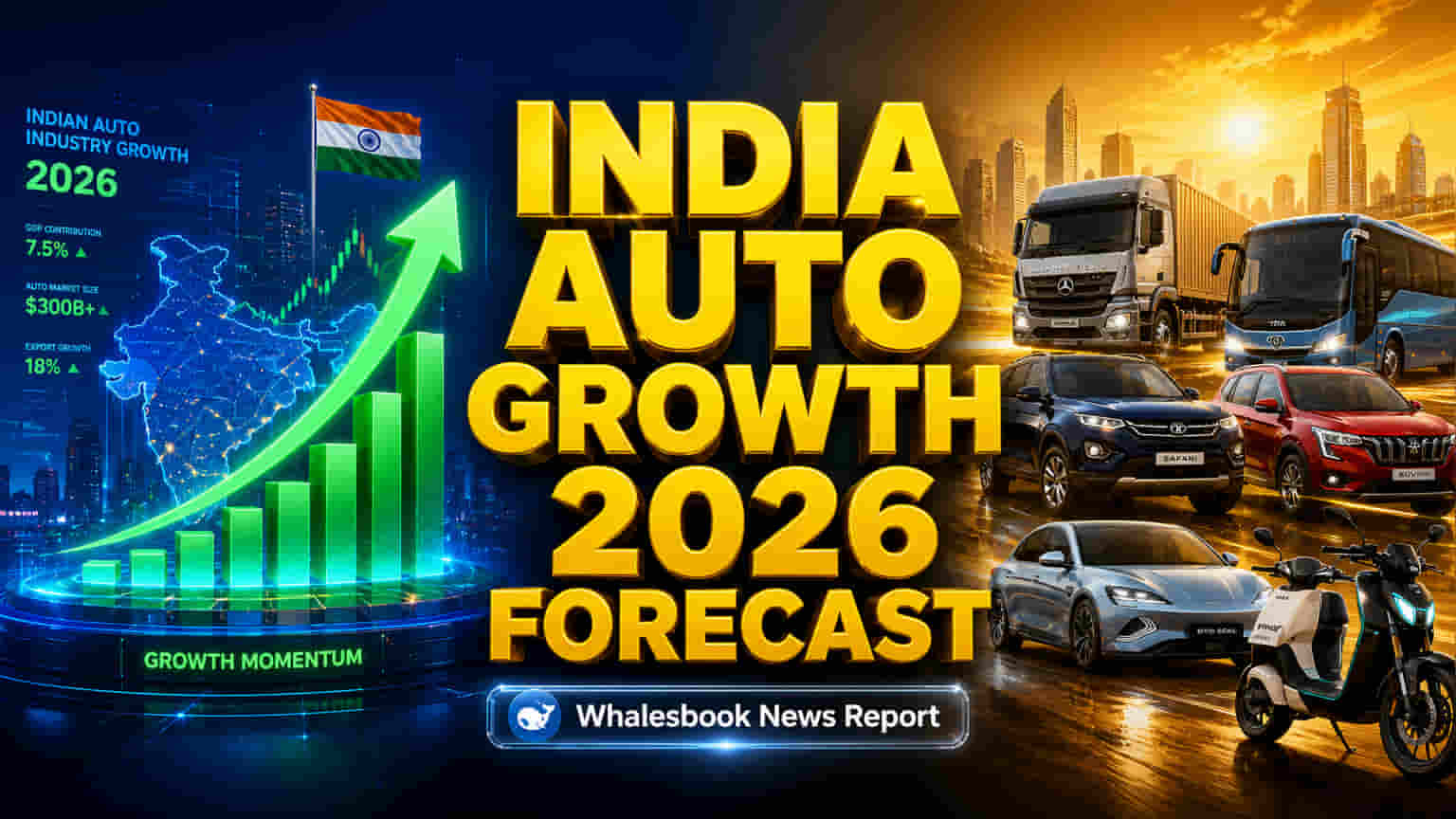


India's auto industry is experiencing strong domestic demand, with growth expected to continue through 2026. Factors like GST adjustments and positive rural sentiment are driving sales. However, global geopolitical issues and rising costs are creating significant risks for exports and profits, especially in the first half of fiscal year 2027.
In April 2026, domestic wholesale volumes showed robust increases. Passenger vehicles rose about 20% year-on-year, with Tata Motors up 31% and Maruti Suzuki up 32%. Commercial vehicles saw a 16% jump, led by Tata Motors' 28% growth. The two-wheeler segment surged 30%, with Hero MotoCorp climbing 85% and Royal Enfield 37%. Electric vehicle adoption also accelerated, with EV passenger vehicles growing 74%.
Despite this broad growth, market valuations vary. As of early May 2026, Maruti Suzuki traded at a trailing twelve-month P/E of about 28.51, Mahindra & Mahindra at 22.78, and Tata Motors at 20.6. These figures compare to the industry average P/E of around 25.33. While growth is reflected in these prices, their sustainability depends on managing new challenges. Within the passenger vehicle market, demand remains strong for SUVs, boosted by new models and EV uptake (around 4% of retails in May 2025). However, the compact car segment faces affordability issues and weaker first-time buyer sentiment, leading to higher inventories and more discounts.
Broader economic factors also play a role. India's GDP is forecast to grow between 6.5% and 7.4% for 2026. Inflation, currently at 3.4% in March 2026, is predicted to reach around 4.7% in 2026, partly due to global energy and food prices linked to the West Asia conflict. This, along with increased freight costs, could squeeze vehicle affordability and manufacturer profit margins. The West Asia conflict poses a direct threat to auto exports, especially to the Middle East, by raising logistics costs and creating shipping uncertainties. While India's exports are diverse, disruptions through key shipping routes could impact major markets like Saudi Arabia and the UAE. Potential trade issues with the US and import duties in Mexico also add to export-related concerns.
Analysts caution that the sector's strong growth momentum, expected to continue for another two to three quarters, faces significant risks. Escalating geopolitical tensions are a primary concern, threatening export volumes and profitability in early fiscal year 2027. Higher freight and insurance costs, coupled with supply chain disruptions and the possibility of force majeure declarations by suppliers, could severely impact margins. Companies heavily reliant on exports to the Middle East, such as Hyundai Motor India and Toyota, might feel these effects most acutely. Rising commodity prices, including for oil and aluminum, add further cost pressures. The automotive industry's reliance on imported materials for EVs, like lithium, also introduces supply chain vulnerabilities that need careful management.