 Whalesbook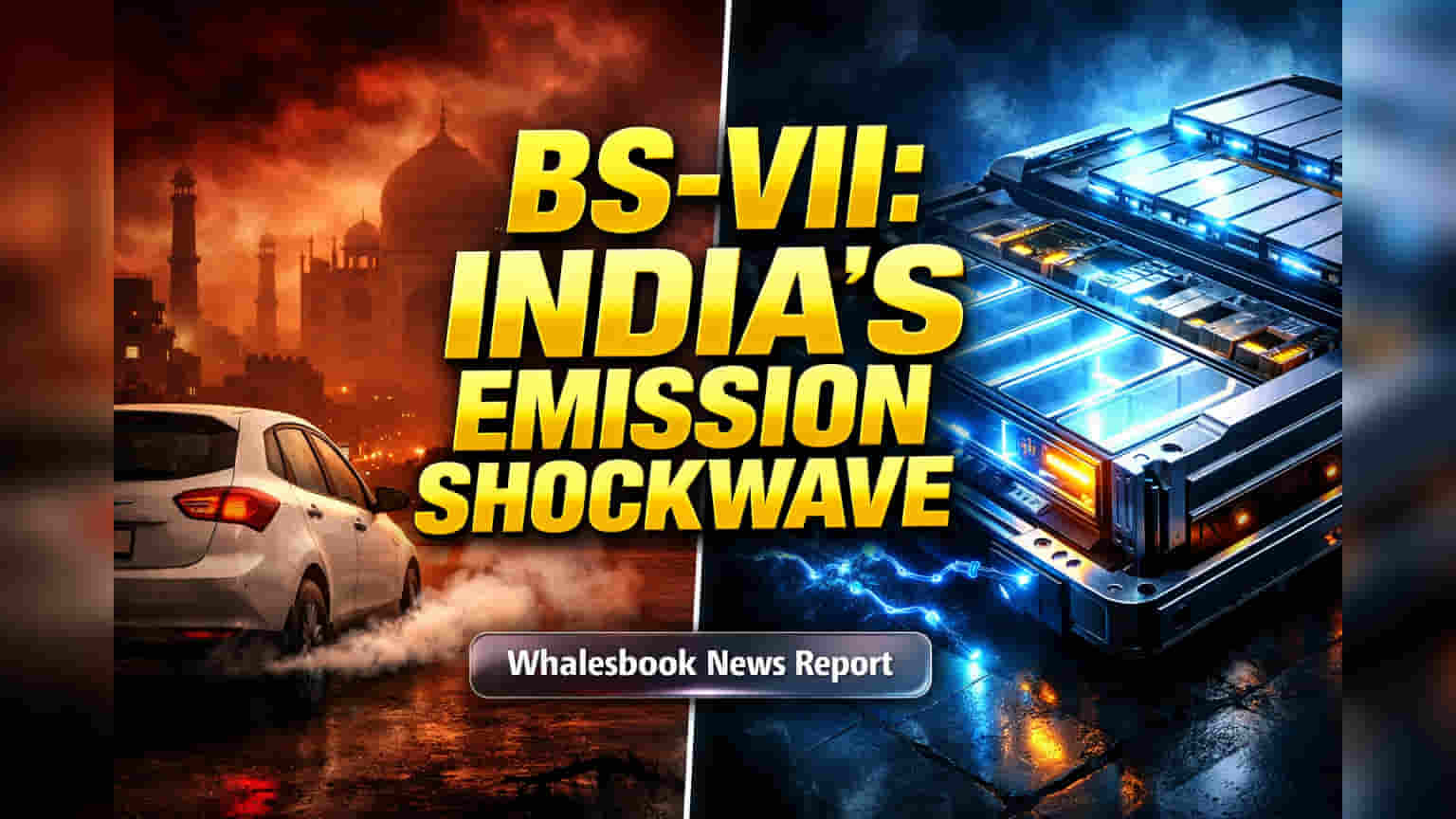


India's Auto Industry Faces New Emission and Fuel Efficiency Rules
India's auto industry is facing a major regulatory shift with new Bharat Stage VII (BS-VII) emission standards and Corporate Average Fuel Efficiency (CAFE)-III regulations set for April 2027. These two rules, along with a focus on EV battery performance, signal a strong push for cleaner transport, similar to global moves like the EU's Euro VII. However, India's specific regulatory structure, especially CAFE-III's linear weight-based CO2 targets, will create significant financial and tech challenges for car makers. This could split the market and affect vehicle prices, particularly for entry-level models.
Details of BS-VII and CAFE-III Regulations
BS-VII rules, similar to Euro VII, will tighten limits on more pollutants, including ammonia to help reduce city smog. A key change is the required On-Board Monitoring (OBM) systems for real-time tailpipe emission tracking, going beyond lab tests. Emissions from brakes and tyre wear will also be regulated. For EVs, the government is considering minimum battery life rules, much like global standards that require specific battery capacity retention over time.
CAFE-III regulations will set tougher fleet-average CO2 limits for passenger cars, aiming for a big reduction. Unlike international rules that often give flexibility for lighter cars, India's proposed linear weight-based formula, which removes exemptions for small cars, will unfairly impact manufacturers focused on budget models. Industry estimates suggest this could raise prices for entry-level vehicles by ₹50,000 to ₹80,000. This strict approach has caused significant debate, with the Society of Indian Automobile Manufacturers (SIAM) stating the proposed cuts are too aggressive and could result in billions in penalties. A clear disagreement has emerged: Maruti Suzuki wants separate, easier rules for cars under 1,000kg, but major companies like Tata Motors, Mahindra & Mahindra, and Hyundai oppose this, fearing unfair competition.
Cost and Technology Challenges for Automakers
For Indian car makers, these strict rules together create a major challenge. Moving to BS-VII and CAFE-III requires significant investment in R&D, engine upgrades, and advanced emission control technology. This cost pressure comes at an important time, as analysts predict slower sector growth for FY2027, forecasting a slowdown to 3-6% after a strong FY2026. This forecast considers comparison to previous strong growth and ongoing supply chain issues.
Major companies have different financial situations. As of April 2026, Maruti Suzuki India Limited had a P/E ratio of about 26.3x and a market value around ₹390,000-₹402,000 crore. Mahindra & Mahindra (M&M) had a P/E between 20.8x and 24.96x with a market value near ₹336,000-₹375,000 crore. Tata Motors showed a varied P/E, with some figures around 1.33x and others near 25.1x, and its PV segment had a market value of about ₹113,000 crore. Ashok Leyland, mainly in commercial vehicles, had a P/E between 24.34x and 31.3x, with a market value around ₹88,600-₹89,800 crore. Large capital spending needed for technology upgrades, estimated at INR 280 billion to INR 320 billion for the auto component sector for FY2027, shows the financial pressure.
Industry Faces Significant Risks
India's auto industry faces many risks. Complying with both BS-VII and strict CAFE-III rules will likely be costly. This could lower profits or force price increases that reduce consumer demand, particularly for budget-conscious buyers. Previous BS-VI implementation shows that such rule changes often lead to higher prices and lower sales volumes in the short term.
Indian manufacturers might struggle to keep up with necessary technology upgrades, especially compared to global competitors with more time or stronger EV systems. CAFE-III's structure, which penalizes lighter vehicles, could make many popular entry-level models too expensive to produce or force major design changes. Also, current supply chain issues, including potential shortages of key parts like AdBlue for commercial trucks, could get worse due to the need for new emission tech and EV batteries. Not meeting these ambitious targets could lead to large fines, threatening smaller companies and risking future investment in this key manufacturing sector. CAFE-III removing exemptions for small cars directly impacts manufacturers that depend on these high-volume sales.
Outlook for India's Auto Sector
Analysts are lowering growth forecasts for India's auto sector, expecting 3-6% growth in FY2027 after a strong FY2026. While EV adoption is driving growth and demand for replacements offers some support, the combined effect of regulation costs, potential price hikes, and ongoing supply chain problems creates a tough outlook. How well the industry handles these complex regulations will be key to its long-term success and profits.