

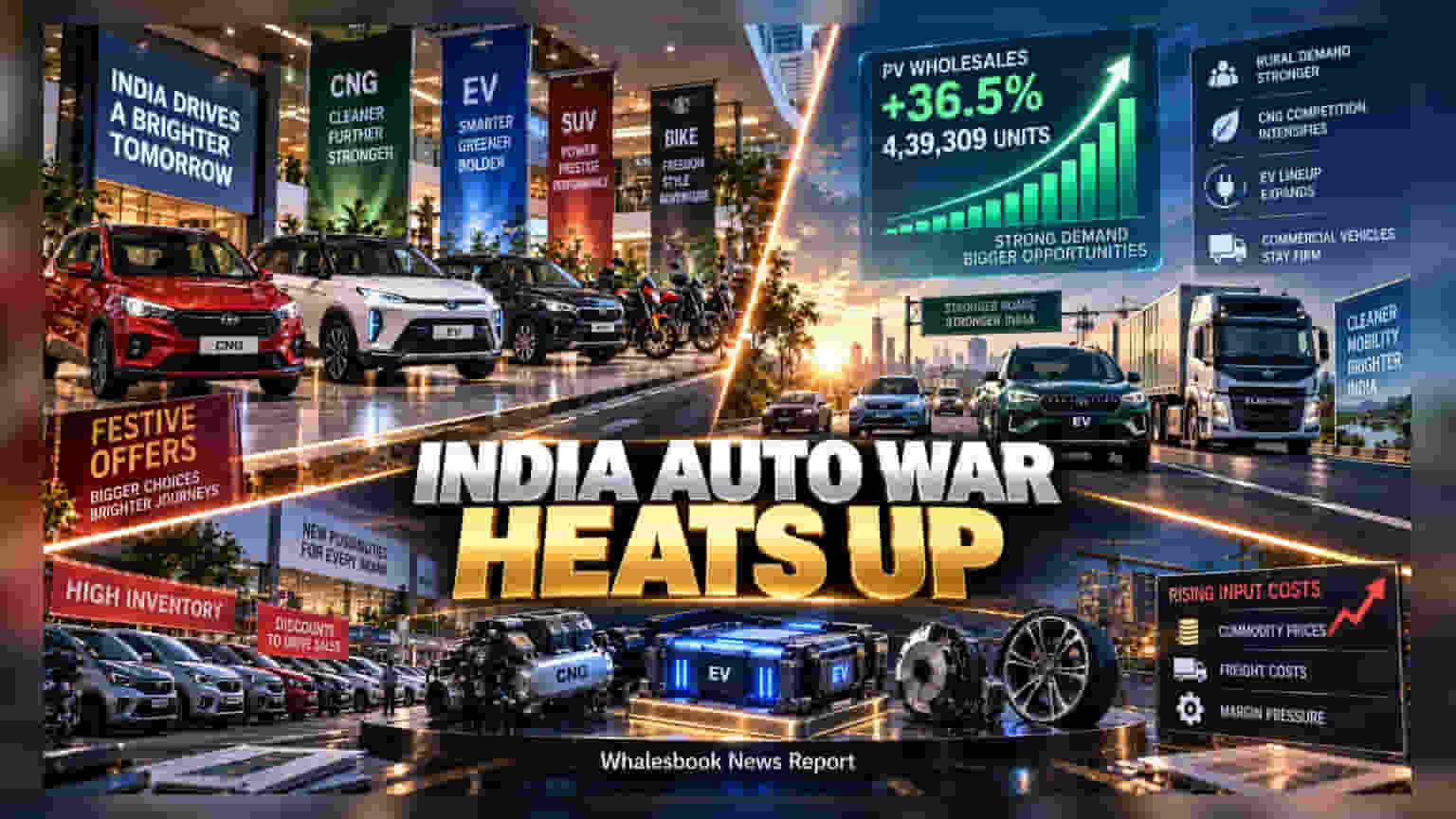
India’s passenger vehicle sales reached 4,39,309 units in August, a 36.5% increase, driven by strong rural demand. While the festive season typically fuels growth, high dealer stock levels of 38-40 days and intense competition across CNG and electric models could pressure profit margins for major manufacturers.
The Indian automobile sector has started the critical festive season on a strong note, with passenger vehicle wholesales rising 36.5% in August to 4,39,309 units. This indicates that manufacturers were aggressive in stocking up dealerships in anticipation of higher consumer interest. However, actual retail registrations grew at a slower pace of 16.14% to 4,02,398 units, highlighting a gap between factory output and customer demand.
A significant trend emerging from the data is the strength of rural markets. Retail registrations in rural areas climbed 24.99% in August, significantly outpacing the 10.93% growth seen in urban centers. This shift has prompted automakers to expand their options, including more fuel types and varied price points, to capture the broader consumer base.
Competition is intensifying rapidly, particularly in the CNG and premium segments. Maruti Suzuki continues to push its S-CNG models by introducing automatic transmissions in vehicles like the Swift, Dzire, and Baleno. This move directly challenges Tata Motors, which has already established a presence in the factory-fitted CNG automatic space. Meanwhile, Kia India is set to enter this segment with the Carens and Carens Clavis. In the premium and electric vehicle space, companies like TVS Motor, Eicher Motors, and Mahindra & Mahindra are active with refreshed lineups and new product launches, while JSW MG Motor is experimenting with new ownership models to attract buyers.
Despite the volume growth, investors are closely watching the inventory situation. Dealers have entered the festive period with stock levels estimated at 38-40 days. When inventory levels are this high, manufacturers often have to rely on increased discounting and dealer incentives to move products, which can put pressure on profit margins. For instance, Tata Motors has already announced a price increase of up to 1% for commercial vehicles starting October 1, citing ongoing commodity and freight cost pressures. While commercial vehicle sales remain firm—supported by growth in infrastructure and mining activity—these persistent input costs remain a challenge for the entire sector.
The coming months will be a test of how well companies can convert high wholesale numbers into actual sales without sacrificing profitability. While newer product segments like CNG and EVs offer opportunities for a better product mix, the ultimate impact on earnings will depend on whether demand remains consistent through the festive season or if manufacturers are forced to offer heavier discounts to manage their high dealer stocks.