

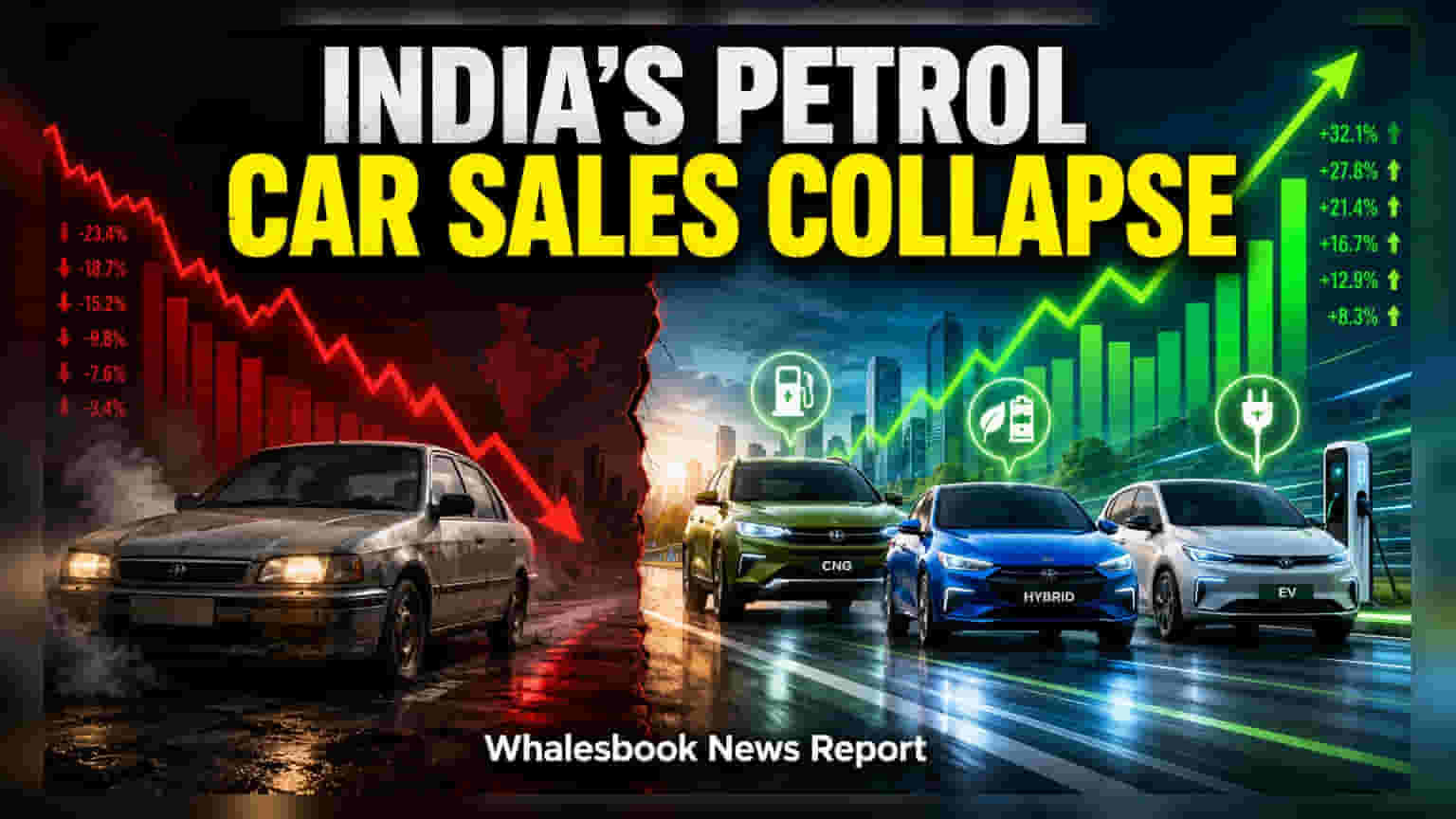
Petrol-powered passenger vehicles saw their market share drop to 41.7% in July 2026, down from 47.6% a year ago. Rising buyer preference for CNG, hybrids, and electric vehicles, combined with concerns over E20 fuel, has led to a significant inventory pile-up at dealerships. This shift is forcing automakers to adjust production and potentially offer higher discounts to clear stock.
The dominance of traditional petrol engines in the Indian passenger vehicle market is facing a notable cooling trend. In July 2026, the retail market share of petrol cars slipped to approximately 41.7%, a significant decline from the 47.6% share held during the same period last year. This transition is not sudden but reflects a growing change in consumer habits, where buyers are increasingly seeking fuel efficiency and lower running costs rather than sticking to conventional gasoline engines.
At the heart of this shift is a combination of economic and technical concerns. Many prospective car buyers have expressed hesitation regarding the government-mandated E20 fuel, which contains a 20% ethanol blend. Concerns regarding long-term engine compatibility, fuel economy, and overall vehicle longevity under the new fuel standard have contributed to a 'wait-and-watch' approach among consumers. Consequently, they are leaning toward alternatives that offer more predictable costs.
Alternative powertrains are filling the void left by petrol cars. CNG vehicles have emerged as a strong contender, capturing about 24% of the market in July 2026, up from 21% a year earlier. Meanwhile, electric vehicles (EVs) are sustaining momentum, accounting for roughly 8% of the market, with retail sales showing strong year-on-year growth. Hybrid technology is also gaining traction, as it offers the benefits of higher fuel efficiency without the range anxiety often associated with fully electric vehicles.
For investors and industry observers, this transition brings immediate challenges, particularly for dealer networks. The cooling demand for petrol cars has resulted in a pile-up of inventory, with some dealerships reporting stock levels lasting 60 to 70 days. High inventory levels can be a financial burden for dealers, often forcing them to offer aggressive discounts to clear older models. Such discounting practices can pressure the profit margins of both the dealers and the manufacturers.
Major Indian automakers are actively pivoting their strategies to mirror these changing preferences. Maruti Suzuki continues to leverage its strong footprint in the CNG segment while simultaneously broadening its electric and hybrid portfolio. Tata Motors is focusing on maintaining its leading position in the electric vehicle market, while Mahindra & Mahindra is concentrating its efforts on SUVs and preparing for its future electric vehicle launches. These companies are effectively moving away from a single-engine reliance to a multi-powertrain approach.
Going forward, the key factor for investors to track is how quickly manufacturers can adjust their production schedules to align with this new demand landscape. Excessive production of petrol models relative to current demand may lead to further inventory issues, while successful shifts toward CNG, hybrid, and electric models will be critical for sustaining revenue and protecting operating margins. Additionally, the pace of infrastructure development for charging stations and CNG availability will remain the final decider in how quickly this powertrain transition evolves.