

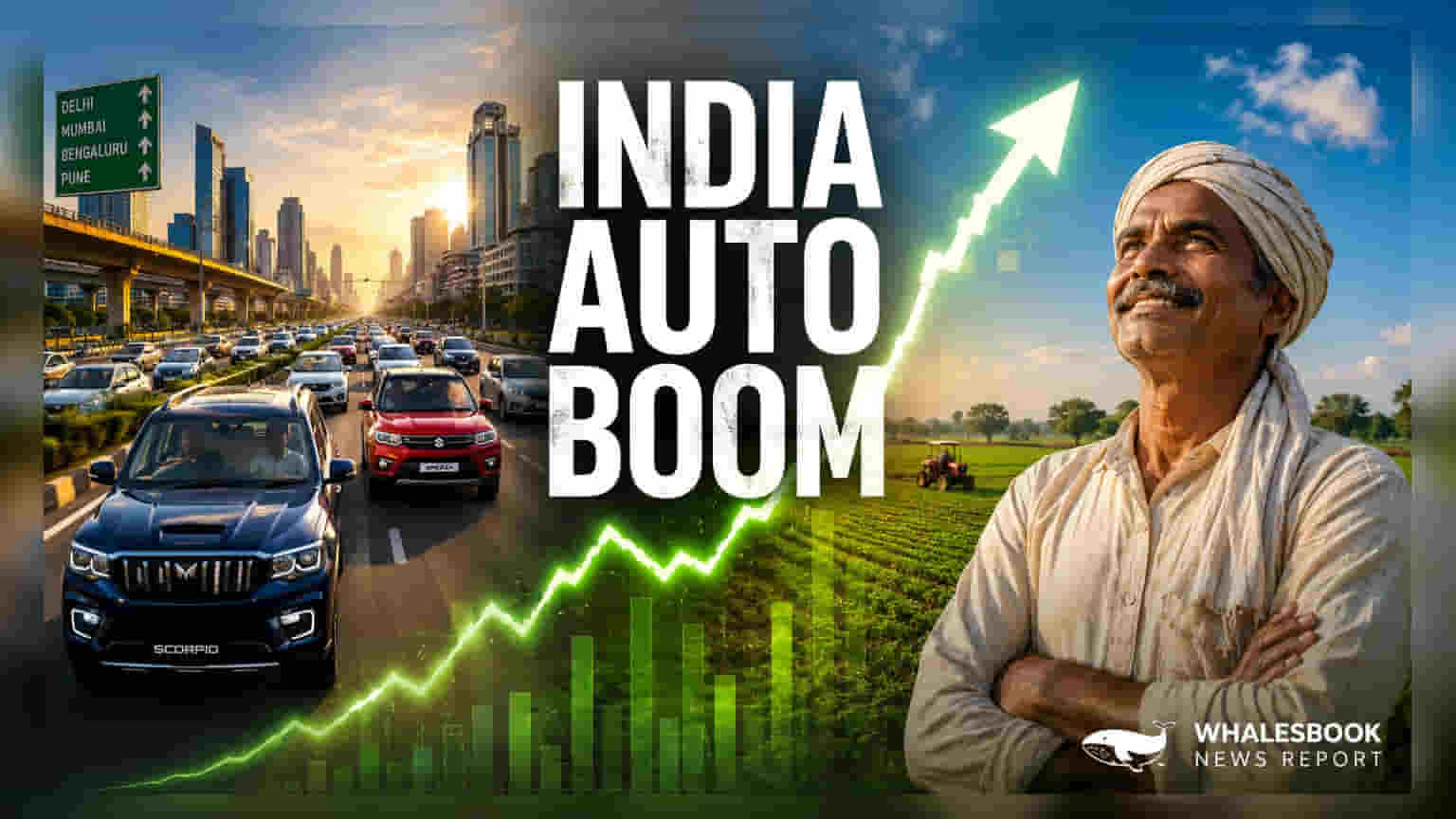
India's passenger vehicle sales rose 28.63% to 410,853 units in June, driven by a 35% surge in rural areas. While the industry sees healthy growth in electric and hybrid segments, investors should track potential risks from monsoon patterns and rising dealer inventory levels.
The Indian automotive industry recorded a strong performance in June 2026, with passenger vehicle retail sales hitting 410,853 units, a 28.63% increase compared to the same period last year. The overall auto sector, including two-wheelers and commercial vehicles, saw retail sales grow by 21.83% to 2.56 million units. This growth was notably supported by a strong push from rural markets, where passenger vehicle demand grew by 35.09%, significantly higher than the 24.67% growth observed in urban regions.
Clean Mobility and Commercial Vehicle Trends
The move toward cleaner energy continues to reshape the sector. Sales of alternative fuel vehicles—comprising CNG, hybrids, and electric vehicles—grew by 40.35%, marking the first time this segment has crossed the 40% growth threshold in a single month. Within this, passenger electric vehicles reached 31,823 units. Commercial vehicles also benefited from steady freight movement and e-commerce logistics, with urban and rural segments growing by 12.75% and 21.63%, respectively. Electric vehicle adoption in the commercial space also reached a record high of 3.53%.
Market Outlook and Potential Risks
The Federation of Automobile Dealers Associations (FADA) reported that over 66% of dealers remain optimistic about the July-September quarter, expecting support from upcoming festive demand and agricultural income cycles. However, the sector faces specific challenges that could influence future performance. Dealers have flagged the risk of monsoon shortfalls and the potential impact of El Niño on rural purchasing power, which has been a primary driver of recent growth.
Additionally, investors may monitor inventory levels at dealerships, as high stock build-up can lead to pressure on profit margins if companies rely on heavy discounting to clear older models. Future affordability also remains a concern, as further price hikes by manufacturers could dampen demand if inflation persists. The sustainability of this growth trajectory will depend on how successfully manufacturers manage supply chain costs and navigate the potential volatility in rural demand during the monsoon season.