

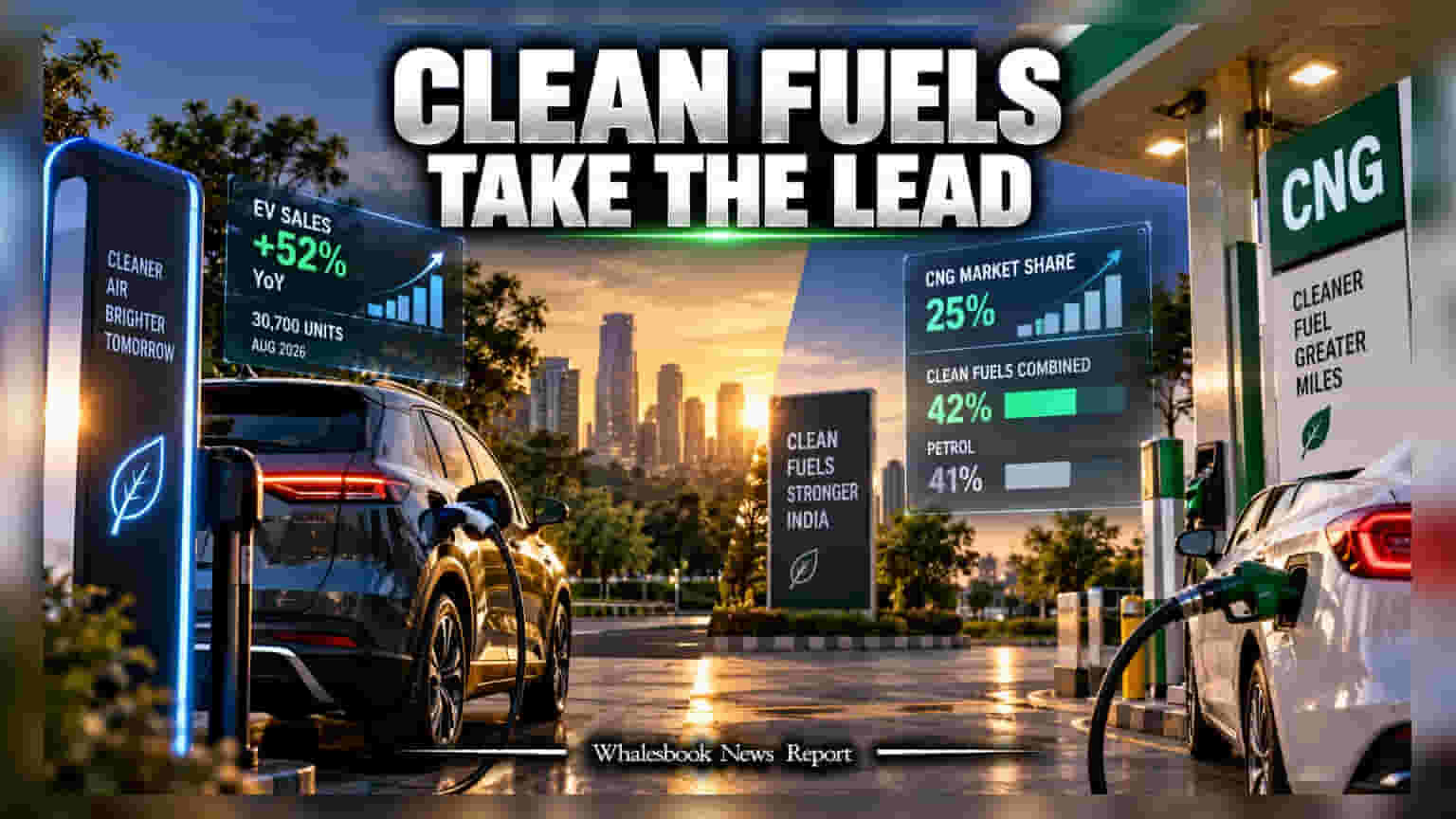
In a significant shift, CNG, hybrid, and electric vehicles captured 42% of India’s passenger vehicle sales in August 2026, surpassing petrol cars for the first time. Retail sales rose 16% year-on-year, driven by changing consumer preferences and concerns regarding the new E20 fuel standards. This transition highlights a fundamental change that could influence the growth trajectory for automakers with varying fuel portfolios.
The Indian automotive landscape marked a significant transition in August 2026, as the combined market share of clean-fuel alternatives—specifically Compressed Natural Gas (CNG), hybrids, and electric vehicles (EVs)—reached 42%, edging past petrol-powered vehicles, which stood at 41%. This historic milestone reflects a fundamental change in buyer behavior, as consumers increasingly look beyond traditional internal combustion engines.
Drivers of the Shift in Fuel Preference
Industry data indicates that retail sales in the passenger vehicle segment grew by 16% year-on-year, supported by improved consumer affordability and recent adjustments to Goods and Services Tax (GST) rates. However, the move away from petrol is not merely about price; it is heavily influenced by consumer anxiety regarding the E20 fuel transition. E20 fuel contains 20% ethanol, and many buyers have expressed concerns regarding long-term engine compatibility, potential corrosion, and reduced fuel efficiency. This uncertainty has pushed buyers toward CNG, which hit a record 25% market share, and electric options.
EV Growth and Competitive Pressure
Electric vehicle (EV) sales showed strong momentum, rising 52% year-on-year to reach 30,700 units in August. While national EV penetration dipped slightly to 7.7% from the previous month, it remains significantly higher than the 5.9% recorded in August 2025. Regional data confirms that Delhi remains at the forefront of this adoption, boasting a penetration rate of 19%, largely sustained by both private and fleet usage.
Competitive dynamics within the EV space are becoming intense. Tata Motors continues to maintain a dominant position, holding an approximately 43.8% market share in the electric segment. Other manufacturers are facing a more challenging environment. For example, JSW MG Motor has seen its market share contract from 28% in the previous year to 15%, reflecting the difficulty legacy and newer players face in maintaining share as portfolios expand and competition heats up.
Investor Implications and Monitorables
For investors, this trend underscores the importance of a company's fuel portfolio. Automakers that have invested heavily in CNG and EV technology may be better positioned to navigate the current shift in consumer sentiment. However, the sector is not without risks. The transition to E20 fuel continues to create uncertainty for traditional petrol-only models, which could pressure sales if concerns linger. Additionally, competitive intensity in the EV market is high, putting pressure on margins as companies balance pricing to capture market share. Investors should track how automakers manage their model lineups and whether they can successfully transition their petrol customers to alternative fuels without losing them to competitors with broader clean-energy offerings. Future growth will likely depend on continued government policy support, stable commodity costs, and the successful execution of EV and hybrid capacity expansion plans.