

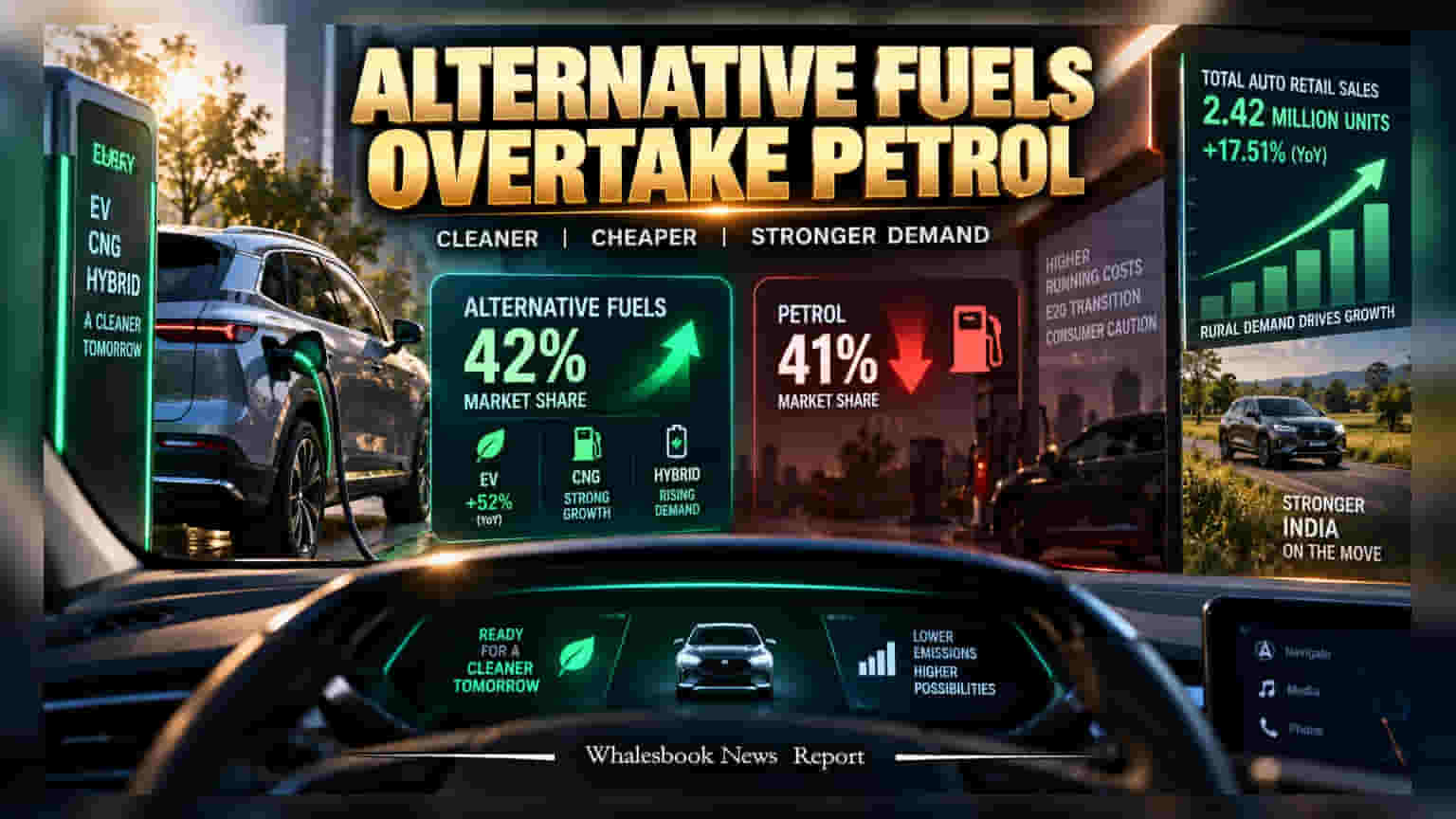
In a historic shift for India’s auto sector, vehicles using CNG, hybrids, and electricity captured 42% of passenger vehicle sales in August 2026, surpassing petrol for the first time. Total retail sales grew 17.51% to over 2.42 million units, largely driven by strong rural demand.
August 2026 marked a historic turning point for the Indian passenger vehicle market. For the first time, sales of vehicles powered by alternative fuels—including CNG, hybrid, and electric engines—outpaced petrol-powered cars. These alternative vehicles secured a market share of approximately 42%, while petrol vehicles accounted for 41%.
Total auto retail sales across the country reached 2.42 million units, reflecting a 17.51% growth compared to the same month last year. While sales decreased by 6.48% compared to July, this drop is primarily attributed to seasonal monsoon effects and the shifting of major festivals like Ganesh Chaturthi to September. Dealers typically expect slower activity during the monsoon, and the market is now preparing for a busy festive period.
Several factors are driving this change. Consumers are increasingly choosing alternative fuels to reduce running costs and are showing hesitation regarding the mandatory transition to E20 ethanol-blended petrol. The electric vehicle segment alone grew 52% year-on-year, with over 30,700 units sold.
Segment Leaders and Rural Growth
Market leadership varies by technology. Tata Motors currently leads the electric vehicle segment with a market share of about 43%, while Maruti Suzuki maintains a dominant 71% share in the CNG segment. This competition between manufacturers and the drive toward cleaner technology is reshaping the industry.
Rural markets are acting as a major growth engine. Passenger vehicle sales in rural areas jumped nearly 25% year-on-year, significantly outperforming the 11% growth seen in urban centers. This suggests that the demand for cleaner or more cost-effective fuels is reaching deeper into smaller towns, supporting overall industry volumes despite weaker performance in the tractor segment.
For the upcoming festive season, which runs from September through November, manufacturers and dealers are watching for sustained demand. Investors will likely monitor how companies manage inventory levels to match this shifting consumer preference. Potential risks for the sector include the need to manage rising maintenance costs for some alternative fuel models, the potential impact of changing government emission regulations, and the ability of rural demand to remain consistent through the end of the year.