 Whalesbook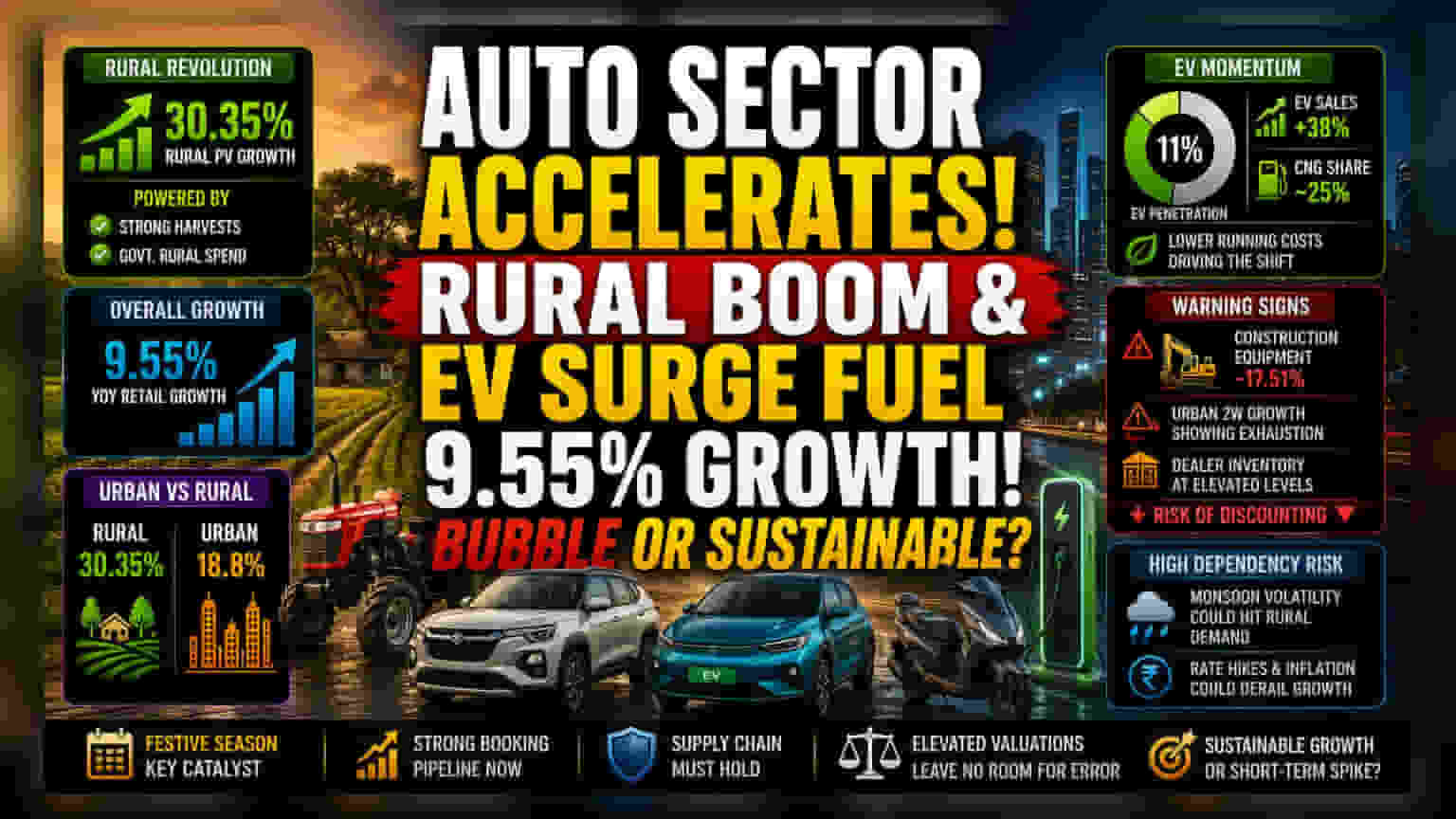


The Rural Consumption Divergence
While the 9.55% year-on-year retail growth suggests a buoyant sector, the internal metrics reveal a distinct bifurcation in consumer behavior. The headline growth rate was heavily anchored by a 30.35% explosion in rural passenger vehicle (PV) uptake, which contrasts sharply with the more muted 18.8% growth in urban centers. This rural-led recovery is tied to improved harvest yields and government-led rural infrastructure spending, effectively acting as an idiosyncratic buffer against the broader macroeconomic instability caused by energy price volatility and regional geopolitical frictions.
The EV Penetration inflection Point
Beyond volume, the most significant shift is the structural change in powertrain mix. With overall electric vehicle (EV) penetration breaching the 11% threshold, the market is demonstrating a clear sensitivity to running costs. This is not merely a preference for green technology but a rational financial response to high fossil fuel prices. The 38% rise in alternative-fuel passenger vehicle sales, coupled with CNG claiming nearly a quarter of the market share, indicates that traditional internal combustion engine dominance is facing a sustained, incentive-backed siege. The aggressive 40% depreciation rate for EVs—compared to the 15% rate for traditional assets—has transitioned from a theoretical benefit to a primary driver for fleet operators and cost-conscious retail buyers alike.
The Structural Weakness: A Forensic View
Despite the optimistic tone from industry bodies, the underlying data highlights potential flashpoints for investors. The 17.51% collapse in wheeled construction equipment retail sales suggests a significant cooling in fixed-asset investment and project execution, potentially hampered by the extreme heatwaves affecting construction productivity. Furthermore, while rural demand is currently robust, it remains highly sensitive to monsoon volatility. If the seasonal rainfall patterns falter, the current reliance on rural markets for growth could turn into a significant liability, especially given that urban two-wheeler growth is showing signs of exhaustion compared to the previous cycle’s performance. Dealers are holding onto significant inventory, and while the current booking pipeline is strong, any abrupt change in interest rates or further supply chain disruption could lead to a rapid inventory pile-up, forcing aggressive discounting that would further compress OEM margins.
Forward Trajectory and Risk Assessment
The market is currently betting on a strong festive season to maintain this momentum, but this assumes that supply pipelines remain uninterrupted. Analysts note that with the sector trading at elevated valuation multiples, any disappointment in the Q2 cycle could lead to a swift reassessment. While FADA projections remain sanguine, the dependency on sustained rural purchasing power creates a fragile equilibrium, where any stagnation in farm income or a resurgence in food inflation could derail the current recovery trend.