

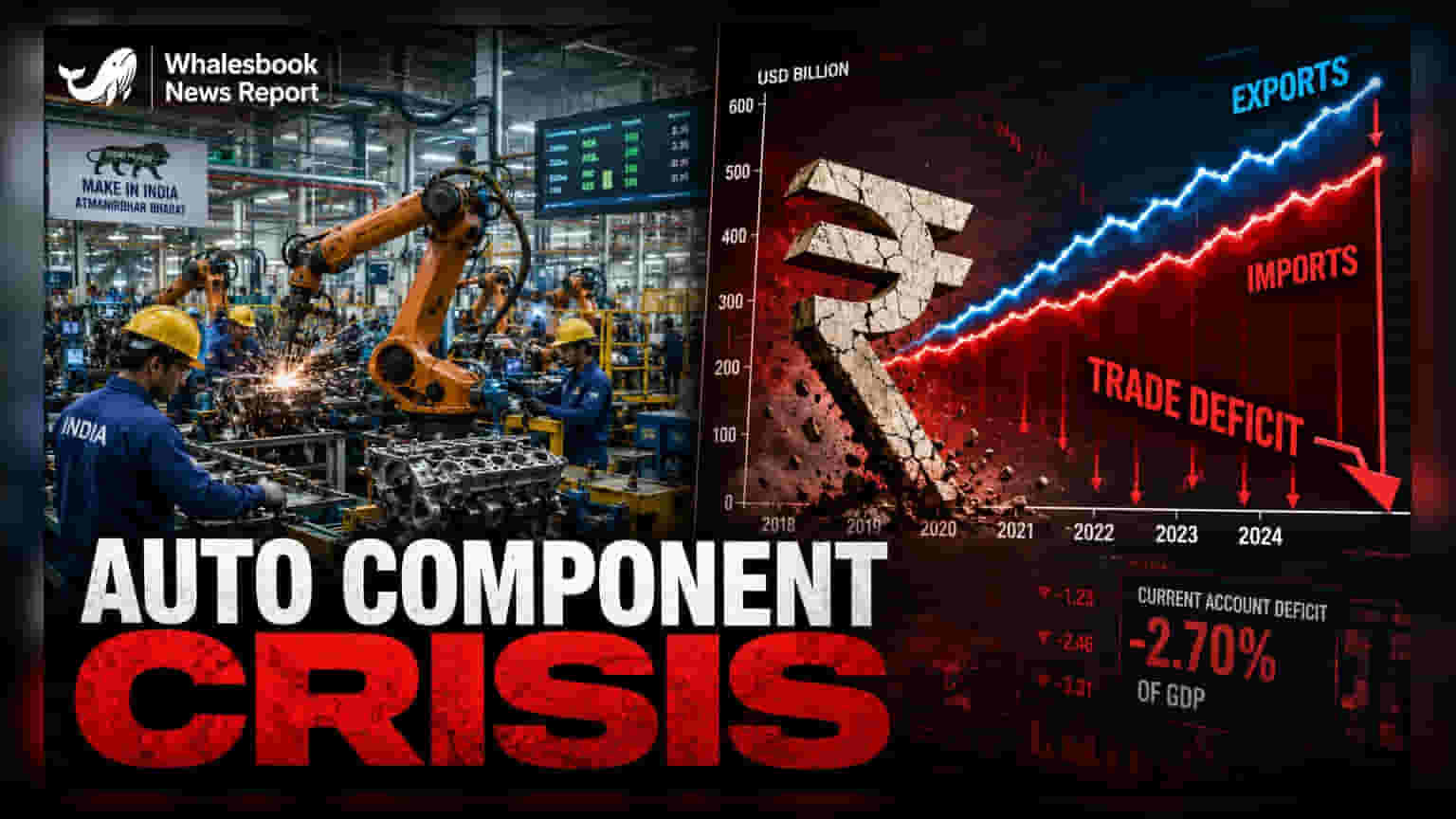
India's auto component sector grew 12.7% in FY26, but imports rose faster than exports, pushing the trade deficit to $1.37 billion. While supply to vehicle manufacturers remains strong, a higher reliance on components from China, Japan, and Germany is creating pressure on the domestic balance of trade.
The Indian auto component industry reported a 12.7% increase in turnover for the fiscal year 2026. This expansion was supported by a 16.3% rise in sales to vehicle manufacturers, commonly known as Original Equipment Manufacturers or OEMs, across the passenger, commercial, and two-wheeler segments. The aftermarket, which covers repair and maintenance services, also grew by 9% as the total number of vehicles on Indian roads continued to increase.
Import Pressure and Trade Imbalance
Despite the growth in domestic production, the sector faced a significant challenge in its external trade. While exports of Indian-made components rose by 5%, driven by demand from European markets and new trade agreements, imports grew at a much faster rate of approximately 13%. This gap between the value of imports and exports led to a trade deficit of $1.37 billion for the year.
The bulk of these imports—about 56%—consists of drive transmission, steering, and engine parts sourced mainly from China, Japan, and Germany. For investors, this reliance indicates that while the Indian sector is expanding its manufacturing capacity, it still depends heavily on international suppliers for high-value or specialized components.
Sector Trends and Risks
Domestic growth is currently supported by robust vehicle demand and government initiatives aimed at infrastructure and carbon neutrality. The electric vehicle (EV) segment, while still in its early stages of widespread adoption, contributed 4.6% to the total sales made to OEMs. However, the sector is navigating a complex environment. Global tensions, such as conflicts in West Asia and geopolitical instability in other regions, have introduced uncertainty into supply chains.
Furthermore, companies in this space are dealing with rising operational expenses, including higher freight and insurance costs, as well as the volatility of raw material prices. The limited availability of specialized inputs, such as rare earth magnets, remains a structural challenge that could impact profit margins for firms heavily dependent on high-tech component imports. Investors may watch how companies manage their supply chain strategies and whether they can increase the local content of their products to reduce dependence on imported components. The ability of domestic manufacturers to scale production for the growing EV market and secure stable supply lines will be key to long-term profitability in the coming quarters.