

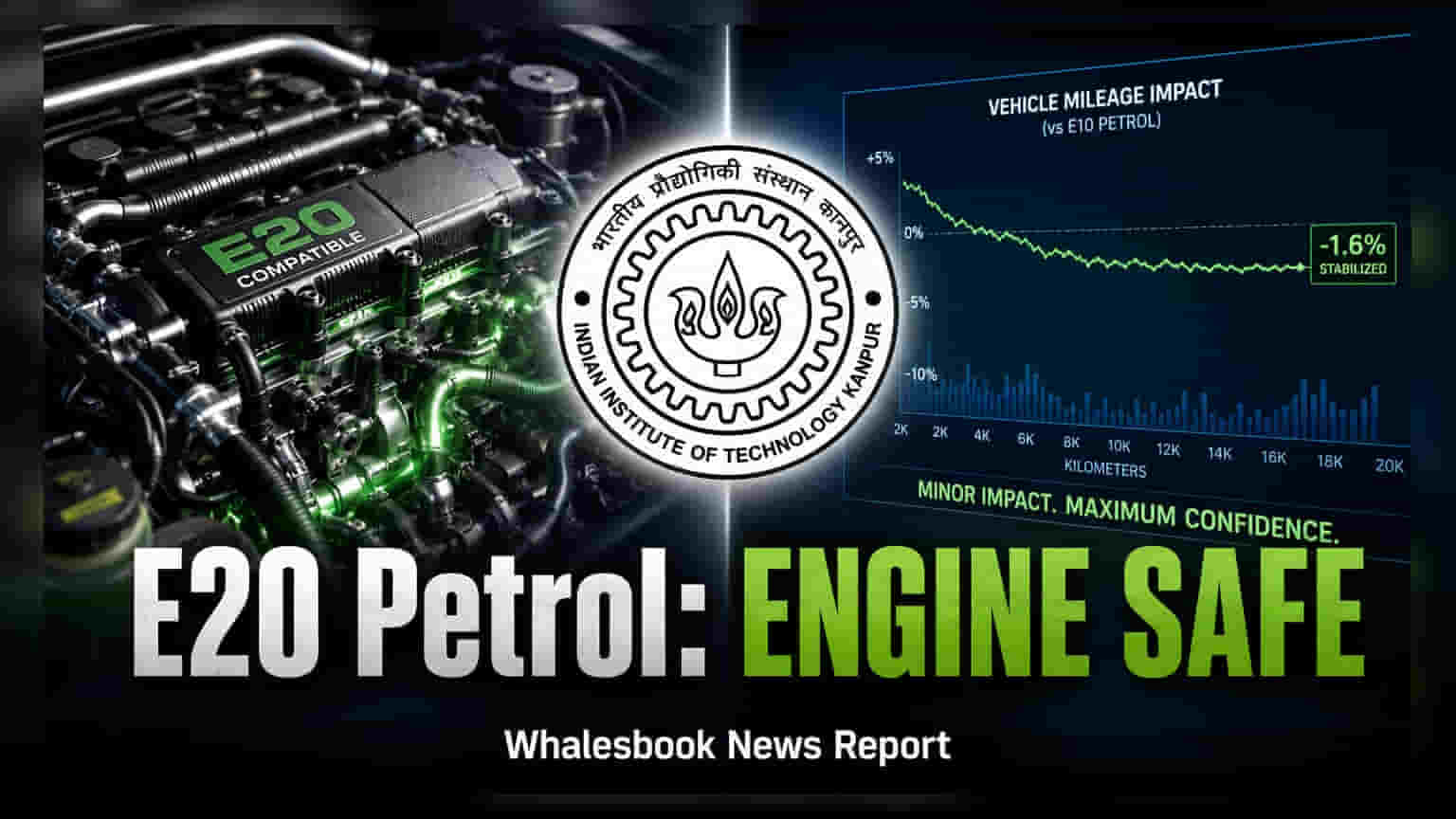
New research from IIT Kanpur confirms that E20 fuel, a 20% ethanol blend, does not cause engine damage or significant drops in fuel efficiency. The findings address public concerns regarding the nationwide rollout of ethanol-blended petrol. For investors, this validation reduces regulatory and technical uncertainty for automobile manufacturers and oil marketing companies.
Researchers at the Indian Institute of Technology (IIT) Kanpur have released findings aimed at addressing public anxiety over the use of E20 petrol. The study, conducted by the institution's Engine Research Laboratory, provides evidence that a 20% ethanol blend does not lead to engine damage or substantial performance degradation in either modern or older vehicle models. This research is significant as it supports the government’s ongoing efforts to transition the Indian fuel market toward higher ethanol blending to reduce crude oil import dependence.
Impact on Fuel Efficiency and Maintenance
One of the primary concerns for consumers has been a potential loss in fuel mileage. However, the study indicates that any reduction in efficiency is marginal—often less than the 5% threshold previously suggested by the Oil Ministry. Experts from the laboratory noted that observed fluctuations in fuel economy are frequently linked to external factors such as driving style, road traffic conditions, and the quality of vehicle maintenance, rather than the chemical composition of the fuel itself. These findings suggest that concerns about severe fuel efficiency drops may be overstated.
Scientific Evaluation vs Public Concern
Addressing widespread discussions regarding the potential for engine corrosion, the research team emphasized that their extensive testing showed no technical failures directly linked to E20 usage. The researchers characterized claims suggesting that E20 causes long-term engine harm as scientifically unfounded. For the automobile sector, this research aligns with official statements from the Ministry of Petroleum and Natural Gas, which has consistently maintained that E20 is a cleaner and higher-quality fuel developed following rigorous consultations with automotive manufacturers.
Broader Implications for the Automotive Sector
The findings provide clarity that could benefit both oil marketing companies and original equipment manufacturers (OEMs). By verifying that standard engines can handle E20, the study reduces the likelihood of future technical hurdles or mass warranty disputes that could have impacted manufacturer margins. The team at IIT Kanpur, led by Professor Avinash Kumar Agarwal, has also successfully tested higher ethanol blends, such as E85, though those require specialized engine engineering. Investors should track future updates from the Petroleum Ministry regarding the next phases of blending targets, as these goals directly influence capital allocation in refinery infrastructure and the production of ethanol-compliant vehicle components.