 Whalesbook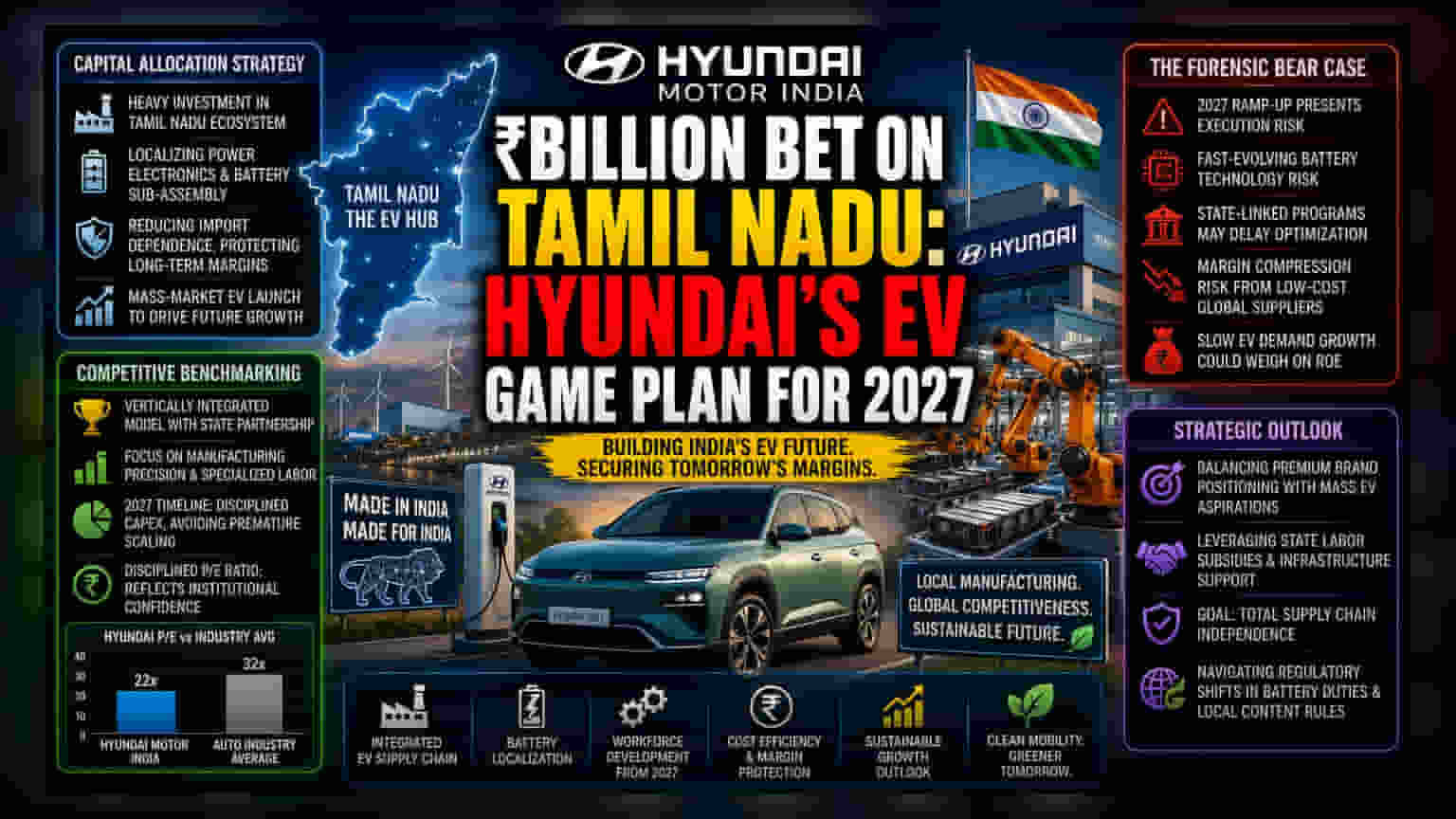


The Capital Allocation Strategy
Hyundai Motor India Limited is shifting its domestic strategy toward heavy infrastructure investment within Tamil Nadu, aiming to centralize its electric vehicle supply chain. By prioritizing the localization of power electronics and battery sub-assembly, the company is attempting to insulate itself from the volatility of imported EV components. This move is less about immediate sales volume and more about securing long-term margin protection against the anticipated rise in raw material costs for lithium-ion battery packs. The focus on a mass-market EV launch serves as a direct response to increasing pressure from domestic rivals and international entrants currently flooding the Indian sub-continent with budget-friendly battery-electric options.
The Competitive Benchmarking
Unlike its peers in the Indian automotive sector, Hyundai is pursuing a vertically integrated model that leans heavily on state-level government partnerships. While competitors like Tata Motors have leveraged a first-mover advantage by dominating the current charging infrastructure and passenger EV market share, Hyundai’s strategy hinges on superior manufacturing precision and specialized labor. The 2027 timeline for the new initiatives suggests a cautious approach to capital expenditure, ensuring that the company avoids the premature scaling that often plagues early-stage EV production. Recent market data indicates that Hyundai maintains a disciplined price-to-earnings ratio compared to the broader industrial sector, reflecting institutional confidence in its stable, albeit slower, transition to pure electric powertrains.
The Forensic Bear Case
The reliance on a 2027 start date for the workforce development program presents a substantial execution risk. Critics point out that the rapidly evolving nature of battery technology could render current manufacturing plans obsolete before they reach full capacity. Furthermore, the commitment to state-linked skill development institutions often involves bureaucratic overhead that can delay assembly line optimization. There is also the persistent risk of margin compression; as Hyundai invests heavily in localizing power electronics, the company faces significant competition from lower-cost suppliers who are already operating at scale. If the mass-market EV segment in India fails to grow at the projected double-digit rates, these fixed assets in Tamil Nadu could become a drag on return on equity, leaving the firm over-leveraged in a stagnant market segment.
The Strategic Outlook
Institutional analysts remain focused on whether Hyundai can maintain its premium brand positioning while simultaneously pivoting to mass-market electric mobility. The current roadmap balances state-sponsored labor subsidies with a long-term goal of total supply chain independence. While the 2027 outlook provides a clear timeline for stakeholders, the firm’s ability to navigate potential regulatory shifts in battery import duties and local content requirements will be the primary determinant of its long-term financial health in the region.