

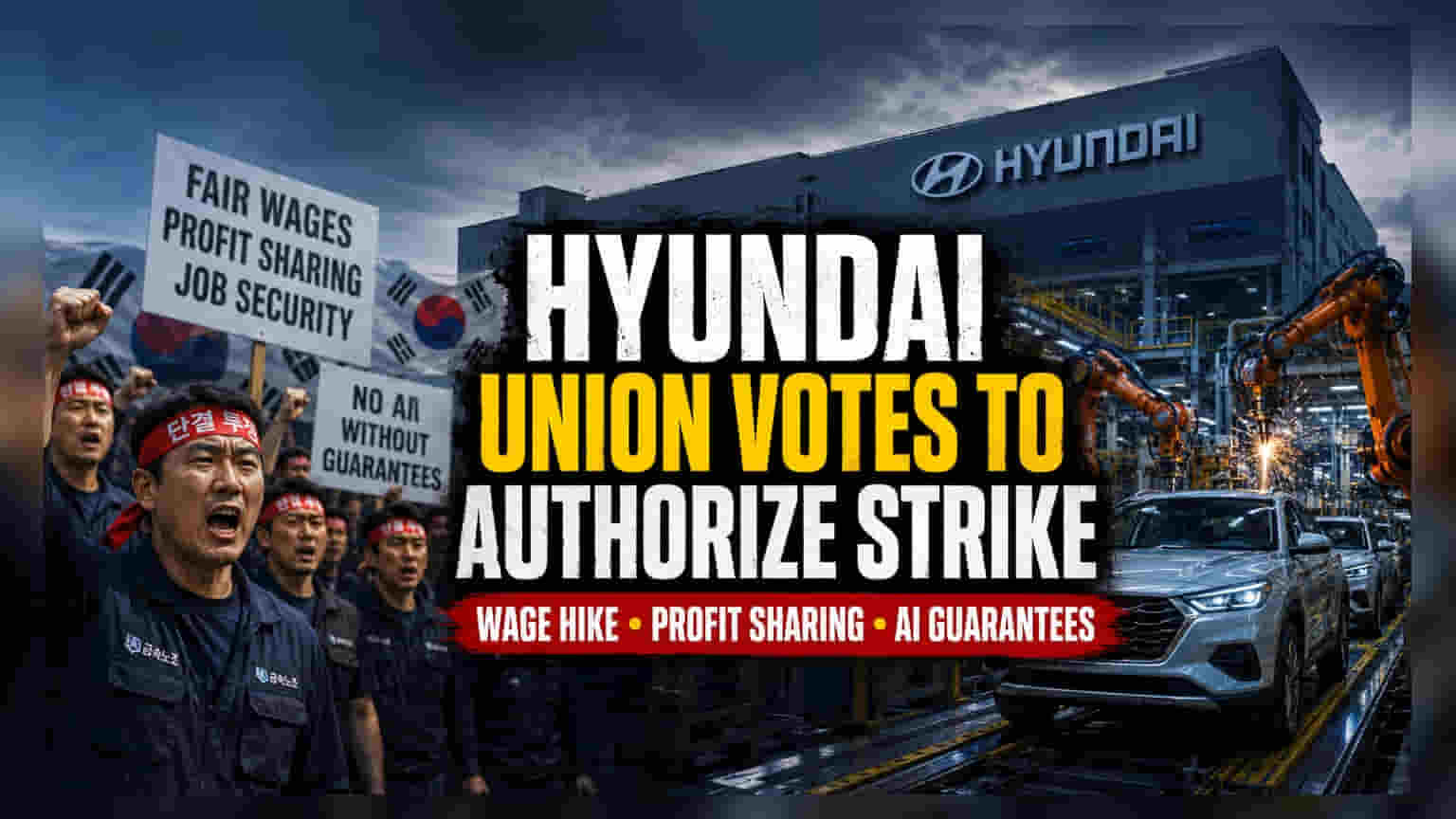
Hyundai Motor’s South Korean union has voted to approve strike action following a deadlock in wage negotiations. Workers are seeking higher pay, a 30% profit-sharing bonus, and AI job guarantees. While Hyundai Motor India operates independently, labor unrest at the parent company is a key development that can influence global production stability and investor sentiment in the auto sector.
What Happened
Hyundai Motor Company's labor union in South Korea has voted to authorize a strike after recent wage negotiations failed to reach an agreement. Union members are seeking a monthly base salary increase of 149,600 South Korean won and a performance bonus linked to 30% of the company's net profit from the previous year. Additionally, the union has demanded employment guarantees concerning the integration of artificial intelligence in manufacturing processes. Government-mediated talks are scheduled to determine if a breakthrough is possible before any industrial action begins.
Why This Matters For Investors
The immediate concern for investors is the potential for production disruptions at Hyundai’s core manufacturing facilities in South Korea. A strike could halt or slow vehicle output, impacting global supply chains and vehicle availability in export markets. While Hyundai Motor India operates its own manufacturing plants and manages its labor relations independently, large-scale labor unrest at the South Korean parent company is often monitored by global investors as it reflects broader labor cost trends and operational risks within the automotive sector.
The Demand For Profit-Sharing
This labor push is partly inspired by recent shifts in the South Korean corporate landscape, specifically the profit-sharing arrangements seen at companies like Samsung Electronics. Employees are increasingly looking for a larger share of corporate earnings, following high-profile payouts at major tech firms. This has set a precedent, emboldening unions across other manufacturing sectors, including automotive, to demand similar structures. For investors, this signals a potential increase in operating costs if companies agree to these higher compensation packages, which could weigh on profit margins.
Labor Costs And Automation
The inclusion of artificial intelligence in the union's demands highlights a growing global concern among workers regarding job security in the era of automation. By seeking guarantees on how AI is used within the company, the union is trying to ensure that new technology does not displace existing roles. This adds a layer of complexity to wage negotiations, as it involves long-term operational and hiring policies rather than just immediate pay hikes.
What Investors Should Track
The primary monitorable is the outcome of the government-mediated discussions. Investors may track whether the management and the union reach a compromise that avoids a full-scale work stoppage. If the strike proceeds, the duration and the specific plants affected will be critical in assessing the actual impact on production volume. Additionally, any settlement reached could set a benchmark for future labor negotiations within the South Korean auto manufacturing sector, influencing long-term cost structures.