

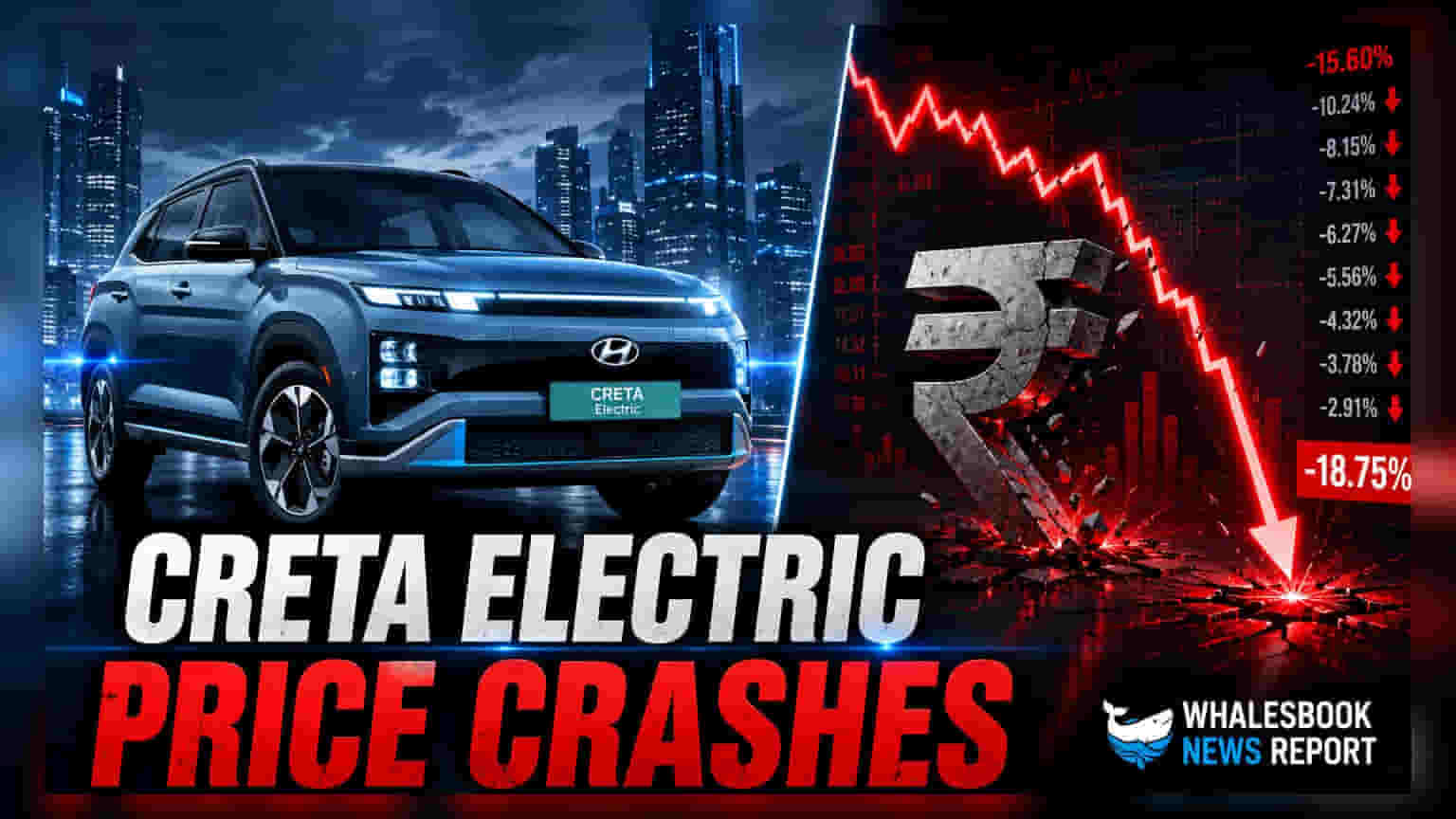
Hyundai Motor India has introduced a 'Battery-as-a-Service' (BaaS) model for the Creta Electric, lowering its starting price to ₹10.99 lakh. By separating battery costs into a subscription, the company aims to reduce upfront hurdles for buyers. This strategic move follows a recent decline in its electric vehicle sales volumes, as it seeks to compete more aggressively with market leaders like Tata Motors and Mahindra.
What Happened
Hyundai Motor India Ltd. (HMIL) has announced a new 'Battery-as-a-Service' (BaaS) ownership model for its Creta Electric SUV. This pricing strategy effectively separates the battery cost from the vehicle price, allowing the entry-level variant to be offered at ₹10.99 lakh. Customers opting for this plan will pay for the battery usage through a separate subscription or EMI model, with rates starting as low as ₹3.9 per kilometer. Alongside this, the company has updated the Creta Electric with added features, including a standard side foot step and a 7.4 kW wall box charger for specific variants.
Why This Matters For The Business
This shift to a subscription-based battery model is a direct attempt to make the Creta Electric more accessible to a wider pool of buyers. High upfront costs have long been a primary barrier for EV adoption in India. By decoupling the battery—the most expensive component—from the vehicle’s purchase price, Hyundai aims to bridge the price gap between electric and traditional petrol or diesel SUVs.
For investors, the timing of this launch is significant. Recent industry data for the first quarter of fiscal 2027 shows that while the broader electric passenger vehicle market in India has grown, Hyundai’s EV sales volumes have faced pressure. This new business model is a strategic effort to regain sales momentum and improve the competitive standing of the Creta Electric against established rivals.
The Competitive Landscape
The Indian electric passenger vehicle segment is currently dominated by a few players, including Tata Motors, Mahindra & Mahindra, and JSW MG Motor India, which together control the vast majority of the market. While these competitors have also explored or utilized BaaS-like leasing models for their own EVs to drive adoption, consumer acceptance has been mixed. Many buyers still prefer total ownership of the vehicle, including the battery, to avoid long-term subscription expenses and concerns regarding residual value.
Hyundai is entering a mature and highly competitive space. Success will depend not only on the lower entry price but also on how effectively it communicates the total cost of ownership (TCO) compared to traditional models. Investors should note that while BaaS can boost showroom footfall, it creates a different revenue stream for the company that is dependent on long-term usage, which differs from the immediate cash inflow of an outright sale.
Risks And Challenges
While the BaaS model lowers the initial barrier, it is not without risks. The Indian market has shown a historical preference for full asset ownership. Previous industry attempts at battery subscription models have faced challenges, including consumer confusion over long-term costs, potential GST complexities between vehicle and service components, and the perception of not truly 'owning' the full vehicle. If the subscription fees are viewed as too high by high-mileage users, adoption might remain limited to specific buyer segments.
What Investors Should Track Next
Investors will be closely watching the sales performance of the Creta Electric in the coming quarters to see if this model leads to a recovery in volume. Key monitorables include:
- The conversion rate of buyers choosing the BaaS model versus the traditional purchase option.
- Impact on profit margins, as service-based revenue models carry different accounting treatments than upfront vehicle sales.
- Whether the company’s planned infrastructure expansion—specifically the deployment of 600 fast-charging stations—keeps pace with vehicle sales to support user confidence.
- How the company manages the cost of battery maintenance and lifecycle management over the long term.