

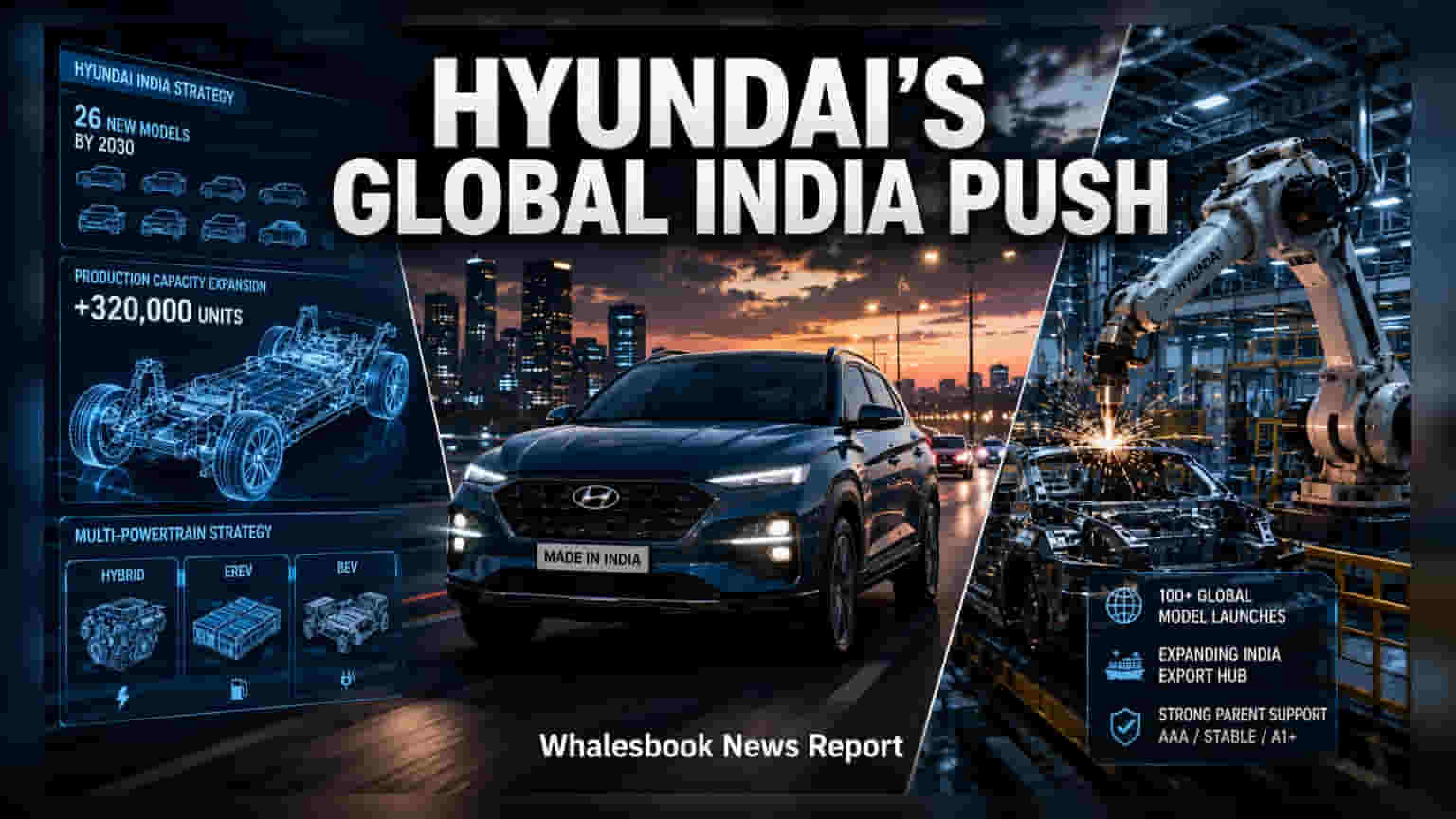
Hyundai Motor has announced plans to launch 26 new vehicle models in India by 2030 and increase production capacity by 320,000 units. The strategy includes a shift toward hybrid and extended-range electric vehicles to adapt to changing market demand. However, the company faces recent challenges, including a 35% dip in quarterly profit and rising input costs that have triggered a 1% price hike effective September 2026.
Hyundai Motor Company has unveiled a significant shift in its global strategy, identifying India as a core pillar for its future growth. During its CEO Investor Day in Seoul, the automaker pledged to introduce 26 new vehicle models in the Indian market by 2030. To support this growth, the company plans to expand its annual production capacity in India by 320,000 units. This initiative is part of a larger global effort that involves over 100 model launches or updates to maintain competitiveness.
A Shift Toward Hybrid Technology
One of the most notable aspects of this strategy is a move toward a multi-powertrain approach. Hyundai is recalibrating its focus by integrating hybrids and extended-range electric vehicles (EREVs) into its lineup alongside its existing battery-electric vehicle (BEV) offerings. This decision reflects a change in consumer demand, as global interest in pure electric vehicles has cooled in certain markets. By offering a broader range of technologies, the company aims to protect its market share while catering to different buyer preferences.
Financial Performance and Market Reality
While the expansion plans are ambitious, Hyundai Motor India Limited (HMIL) is currently navigating a period of financial difficulty. For the quarter ending June 2026 (Q1 FY27), the company reported a 35% decline in consolidated net profit, which stood at ₹889 crore. Profitability has also been under pressure, with EBITDA margins contracting to 9.3%. To address rising input costs and geopolitical uncertainties, the company has announced a price increase of up to 1% across its vehicle portfolio, effective from September 2026.
Competition and Risk Factors
The Indian automotive market is highly competitive, with established domestic rivals such as Tata Motors and Mahindra & Mahindra aggressively expanding their market share in key segments like SUVs. These competitors have been scaling up their electric vehicle and SUV offerings, putting pressure on Hyundai to maintain its position. Furthermore, persistent volatility in commodity prices remains a risk to the company's cost structure. Despite these pressures, credit rating agency CRISIL has reaffirmed HMIL’s 'AAA/Stable/A1+' rating, citing the company's strong financial risk profile and the continued support it receives from its South Korean parent organization.
Monitoring Future Execution
The key monitorable for investors will be how effectively Hyundai executes its large-scale capacity expansion while balancing the need to recover profit margins. The success of its multi-powertrain strategy will depend on whether these new models can gain traction against strong domestic competition. Market participants will also watch whether the upcoming price adjustments and potential shifts in raw material costs help the company restore its margin profile in the coming quarters.