

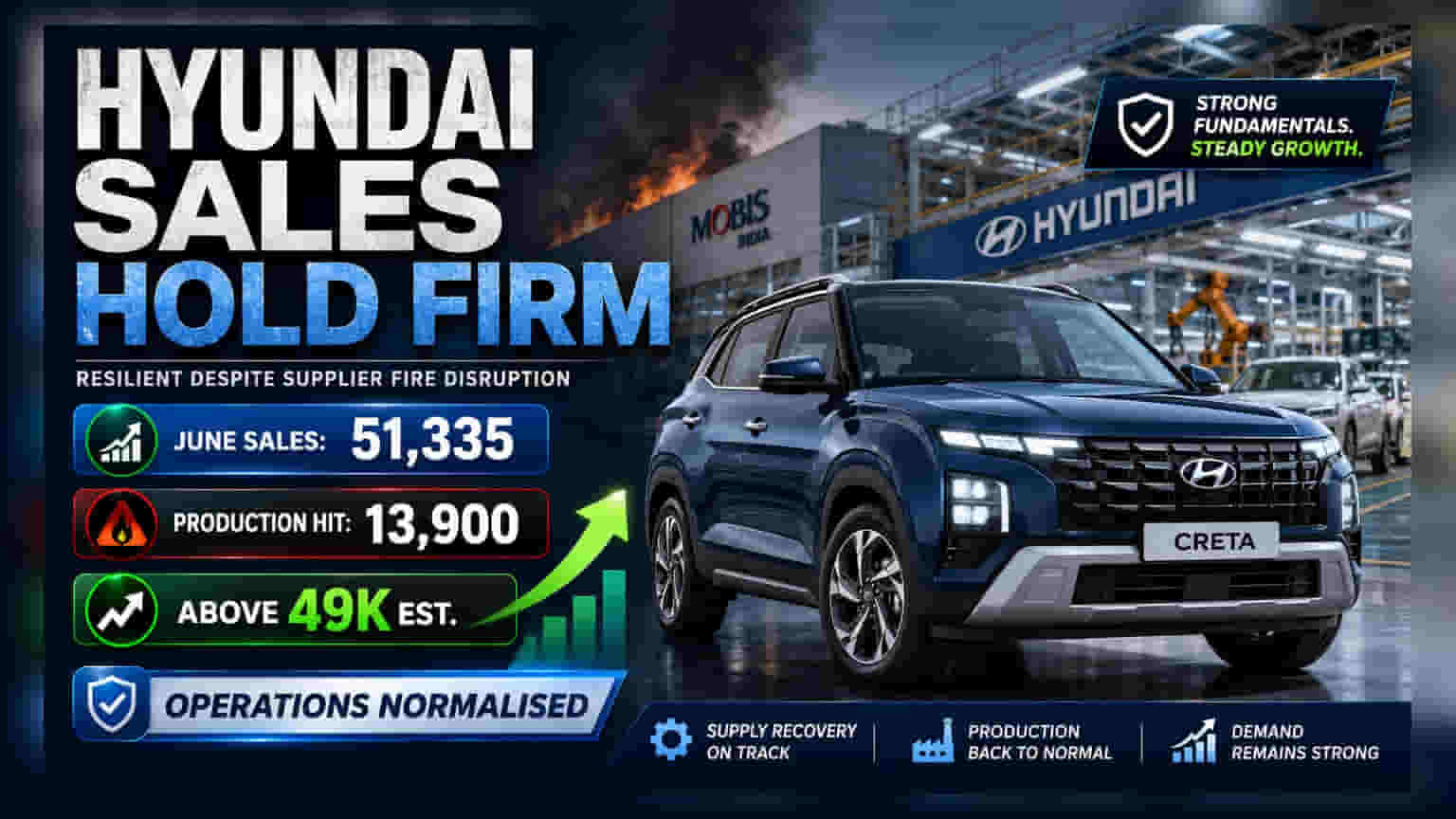
Hyundai Motor India reported sales of 51,335 units in June 2026, surpassing analyst estimates despite a 13,900-unit production loss caused by a supplier's factory fire. The company has restored normal operations and plans to recover the lost volume in the coming quarter.
What Happened
Hyundai Motor India Ltd. (HMIL) reported total sales of 51,335 units for June 2026. This figure includes 39,635 domestic sales and 11,700 exports. This performance came during a difficult month where the company faced a significant operational hurdle: a fire at a key component supplier’s manufacturing facility, Mobis India. The incident led to a production loss of approximately 13,900 vehicles. Despite this challenge, the company’s sales figures comfortably exceeded the estimated market projections of 49,000 units.
The Operational Hurdle
Modern automobile manufacturing relies on a 'just-in-time' supply chain, where parts arrive at the factory exactly when needed. When a fire hit the facility of Mobis India—a crucial supplier of automotive modules—the disruption created a ripple effect, particularly affecting production of the Creta, one of Hyundai’s best-selling SUVs. The company initially disclosed the disruption in early June and worked to minimize the impact by sourcing parts from alternate locations. Management confirmed that manufacturing operations across all plants were fully normalized as of June 22, 2026.
Why This Matters For Investors
The ability to sell 51,335 units despite losing nearly 14,000 units in production suggests that Hyundai had sufficient inventory levels in its network to meet customer demand during the crisis. For investors, this resilience indicates robust supply chain contingency planning. By surpassing market expectations during a supply crisis, the company demonstrated that consumer demand for its SUV-heavy portfolio remains sticky even when delivery timelines are under pressure. The focus now shifts to the recovery phase.
Financial Context And Recovery
Hyundai Motor India has indicated that it expects to make up for the lost production volume in the second quarter of the 2026-27 fiscal year. Because operations have already returned to normal, the company plans to utilize the coming months to clear backlogs and normalize volume. While the June production loss impacted manufacturing output, the company’s ability to pivot and source parts elsewhere helped stabilize retail operations.
What Investors Should Track
The most important factor for investors in the coming months will be the execution of this recovery plan. Monitoring monthly wholesale numbers in July and August will clarify whether the company can successfully ramp up production to clear order backlogs without incurring excessive costs. Additionally, investors may observe how effectively the company manages its product mix and pricing in a competitive Indian market, especially as it continues to battle for market share against other major automotive players.