

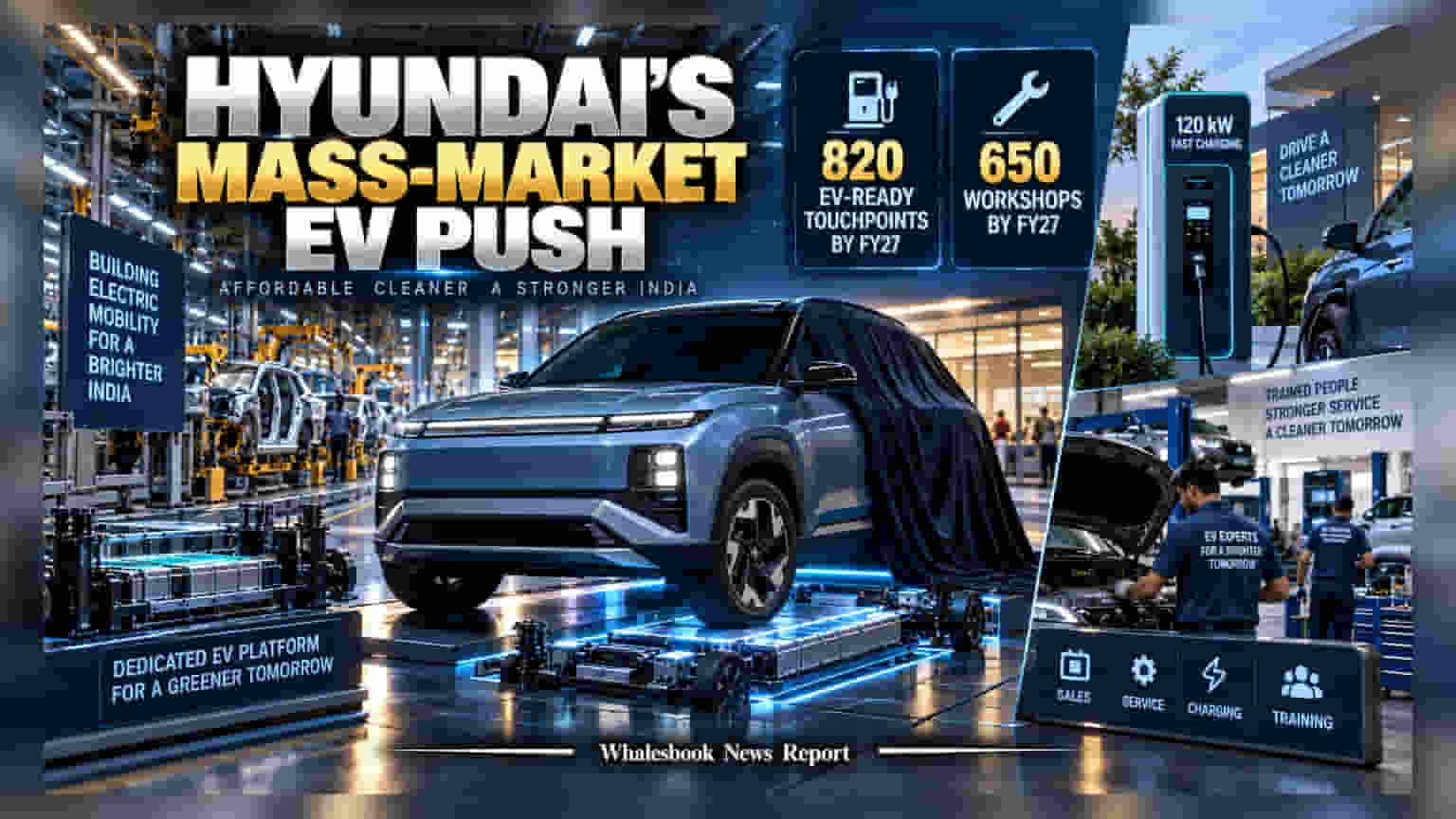
Hyundai Motor India is building a dedicated platform for a new mass-market electric SUV. The company is also scaling its network to 820 EV-ready touchpoints by FY27. Investors are tracking how this expansion affects profitability, as the company recently reported a 9.3% EBITDA margin and announced a 1% price hike to manage rising costs.
Hyundai Motor India is preparing to enter the mass-market electric vehicle segment with a new SUV built on a dedicated electric platform. This move marks a strategic shift from the company’s existing models like the Ioniq 5 and the electric version of the Creta, which were either premium imports or based on internal combustion engine architectures. By focusing on a dedicated platform and local production, the company aims to reduce costs and gain a stronger foothold in the price-sensitive Indian EV market.
To support this expansion, the company is aggressively growing its service and charging infrastructure. Hyundai has set a target of 820 EV-ready sales and service touchpoints, along with 650 workshops by the end of FY27. The company is also training thousands of sales and service staff to handle electric vehicle maintenance. This investment in infrastructure is crucial as range anxiety and lack of service support often act as barriers for new buyers.
From a financial perspective, these plans come at a time when the company is managing cost pressures. In the first quarter of FY27, Hyundai reported an EBITDA margin of 9.3%, with a goal of reaching 11-14% for the full year. To mitigate rising commodity and operational costs, the company implemented a portfolio-wide price hike of up to 1% in September 2026. As of early September 2026, the company’s stock has been trading in the ₹2,175–₹2,189 range on the exchanges.
The Indian electric vehicle sector is becoming increasingly crowded. Hyundai will face stiff competition from domestic players like Tata Motors and Mahindra & Mahindra, who have already captured significant market share with their own electric product lines. For Hyundai, success will depend on its ability to price the new SUV competitively while maintaining healthy profit margins amidst high infrastructure spending.
Investors should look for updates on the official launch timeline, the vehicle's estimated price point, and its battery specifications. The ability of the company to achieve its margin targets while simultaneously funding this heavy expansion will also be a key factor for shareholders to watch in the coming quarters. The effectiveness of the new, dedicated platform in reducing production costs compared to previous models will be critical for long-term competitiveness.