 Whalesbook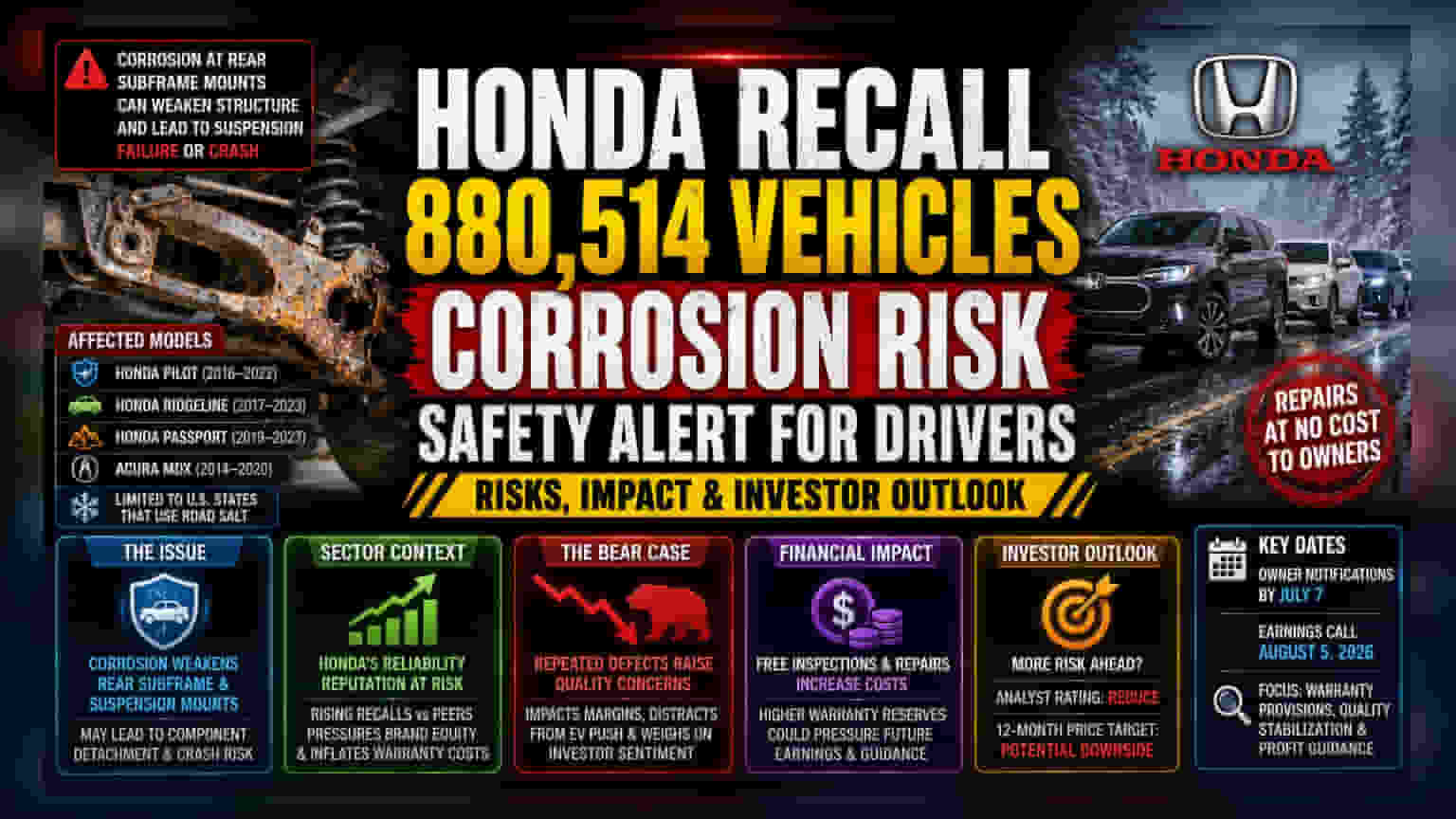


Honda is launching a massive safety recall for 880,514 vehicles in the U.S. due to rear subframe corrosion that threatens suspension stability and driver control. The campaign covers specific Pilot, Ridgeline, Passport, and Acura MDX models sold in states with heavy road salt usage. While no injuries have been reported, the recall underscores ongoing quality control challenges for the automaker as it navigates complex manufacturing requirements.
The Corrosion Catalyst
American Honda Motor Co. has initiated a significant safety campaign affecting 880,514 vehicles, centered on the rear subframe assembly. The defect involves potential corrosion at suspension mounting points, which can weaken the structural integrity of the vehicle. In severe cases, this degradation may lead to the detachment or failure of rear suspension components, significantly impairing vehicle handling and increasing the probability of a crash. This recall specifically impacts Honda Pilot (2016-2022), Honda Ridgeline (2017-2023), Honda Passport (2019-2023), and Acura MDX (2014-2020) models. The geographic scope is limited to U.S. states where road salt is frequently utilized during winter months, as the salt acts as a primary accelerant for the identified metal fatigue.
Sector Context and Market Positioning
This move comes amid a broader struggle within the automotive sector to balance rapid model iteration with long-term durability. While Honda has historically maintained a premium brand reputation for reliability—often outperforming peers in Consumer Reports rankings—the frequency of recent mechanical and software-related recalls suggests a potential strain on internal quality assurance protocols. Unlike competitors such as Toyota, which has seen its own share of sensor-related recall activity, Honda’s recurring issues with suspension and structural rust point to systemic manufacturing vulnerabilities in its North American supply chain. Investors should note that while historical market data suggests that individual recall events often generate statistically insignificant immediate stock price movements, the cumulative effect of these campaigns can degrade brand equity and inflate long-term warranty reserves, putting downward pressure on operating margins.
The Bear Case: Structural Weaknesses
From a risk-averse perspective, this recall highlights a concerning trend in Honda’s operational oversight. This is not an isolated incident; it follows a string of recent recalls involving fuel pump failures and steering gearbox defects across various models. The firm’s reliance on joint ventures in competitive markets like China has already pressured retail volumes, and now, domestic safety issues threaten to distract management from their pivot toward hybrid and electric vehicle profitability. With the company operating at a negative P/E ratio and analysts expressing caution through a consensus 'Reduce' rating, these recurring defect reports act as a drag on sentiment. The financial burden of free inspection and reinforcement kits—while necessary to maintain regulatory compliance—further complicates the company's fiscal guidance, particularly as it faces a high cost of capital.
Outlook and Analyst Consensus
Management has committed to notifying affected owners by July 7, with repairs performed at no cost. Moving forward, the focus remains on whether Honda can stabilize its manufacturing quality. Market observers are closely watching the August 5, 2026, earnings call for updates on operating profit guidance, as any further increases in warranty provisions could challenge the current rebound narrative. With a 12-month consensus price target reflecting potential downside, the path to recovery relies heavily on successfully executing these large-scale remediation programs without incurring further reputational damage.