 Whalesbook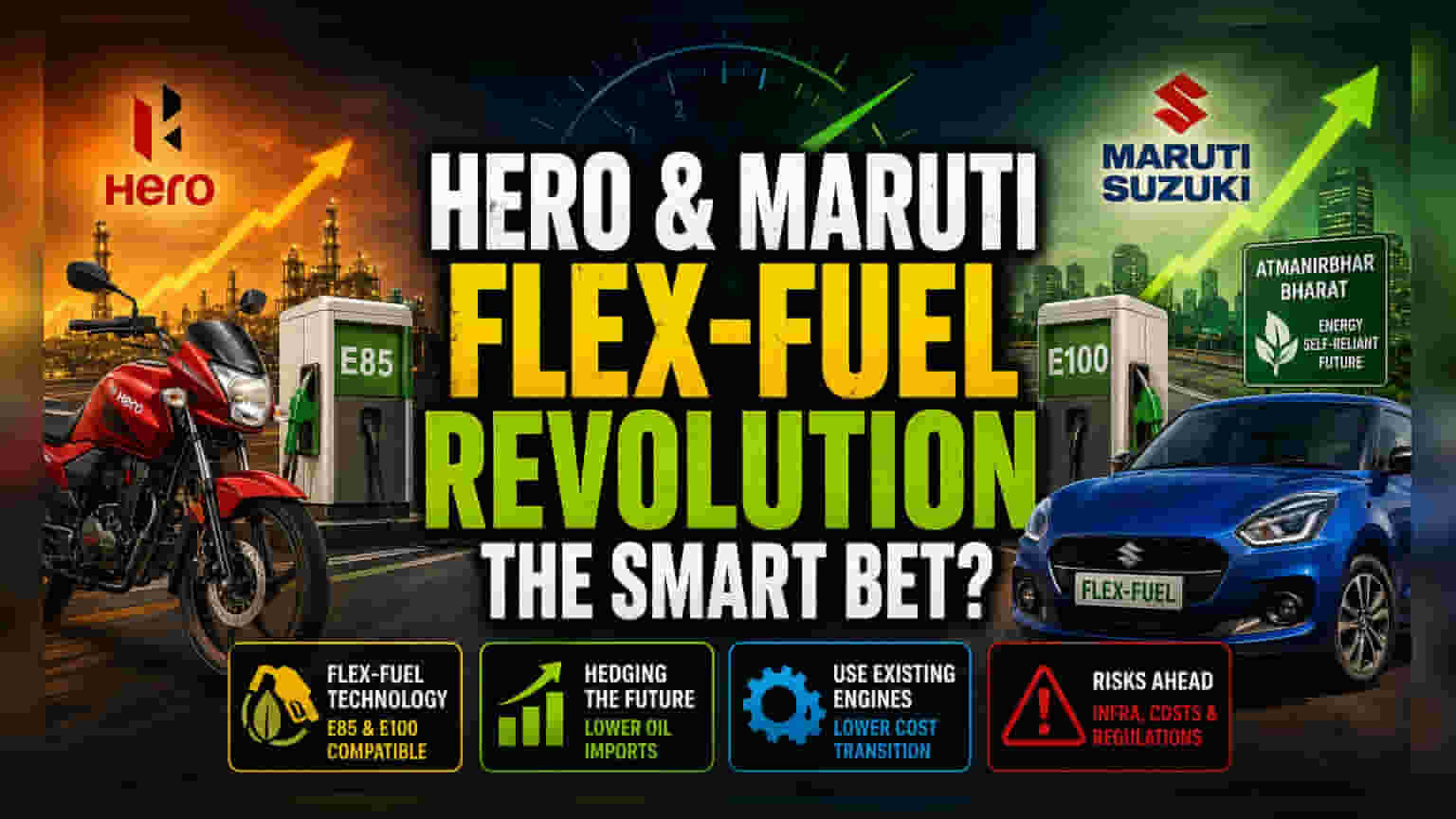


The Valuation Gap and Strategic Hedge
Hero MotoCorp and Maruti Suzuki are leveraging their dominant market footprints to introduce flex-fuel technology, creating a distinct narrative in an automotive sector increasingly fixated on electrification. Trading at a P/E of approximately 16.85 and 27.95 respectively, both companies are currently navigating a market that has been skeptical of traditional automakers' pace in the EV race. By championing flex-fuel vehicles (FFVs), these manufacturers are effectively hedging against the high capital expenditure of EV battery production while simultaneously aligning with government-led 'Atmanirbhar' (self-reliance) goals to curb crude oil import dependence. Unlike pure-play EV players, these incumbents are utilizing their existing, high-margin internal combustion engine platforms, allowing for a more cost-effective transition that bypasses the immediate need for massive charging infrastructure overhauls.
The Infrastructure Bottleneck
The pivot toward E85 and E100 fuel compatibility relies heavily on an optimistic trajectory for India’s ethanol distribution network. While the government has set ambitious targets—aiming for 5,000 refueling stations by 2027—the current disparity between vehicle capability and fuel accessibility is a critical pain point. Proponents argue that FFVs offer a bridge, particularly in two-wheeler segments where volume is king and mass-market price sensitivity remains the primary barrier to electric adoption. However, skeptics suggest that without a nationwide, reliable supply of high-blend ethanol, these vehicles risk becoming standard gasoline engines that simply carry the added engineering cost of high-ethanol compatibility, failing to deliver the promised environmental benefits in real-world driving scenarios.
Structural Weaknesses and The Bear Case
From a risk perspective, this multi-pathway strategy serves as a double-edged sword. There is a palpable danger that by splitting R&D resources between EV and flex-fuel, both Hero and Maruti may find themselves under-optimized in both categories compared to leaner, EV-native competitors. Furthermore, management’s insistence on the viability of FFVs has historically been viewed by some analysts as an 'incumbent's trap'—a way to prolong the life of legacy technology at a time when emission norms are tightening globally. If consumer preference shifts decisively toward electric, these heavy investments in biofuel-compatible combustion engines could result in significant stranded assets. Investors should also note that while FFVs are marketed as green, their reliance on biomass-derived fuel faces scrutiny regarding land-use efficiency and potential conflict with food security, a long-term regulatory variable that could impact fuel pricing and availability.
The Future Outlook
The market’s immediate reaction remains cautious as stakeholders wait for evidence of actual retail uptake for these new models. While the government continues to provide a clear policy tailwind, the ultimate test for Hero and Maruti will be whether they can achieve the same cost parity and user convenience that cemented their dominance in the petrol era. As the sector matures, the ability to scale these flex-fuel fleets without compromising profit margins will be the ultimate barometer of the success of this strategy.